
Addressing the 26th International Conference of Chief Justices of the World at City Montessori School in Lucknow, his alma mater, Shukla said that viewing Earth from space offers a powerful and transformative perspective.
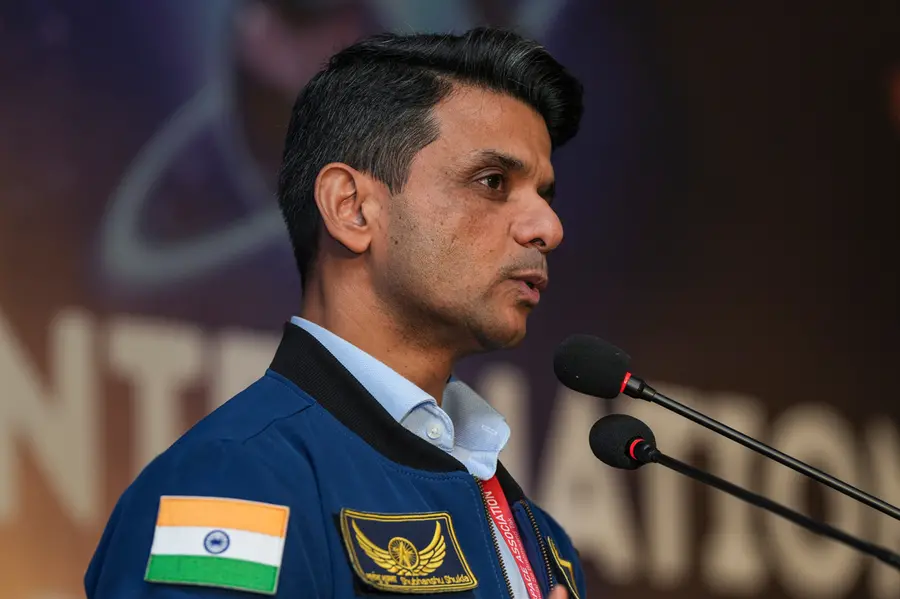
Lucknow: Astronaut and Air Force Group Captain Shubhanshu Shukla has called on young people to unite in tackling global challenges such as climate change and to ensure humanity does not repeat “the mistakes of Earth” as it expands into space.
Addressing the 26th International Conference of Chief Justices of the World at City Montessori School in Lucknow, his alma mater, Shukla said that viewing Earth from space offers a powerful and transformative perspective.
Also Read

“Travelling beyond Earth gives you the profound realisation that this is your planet, this is your home, there is nowhere else to go,” he told the gathering of international jurists and students. “It is not about a region, It is not about a city, it’s about the entire planet. What happens in one place…will affect us months or years later. The realisation becomes very deep and you come back a changed person.”
Shukla warned that climate change is a shared global emergency requiring decisive, collective action. “...there is a distinct need for us to first of all realise it and take concrete steps to protect it (Earth) and prevent what is happening,” he said.
He drew parallels with past moments when scientific advances reshaped global understanding, citing the spike in thyroid cancer detections in the early 2000s across several countries. Improved diagnostic tools, he noted, revealed conditions that had long existed but gone unnoticed. A similar shift occurred with the advent of satellite technology in the mid-20th century, which provided “irrefutable data” showing that climate change was a worldwide phenomenon rather than a localised issue.
Despite widespread awareness of the crisis, Shukla said the world continues to struggle with implementing solutions. “I think all of us understand the problem...and there are a few people who also want to solve it. But somehow we always fail at implementation. How do we get people to agree on what we think is the right way to go forward? We don’t have the answer.”
He urged young people to think ambitiously about building mechanisms for global consensus. “I hope some of you... come up with a framework that allows citizens and governments all over the world to come together and agree that this is what the world needs to do together and go forward.”
Rapid space exploration poses new challenges
Turning to the rapid expansion of space activity, Shukla highlighted the growing ethical and legal challenges. With around 13,000 satellites currently orbiting Earth — a number expected to rise to as many as 40,000 in the coming years — he cautioned that existing treaties were struggling to keep pace.
“We are exploring space at an extremely rapid rate... I’m not even talking about what’s happening beyond the lower Earth orbit, or on the Moon and beyond” he said. “How do we not make the mistakes that we have made here on Earth outside?...I don’t think we don’t have solid answers.”
He stressed that future challenges will extend far beyond engineering. “It is going to be an ethical challenge, a moral challenge, and your responsibility that you have to understand now,” he told students, encouraging them to take advantage of unlimited access to information and educate themselves from the ground up.
“This is your planet and your future,” Shukla said. “Go to the field with the right mindset to the problems we are facing globally.”
He concluded by calling on young people in particular to participate actively in shaping collective solutions for both Earth and space.
PTI
Published: 23 Nov 2025, 10:42 am IST
Disclaimer: Kindly avoid objectionable, derogatory, unlawful and lewd comments, while responding to reports. Such comments are punishable under cyber laws. Please keep away from personal attacks. The opinions expressed here are the personal opinions of readers and not that of Mathrubhumi.