
The summit’s location in the Amazon gave it a markedly different feel from recent COPs in tightly controlled, oil-rich states
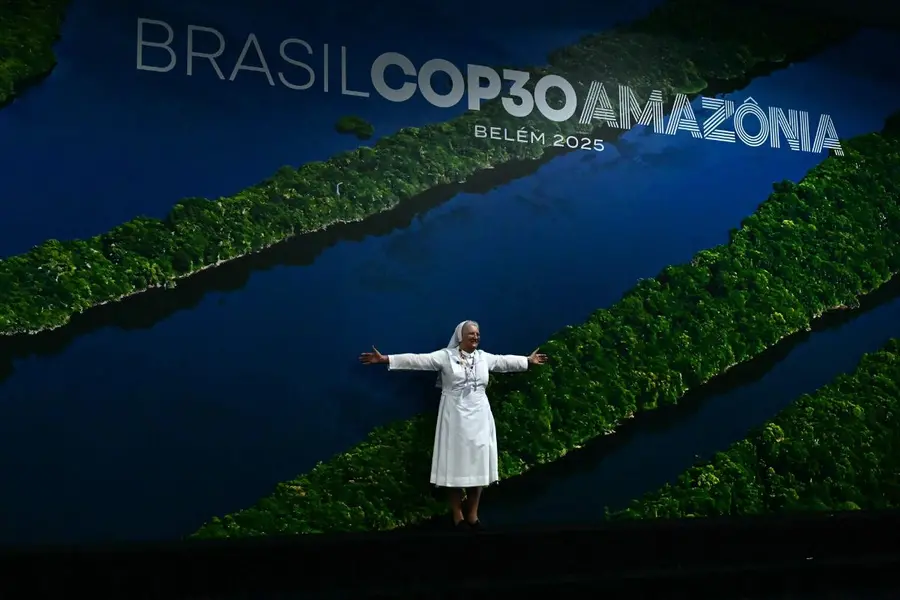
Belem, Brazil: Nearly 200 nations reached a modest agreement at the UN climate summit in the Brazilian Amazon on Saturday, as countries accepted weaker terms on phasing out fossil fuels in order to preserve unity. The deal was approved by consensus after two weeks of intense negotiations on the fringes of the rainforest, with the notable absence of the United States, whose President Donald Trump shunned the talks. Applause rang out as the gavel fell in steamy Belem, capping a summit marked by raucous protests, a damaging fire, and massive street marches.
Brazilian President Luiz Inacio Lula da Silva, who had staked significant political capital on the summit’s success, said the pact showed a fractured world could still come together in crisis. “The international community faced a choice: to continue or to give up. We chose the first option,” Lula said in South Africa, where he was attending a G20 summit. “Multilateralism won.”
In Belem, European ministers offered more measured reactions. EU climate chief Wopke Hoekstra said: “We’re not going to hide the fact that we would have preferred to have more.” He added: “I know it’s a bit intangible, but there is huge value in doing stuff together.”
China’s delegation head, Li Gao, called the summit a success: “We achieved this success in a very difficult situation, so it shows that the international community would like to show solidarity and make joint efforts to address climate change.” India hailed a “meaningful” deal on behalf of the BASIC coalition — Brazil, South Africa, India, and China. The Alliance of Small Island States, a bloc of 39 of the world’s most climate-vulnerable nations, said the deal was “imperfect, but necessary progress” in a body that operates by consensus.
Dozens of countries had threatened to walk out unless there was a clear exit strategy for oil, gas, and coal. The final deal, however, only referenced previous pledges on fossil fuels without explicitly naming them. COP30 president Andre Correa do Lago offered a voluntary “roadmap” away from fossil fuels as a consolation. Colombian President Gustavo Petro rejected the deal, saying his country “does not accept” the outcome, ahead of a world-first summit on fossil fuel phaseouts that Colombia is hosting in April next year. Carolina Pasquali of Greenpeace Brazil said: “President Lula set the bar high in calling for roadmaps to end fossil fuels and deforestation, but a divided multilateral landscape was unable to hurdle it.”
Brazil aimed to manage expectations given global geopolitics and the absence of the US. Nevertheless, developing nations secured a commitment to “at least triple” climate adaptation finance for poorer countries by 2035. A negotiator from Bangladesh described this as a minimum, saying the “fight will continue”, while Nepal’s Raju Pandit noted the summit “had not met the expectations of climate vulnerable countries.” For the first time, strong language on trade measures was also included in a COP agreement — seen as a diplomatic win for China.
The summit’s location in the Amazon gave it a markedly different feel from recent COPs in tightly controlled, oil-rich states. Tens of thousands marched through the streets in a carnival-like atmosphere, while Indigenous protesters clashed with security inside the venue early in the week. A large fire on the penultimate day burned through the fabric ceiling, sending attendees scrambling as smoke filled the halls. Even at the final plenary, Correa do Lago struggled to be heard over the din, noting “the wonderful noise of an Amazon rain” as humidity and tropical storms made their presence felt.
Published: 23 Nov 2025, 08:12 am IST
Related Topics
Disclaimer: Kindly avoid objectionable, derogatory, unlawful and lewd comments, while responding to reports. Such comments are punishable under cyber laws. Please keep away from personal attacks. The opinions expressed here are the personal opinions of readers and not that of Mathrubhumi.
