
The two-day summit is taking place without the world’s largest economy, after United States President Donald Trump ordered a boycott
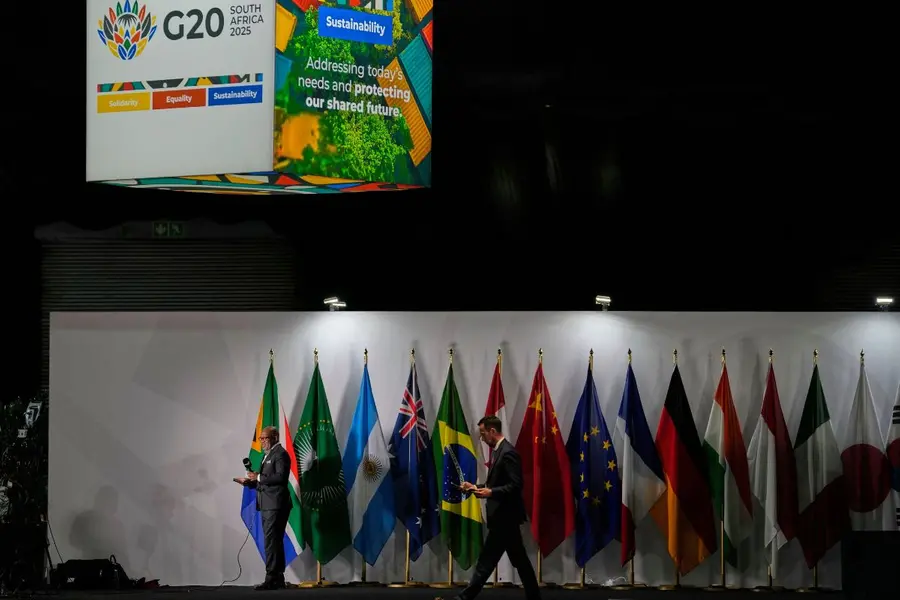
The first Group of 20 (G20) summit to be held in Africa opened on Saturday with an ambitious agenda aimed at tackling long-standing challenges facing the world’s poorest nations.
Leaders and senior officials from the richest and leading emerging economies gathered at an exhibition centre near the historic Soweto township in South Africa — once home to Nelson Mandela — to seek consensus on the host country’s priorities. These include aiding poor nations in recovering from climate-related disasters, reducing foreign debt, transitioning to green energy, and harnessing critical mineral resources to counter widening global inequality.
“We'll see,” United Nations Secretary-General Antonio Guterres said when asked whether the G20 could prioritise developing countries and deliver meaningful reforms. “But I think South Africa has done its part in putting those things clearly upon the table.”
The two-day summit is taking place without the world’s largest economy, after United States President Donald Trump ordered a boycott, citing claims that South Africa was pursuing racist anti-white policies and persecuting its Afrikaner minority.
A months-long diplomatic rift between the US and South Africa had dominated pre-summit discussions in Johannesburg. Nevertheless, some leaders emphasised the importance of moving forward.
“I do regret it,” French President Emmanuel Macron said of Trump’s absence, “but it should not block us. Our duty is to be present, engage and work all together because we have so many challenges.”
The G20, which actually consists of 21 members including 19 nations, the European Union, and the African Union, was formed in 1999 to bridge rich and poor countries and address global financial crises. Its members collectively account for roughly 85% of the world’s economy, 75% of international trade, and more than half of the global population.
However, the bloc operates on consensus rather than binding resolutions, making agreement difficult among members with divergent interests, including the US, Russia, China, India, Japan, Western European nations, Indonesia, Saudi Arabia, and South Africa.
Guterres cautioned that wealthy nations have often failed to make the concessions necessary to achieve meaningful climate or financial reforms.
Traditionally, G20 summits end with a leaders’ declaration summarising agreements. Ahead of this summit, South Africa said the US had pressured it not to issue a joint declaration in its absence, instead suggesting a unilateral statement from the host country.
Responding to the pressure, South African President Cyril Ramaphosa said: “We will not be bullied,” promising a declaration from all members present at the close of the summit on Sunday.
Even so, the G20’s direction may shift sharply as the US assumes the rotating presidency after this summit, with the Trump administration historically critical of the focus on climate change and inequality. The US role at this summit is limited to a representative from its embassy attending the formal handover ceremony.
South Africa criticised this arrangement, calling it “an insult” for Ramaphosa to hand over the G20 presidency to what it considers a junior US diplomatic official.
Published: 22 Nov 2025, 11:18 am IST
Related Topics
Disclaimer: Kindly avoid objectionable, derogatory, unlawful and lewd comments, while responding to reports. Such comments are punishable under cyber laws. Please keep away from personal attacks. The opinions expressed here are the personal opinions of readers and not that of Mathrubhumi.
