
Amit Shah chaired the 31st Southern Zonal Council meeting in Tamil Nadu, with southern states discussing water disputes, Centre-state coordination and regional issues.
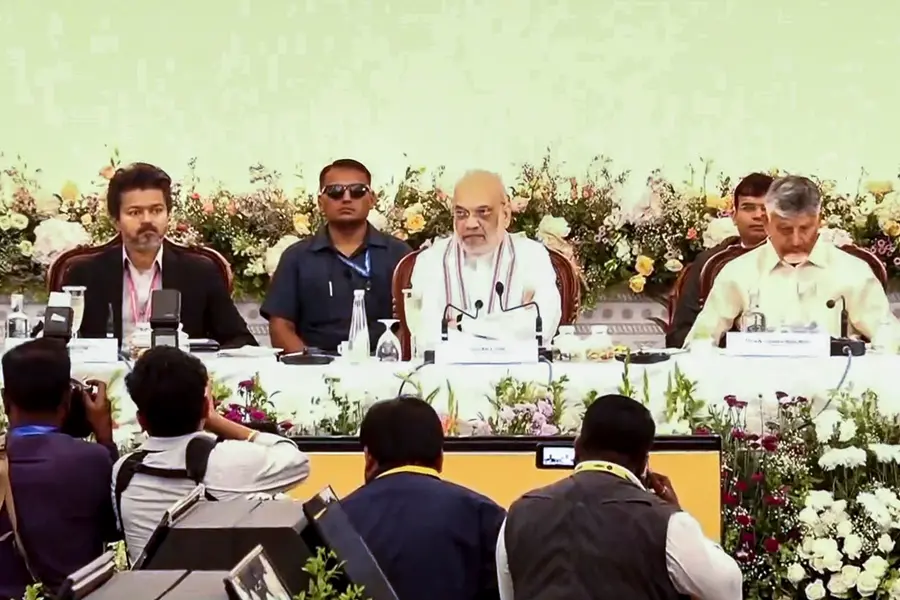
Union Home Minister Amit Shah chaired the 31st meeting of the Southern Zonal Council in Tamil Nadu on Thursday, bringing together representatives from the southern states to discuss inter-state and national issues, including water disputes, regional development and coordination between states and the Centre.
The 31st meeting of the Southern Zonal Council began in Tamil Nadu on Thursday with Union Home Minister Amit Shah in the chair.
Also Read

The meeting brought together leaders and senior representatives from the five southern states of Tamil Nadu, Kerala, Karnataka, Andhra Pradesh and Telangana. Representatives of the Union Territories covered by the council are also part of the wider zonal framework.
Tamil Nadu Chief Minister C Joseph Vijay met Shah in Chennai ahead of the meeting and felicitated the Union Home Minister.
The meeting is intended to provide a platform for southern states and the Centre to discuss issues that affect more than one state and require inter-state coordination.
What is the Southern Zonal Council?
The Southern Zonal Council is one of India's five Zonal Councils established under the States Reorganisation Act, 1956.
The Southern Zonal Council covers Andhra Pradesh, Karnataka, Kerala, Tamil Nadu and Telangana, along with the Union Territories of Puducherry, Lakshadweep and the Andaman and Nicobar Islands.
The councils are designed to encourage cooperation between states and provide a forum for resolving issues through discussion and recommendations.
Their areas of discussion can include economic and social planning, inter-state transport, border-related matters, linguistic issues and disputes involving shared resources.
What issues are being discussed?
One of the major areas of concern for the southern states is inter-state water sharing.
The region has several long-running disputes involving rivers shared between states, including the Cauvery, Krishna and Godavari.
Water-sharing disagreements become particularly sensitive during periods of inadequate rainfall because they affect drinking water supplies, irrigation and farmers.
The Southern Zonal Council provides an institutional forum for states to raise such concerns and seek greater coordination.
Centre-state coordination
The meeting also focuses on broader coordination between the Union government and southern states.
Issues relating to regional development, implementation of central schemes and pending matters between states can be discussed through the council.
The forum is intended to resolve issues through dialogue before they develop into prolonged administrative or legal disputes.
Andhra Pradesh Reorganisation issues
Issues arising from the reorganisation of Andhra Pradesh and the subsequent division of responsibilities and assets between Andhra Pradesh and Telangana have featured prominently in previous Southern Zonal Council meetings.
These include matters relating to the division of assets and institutions and other questions arising from the bifurcation of the former undivided Andhra Pradesh.
The Centre has previously encouraged the two states to resolve their outstanding issues through dialogue.
What about delimitation?
Delimitation has become a major political concern in southern India, particularly because several southern states have raised questions about the possible future redistribution of Lok Sabha constituencies based on population.
The issue has generated debate over whether states that have successfully reduced population growth could see their political representation affected in a future delimitation exercise.
However, the material available for this report does not establish that a specific "2026 Delimitation Bill" is formally part of the Southern Zonal Council's agenda.
Therefore, delimitation should be treated as a broader political context surrounding Centre-state relations rather than presented as a confirmed agenda item of Thursday's meeting unless officially stated.
Why is the meeting important?
The meeting comes at a time when several southern states continue to raise concerns about inter-state water sharing, fiscal issues, regional development and the relationship between state governments and the Centre.
The Southern Zonal Council does not function as a court or a legislative body. Its discussions and recommendations are intended to encourage cooperation and help states and the Centre find mutually acceptable solutions.
Its importance therefore lies in providing a regular institutional platform for states to raise common concerns and negotiate issues that cross state boundaries.
Analysis
The Southern Zonal Council is part of India's cooperative federalism framework, rather than a forum created specifically to settle one particular dispute.
Its meetings become especially significant when multiple states face interconnected problems involving rivers, transport, development projects or the implementation of national policies.
For southern states, water sharing remains one of the most politically sensitive issues because rivers such as the Cauvery, Krishna and Godavari cross state boundaries. Disagreements over their use can directly affect agriculture and drinking-water availability.
At the same time, issues such as delimitation and the distribution of financial resources have created a wider debate about the relationship between population, political representation and economic contribution. Those debates form an important political backdrop, but they should not be conflated with the confirmed agenda of the Southern Zonal Council meeting.
The broader objective of the meeting is therefore to bring the Centre and southern states together to address common regional concerns through dialogue and institutional coordination.
What happened in brief?
Amit Shah chaired the 31st Southern Zonal Council meeting in Tamil Nadu on August 20.
Representatives from the five southern states participated in the deliberations.
Inter-state water sharing, regional development and Centre-state coordination are among the key areas of discussion.
Issues arising from the Andhra Pradesh Reorganisation Act have also featured in previous meetings.
The council functions as a platform for cooperative federalism and makes recommendations rather than binding judicial orders.
Published: 20 Aug 2026, 12:19 pm IST
ABOUT THE AUTHOR
Disclaimer: Kindly avoid objectionable, derogatory, unlawful and lewd comments, while responding to reports. Such comments are punishable under cyber laws. Please keep away from personal attacks. The opinions expressed here are the personal opinions of readers and not that of Mathrubhumi.