

Tamil Nadu has approached the Supreme Court seeking immediate compliance with its share of the Cauvery water. The matter is scheduled to come up on August 17
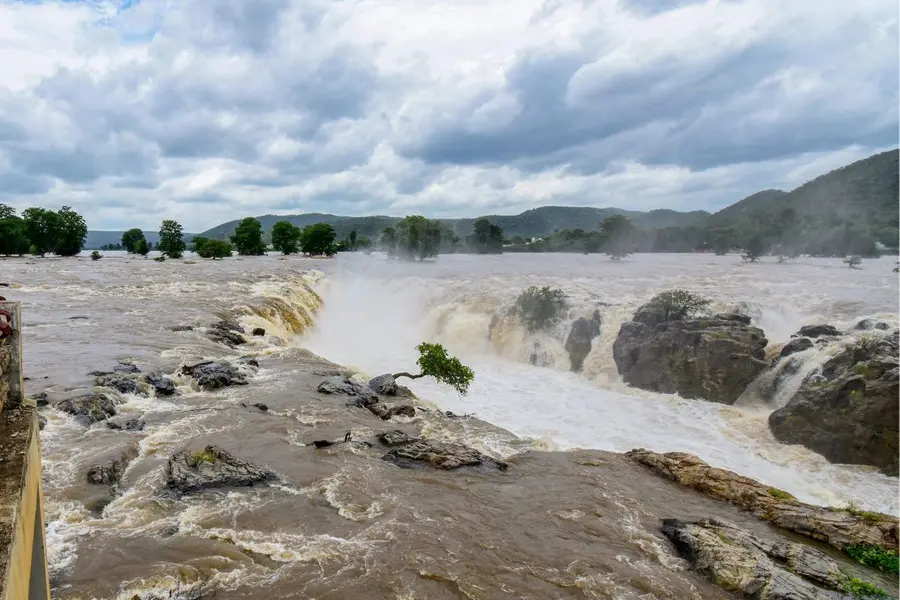
New Delhi: The Supreme Court will hear on August 17 Tamil Nadu’s plea seeking directions to Karnataka to immediately release its share of Cauvery water, amid a fresh escalation in the long-running water-sharing dispute between the two states.
The development comes a day after the Cauvery Water Management Authority (CWMA) upheld the Cauvery Water Regulation Committee’s (CWRC) recommendation directing Karnataka to release water at the rate of 12,000 cusecs to Tamil Nadu for 15 days from August 12.
Also Read
The CWMA directed Karnataka to ensure that a flow of 12,000 cusecs is maintained at Biligundlu from 8 am on August 12.
Tamil Nadu has approached the Supreme Court seeking immediate compliance with its share of the Cauvery water. The matter is scheduled to come up on August 17.
Karnataka, meanwhile, has opposed the direction, citing deficient rainfall, declining inflows and limited storage in its reservoirs.
The state said its four Cauvery reservoirs had received 77.746 TMC of water, around 47% below the 30-year average. It argued that further releases would affect its ability to meet drinking water requirements and support Kharif agriculture.
Karnataka also told the CWMA that it had already ensured a flow of 86,942 cusecs at Biligundlu against the prescribed 52,500 cusecs, with additional water still in transit.
The state maintained that distress sharing should be equitable and argued against applying a rigid pro-rata formula based solely on reservoir inflows.
Tamil Nadu, however, disputed Karnataka’s assessment of the water situation. It said rainfall deficit between June 1 and August 10 was only 9% in the catchment upstream of the Krishnaraja Sagar (KRS) reservoir and 19% upstream of Kabini.
In contrast, the state pointed out that the Cauvery downstream of Biligundlu had recorded a 36% rainfall deficit, according to data cited from the India Meteorological Department.
Tamil Nadu also argued that Karnataka’s plan to retain enough water to meet one year’s drinking water requirement for Bengaluru as a contingency against a worst-case scenario could not be used to deny the state its legitimate share.
Following the CWMA decision, protests broke out in parts of Karnataka. Farmer organisations staged demonstrations in Mandya, while Kannada organisations called for a state-wide bandh on August 13.
Karnataka Chief Minister D K Shivakumar said the government had a responsibility to protect the state’s farmers while also complying with court orders.
“I have the duty to protect our farmers. We must protect our farmers and also abide by the court orders,” Shivakumar said, adding that he would discuss the issue with the irrigation minister and officials.
Karnataka Additional Chief Secretary Gaurav Gupta said the state was examining all available legal options, including approaching the Supreme Court.
Water Resources Minister Ramalinga Reddy said Shivakumar would hold a meeting with senior advocates, officials and engineers on Wednesday to discuss the state’s legal course.
Meanwhile, Kannada organisations have announced plans to intensify protests against the water release order, with Vatal Nagaraj calling for a Karnataka bandh on August 13.
The Supreme Court hearing on August 17 is expected to bring the dispute over Karnataka’s obligation to release Cauvery water to Tamil Nadu back into focus.
Published: 12 Aug 2026, 12:18 pm IST
ABOUT THE AUTHOR
Related Topics
Disclaimer: Kindly avoid objectionable, derogatory, unlawful and lewd comments, while responding to reports. Such comments are punishable under cyber laws. Please keep away from personal attacks. The opinions expressed here are the personal opinions of readers and not that of Mathrubhumi.