
Union Home Minister Amit Shah confirmed that the government will conduct a caste census, dismissing opposition claims as misinformation and emphasising its importance during a Lok Sabha debate.
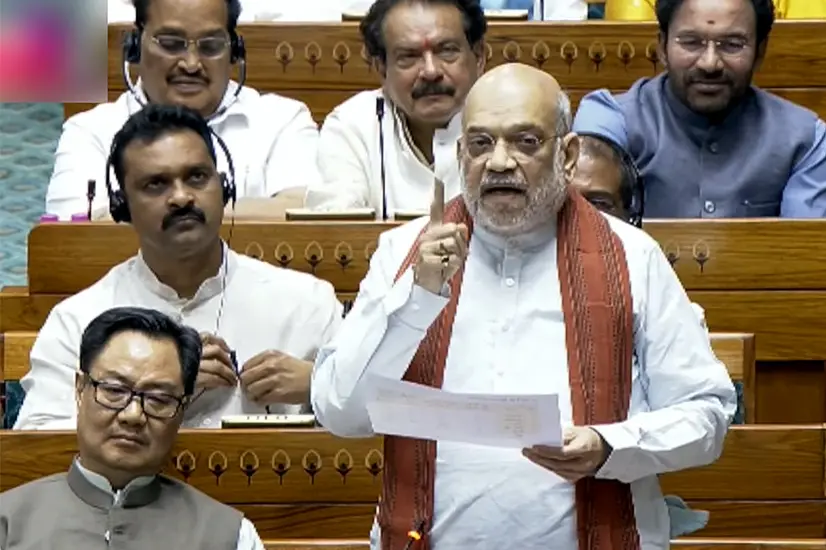
New Delhi: The caste census emerged as the central issue in Parliament with Union Home Minister Amit Shah firmly stating that the Centre has already taken a decision to conduct it, dismissing opposition claims as “misinformation”.
Speaking in the Lok Sabha during a debate on key electoral reform bills, Shah, on Thursday, said the government led by Prime Minister Narendra Modi is committed to including caste data in the upcoming census.
“Under the leadership of Prime Minister Narendra Modi, this government has decided to do a caste census. Misinformation is being spread that there is no mention of caste. Census happens in two phases. First, all the houses are counted and then the people living inside them. Now there has been no caste system for buildings; when there will be one, then we will count that too,” Shah said, making it clear that the caste census will be part of the official enumeration process.
Caste census clarification: ‘Process happens in phases’
Explaining the methodology, Shah said the census is conducted in two stages — first counting households and then collecting individual-level data, including caste details.
Taking a swipe at the opposition, he said concerns were being raised without understanding the process. “Now there has been no caste system for buildings; when there will be one, then we will count that too,” he remarked.
The caste census issue has become a key political flashpoint, with opposition parties alleging delays and a lack of clarity, while the government insists the exercise is already planned.
Women’s reservation, delimitation linked to census exercise
The caste census debate unfolded alongside discussions on the Women’s Reservation Act and delimitation reforms, both of which depend on updated population data.
Shah rejected opposition claims that the government intends to rely solely on outdated census figures, asserting that the broader reform framework — including reservation and seat redistribution — will be implemented transparently.
No impact on South India’s political share
Addressing concerns from southern states, Shah said delimitation and women’s reservation will not reduce their influence in the Lok Sabha.
He presented comparative data showing that while the total number of seats will increase, the proportional representation of southern states will either remain stable or improve.
“The biggest narrative being created is that these three bills, the Constitution Amendment Bill, bill on delimitation, and changes to the constituency election law, will harm the power of the South. If we listen to the entire narrative created for the South, then out of the 543 seats created by you, 129 MPs currently sit in this House, which is approximately 23.76%. In the new House, 195 MPs will be sitting here, and their power will be 23.97%,” he said.
PM Modi offers ‘guarantee’ on fair implementation
Earlier, Prime Minister Narendra Modi assured the House that no region would face discrimination in the delimitation process.
“If you need a guarantee, I give you a guarantee; if you need a promise, I make a promise... because if the intention is clear, there is no need to play games with words,” Modi said, urging all parties to support the bills unanimously.
Political significance of caste census
The caste census has become one of the most politically sensitive issues ahead of future elections, with implications for:
- Reservation policies
- Welfare targeting
- Electoral representation
- Delimitation of constituencies
The government’s confirmation of the exercise is expected to intensify political debate in the coming months.
Bills under consideration
The Lok Sabha is debating three major bills aimed at early implementation of women’s reservation:
- Constitution (One Hundred and Thirty-First Amendment) Bill, 2026
- Union Territories Laws (Amendment) Bill, 2026
- Delimitation Bill, 2026
A special session of Parliament has been convened to fast-track these reforms ahead of the 2029 general elections.
ANI
Published: 17 Apr 2026, 06:53 am IST
Disclaimer: Kindly avoid objectionable, derogatory, unlawful and lewd comments, while responding to reports. Such comments are punishable under cyber laws. Please keep away from personal attacks. The opinions expressed here are the personal opinions of readers and not that of Mathrubhumi.
