
While pilot training emphasises rigorous procedures for engine failure, the aircraft didn't reach a sufficient altitude for full emergency protocols
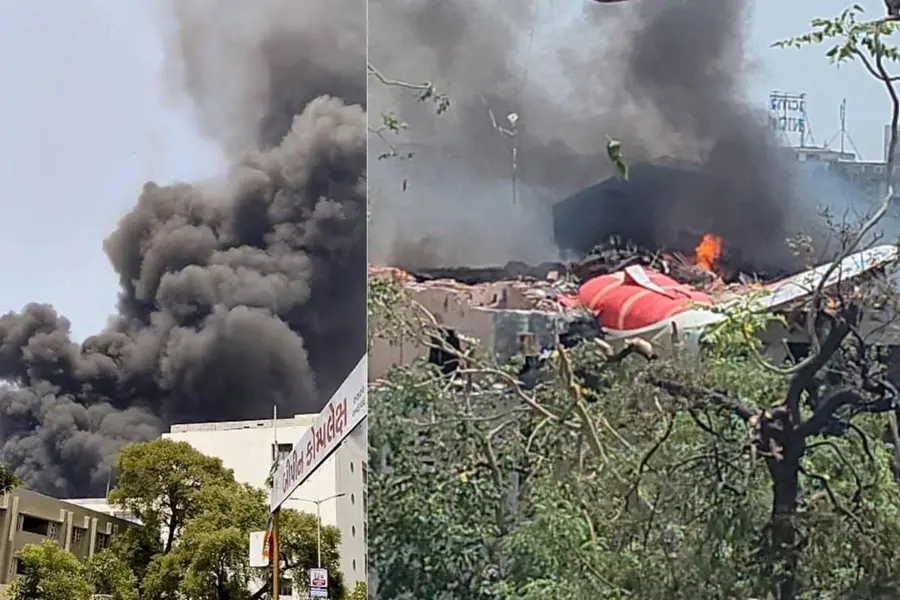
As the aviation world awaits the preliminary findings into the tragic crash of Air India Flight AI-171, a new report by respected industry publication The Air Current suggests that investigators are honing in on the engine fuel control switches as a potential focal point of failure.
The report, citing "multiple people with knowledge of the investigation", comes just as India’s Aircraft Accident Investigation Board (AAIB) is expected to release its preliminary report into the June 12 crash that claimed 260 lives, including those on the ground. The Dreamliner crashed within 35 seconds of take-off from Ahmedabad en route to London Gatwick.
Of the 241 people on board, only one passenger survived. Although the AAIB and Ministry of Civil Aviation have not formally announced when the preliminary findings will be made public, India, as a signatory to the International Civil Aviation Organisation (ICAO), is expected to release the report within 30 days of the incident. That places the likely release date around July 11, unless published earlier.
While the Air Current report stops short of drawing conclusions, its reference to fuel-control switches has reignited discussion around possible pilot error.
In the event of a single-engine failure after take-off, it is conceivable that the wrong engine may have been shut down, effectively disabling the aircraft’s only remaining source of power. Standard operating procedure in such scenarios requires the shutdown of the malfunctioning engine, typically by cutting off fuel supply via fuel control switches. Shutting down the operational engine by mistake could have catastrophic consequences, especially during the critical phase of take-off. However, sources claim that such a mistake would be highly unlikely, given the rigorous training crews undergo.
In the case of a dual-engine flame-out, for example, pilots are trained to execute memory-based procedures, including toggling the fuel switches from 'run' to 'cutoff' and back to 'run' to attempt engine relight. Importantly, such procedures are only initiated at altitudes above 400 to 1,000 feet, depending on the failure scenario and configuration of the aircraft.
The Air India Dreamliner, unfortunately, never gained sufficient altitude for these emergency procedures to be fully deployed. Pilot training also dictates that autothrottle systems be disengaged and thrust levers brought to idle before the malfunctioning engine's fuel switch is turned off.
These steps are closely coordinated between the captain and first officer to prevent procedural errors.
In the event of an engine fire, engine fire switches are activated to release extinguishing agents. The Air Current further notes the absence of any Multi-Operator Message (MOM) or general advisory from Boeing or General Electric, 13 days after the AAIB reportedly retrieved data from the aircraft’s black box on June 25. This lack of urgent communication may indicate that investigators are not immediately suspecting mechanical or design failure as a primary cause.
As of now, the timeline for the final investigation report remains uncertain. Whether the preliminary report will shed light on the root causes or simply outline known facts remains to be seen.
Published: 09 Jul 2025, 07:54 pm IST
Disclaimer: Kindly avoid objectionable, derogatory, unlawful and lewd comments, while responding to reports. Such comments are punishable under cyber laws. Please keep away from personal attacks. The opinions expressed here are the personal opinions of readers and not that of Mathrubhumi.
