
AAIB enters final phase of AI-171 crash probe, finding no fuel control switch defects while targeting October 2026 for the draft report.
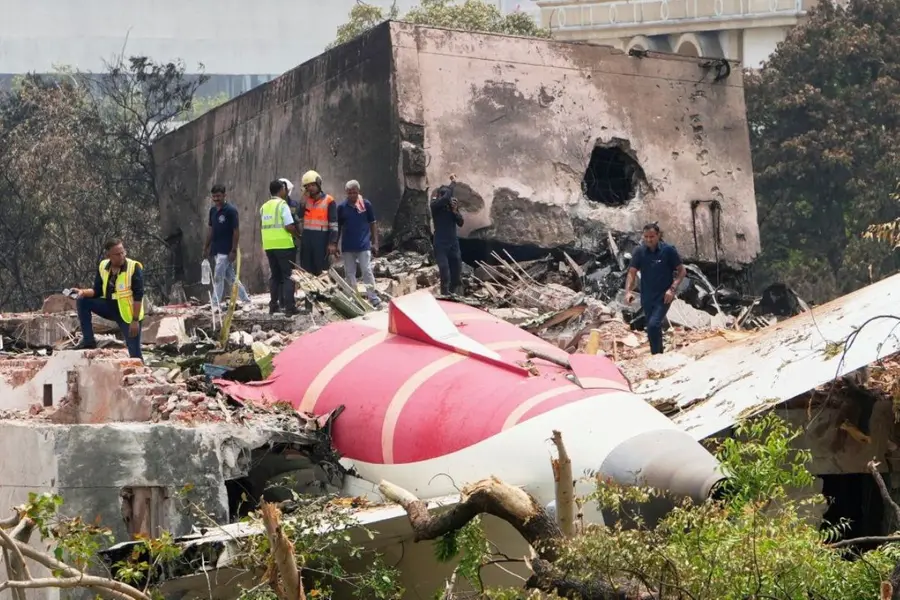
More than a year after the tragic crash of Air India Flight AI-171 in Ahmedabad that claimed 260 lives, the investigation into India's worst aviation disaster in recent years has entered its final stage. The Centre has informed both the Supreme Court and Parliament that the Aircraft Accident Investigation Bureau (AAIB) is close to completing its inquiry, with the draft final report expected to be ready by October 2026.
The government has also clarified that no defect has been found so far in the aircraft's fuel control switch, an area that has drawn significant attention during the investigation. However, officials have stressed that the overall investigation is still ongoing and no conclusions on the cause of the accident have been reached.
Draft report to be submitted to top court
During a hearing before the Supreme Court, the Centre informed a three-judge Bench headed by Chief Justice Surya Kant, along with Justice Joymalya Bagchi and Justice V Mohana, that the draft final investigation report would be submitted to the court in a sealed cover during the first week of October.
Representing the Centre, Solicitor General Tushar Mehta said the investigation has progressed substantially and is nearing completion. He also informed the court that the Federation of Indian Pilots (FIP) could submit its observations and technical inputs to the AAIB. These submissions, he said, would be considered by investigators if they are found relevant to the ongoing probe.
The court was hearing petitions filed by the Federation of Indian Pilots and Pushkar Raj Sabharwal, the father of the late Captain Sumeet Sabharwal, one of the pilots who lost his life in the crash. The petitioners have sought a court-monitored investigation into the accident.
International experts part of the investigation
The Centre emphasised that the investigation is not being carried out solely by Indian authorities. According to the government, the probe is being conducted in accordance with the Chicago Convention and ICAO Annex 13, which govern international aircraft accident investigations.
Experts and accredited representatives from the State of Registry, State of Operator, State of Design and State of Manufacture are actively participating in the investigation. The inquiry has also included more than four detailed simulation exercises to better understand the sequence of events that led to the crash.
The government said this collaborative approach ensures that the investigation follows internationally accepted standards and benefits from the technical expertise of all stakeholders involved.
Fuel control switch normal
In Parliament, the Ministry of Civil Aviation provided an important update on one of the key technical components under examination, the aircraft's fuel control switch.
Replying to questions in the Rajya Sabha, Minister of State for Civil Aviation Murlidhar Mohol said advanced testing conducted by the aircraft's Original Equipment Manufacturer (OEM) had found no abnormality in the fuel control switch or its locking mechanism.
According to the Ministry, investigators carried out a detailed examination of the switch, including checks on the structural integrity of its locking detents. The tests did not identify any manufacturing defect or mechanical failure in the component.
These inspections were conducted following airworthiness checks ordered by the Directorate General of Civil Aviation (DGCA) as part of the continuing investigation.
Further examination underway
While the fuel control switch has been cleared of any apparent defect, investigators have not yet completed their examination of the aircraft's Thrust Control Module. The Ministry confirmed that the complete thrust control module is currently undergoing inspection at the OEM's facility in Seattle. Investigators are awaiting the outcome of these technical examinations before drawing any final conclusions regarding the aircraft's systems.
Officials have reiterated that every possible cause and contributing factor continues to be examined as part of the investigation.
Government rejects delay allegations
The government also rejected suggestions that the AAIB has delayed the publication of its final report. Responding to concerns raised in Parliament, the Ministry of Civil Aviation said aircraft accident investigations, particularly those involving major commercial airliners do not follow a fixed timeline. Instead, investigators are required to examine every technical, operational and human factor thoroughly before issuing a final report.
According to the Ministry, the AI-171 investigation is progressing in line with established international procedures, and all probable causes and contributing factors are still under detailed examination.
Final report
Once the investigation is complete, the government has confirmed that the AAIB's final report will be published on its official website, making its findings available to the public.
The report is expected to present the complete sequence of events, technical findings, safety recommendations and any contributing factors identified during the investigation.
For the families of the 260 victims, the aviation industry and the wider public, the report is expected to provide much-needed clarity on one of India's most tragic aviation accidents. Beyond identifying the causes of the crash, its recommendations are also likely to influence future aviation safety measures, operational procedures and regulatory oversight with the aim of preventing similar tragedies in the years ahead.
Published: 29 Jul 2026, 07:04 pm IST
Disclaimer: Kindly avoid objectionable, derogatory, unlawful and lewd comments, while responding to reports. Such comments are punishable under cyber laws. Please keep away from personal attacks. The opinions expressed here are the personal opinions of readers and not that of Mathrubhumi.
