
On Human Rights Day 2025, we look at the countries with the lowest human rights scores globally and highlight key judicial interventions in India that protect citizens’ rights
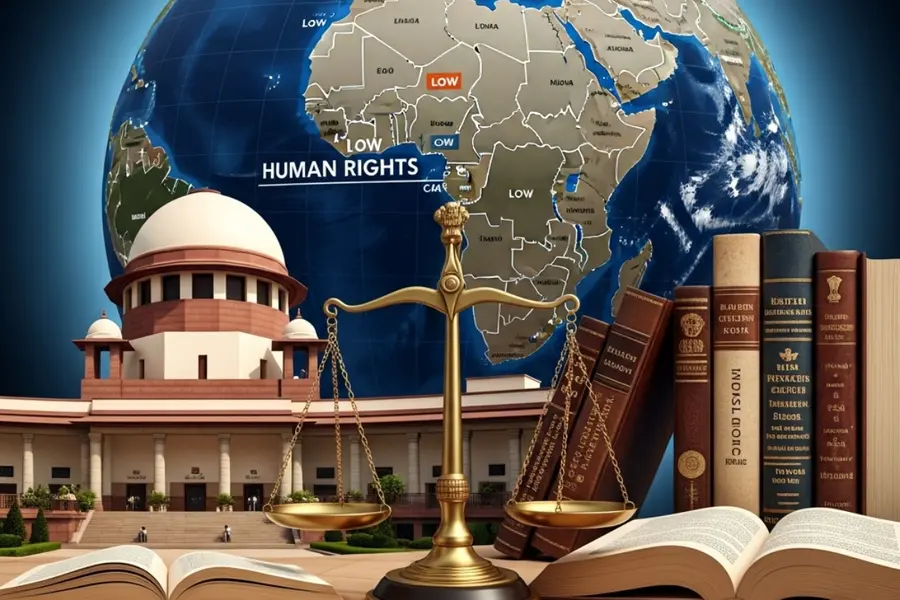
Human Rights Day, celebrated annually on December 10, commemorates the adoption of the Universal Declaration of Human Rights by the United Nations. The 2025 theme, “Our Everyday Essentials”, highlights fundamental rights that every individual is entitled to, irrespective of race, gender, nationality, religion, or social status.
Despite progress in some areas, certain countries continue to face severe human rights violations, reflected in their low Human Rights Index scores:
Also Read

- North Korea (0.02): Totalitarian regime, pervasive surveillance, political prison camps, and strict restrictions on speech, movement, religion, and information.
- Afghanistan (0.05): Under Taliban rule, women’s education and employment are curtailed, media is suppressed, minorities face persecution, and ongoing conflict worsens humanitarian conditions.
- Eritrea (0.06): Indefinite national service, forced labour, imprisonment of dissidents and journalists, and absence of elections since independence.
- Turkmenistan (0.11): Authoritarian control, personality cult, media monopoly, and limited civil society participation.
- Myanmar (0.11): Post-coup killings, mass arrests, airstrikes in opposition areas, and persecution of Rohingya and other minorities.
- Nicaragua (0.13): Political repression, jailing of opponents, closure of NGOs, and media restrictions.
- Syria (0.13): Prolonged civil war, chemical weapons allegations, mass displacement, and documented torture.
- Laos (0.15): One-party rule, restricted freedom of expression, assembly, and arbitrary detentions.
- Saudi Arabia (0.17): Criminalisation of dissent, limited social reforms, restrictions on women’s autonomy, and use of harsh punishments.
- China (0.17): Tight censorship, widespread surveillance, suppression of activists, and human rights abuses against Uyghurs and Hong Kong citizens.
India’s Judicial Interventions: Safeguarding Rights
While global violations persist, India’s courts have repeatedly stepped in to uphold constitutional rights, protect marginalized groups, and ensure justice. Key interventions include:
1. Tackling Caste-Based Discrimination
The Supreme Court, on October 3, 2024, struck down prison rules that reinforced caste hierarchies, particularly affecting communities historically labelled as “criminal tribes.” This ensured that all prisoners are treated equally, upholding constitutional equality.
2. Ensuring Accessible Facilities
In January 2025, the Supreme Court directed all courts and tribunals to provide separate and accessible toilet facilities for men, women, transgender individuals, and persons with disabilities. The directive linked access to sanitation with the broader right to justice.
3. Addressing Illegal Detention and Delayed Releases
The Supreme Court and high courts ordered compensation for individuals unlawfully detained or facing delayed bail. For instance, a June 2025 directive required the Uttar Pradesh government to pay Rs 5 lakh as provisional compensation to a man whose release was delayed.
4. Combating Custodial Torture
Courts recognised instances of custodial torture as a severe human rights violation. Victims received compensation, and probes were ordered to hold authorities accountable, reinforcing the rule of law.
5. Preventing Arbitrary Demolitions
The Supreme Court laid down guidelines to curb government demolition of private properties without due process. These actions protect the right to shelter and presumption of innocence.
6. Mental Health and Student Safety
Pan-India directives were issued to educational institutions to establish mechanisms addressing harassment, bullying, sexual assault, and mental health issues, safeguarding students’ fundamental rights.
7. Protecting Manual Scavengers
The Calcutta High Court mandated compensation for workers who died while cleaning sewer lines and emphasized safer working conditions, highlighting continued concern over this human rights issue.
8. Safeguarding Rights of Disabled Prisoners
Courts directed the establishment of legal frameworks and facilities for prisoners with disabilities, ensuring equal treatment during incarceration.
9. Supporting Childcare and Women’s Workforce Participation
The Supreme Court ruled that denying child care leave to women employees violated constitutional rights, reinforcing workplace equity.
The Continuing Struggle for Human Rights
Human Rights Day serves as a reminder that protecting fundamental rights requires constant vigilance. While international monitoring highlights global violations, India’s judiciary demonstrates how timely intervention can prevent abuse, provide justice, and uphold dignity. From ensuring equality in prisons to safeguarding women, children, and marginalized communities, courts play a crucial role in translating constitutional guarantees into reality.
As the world reflects on “Our Everyday Essentials”, the emphasis remains on ensuring that every individual, regardless of their circumstances, has access to basic human rights and protection under the law.
Published: 10 Dec 2025, 12:32 pm IST
Disclaimer: Kindly avoid objectionable, derogatory, unlawful and lewd comments, while responding to reports. Such comments are punishable under cyber laws. Please keep away from personal attacks. The opinions expressed here are the personal opinions of readers and not that of Mathrubhumi.