
As December 31 trends across news and social media, the date stands out not only as New Year’s Eve but as a day that has quietly shaped history through decisions, inventions, cultural milestones and moments of crisis.
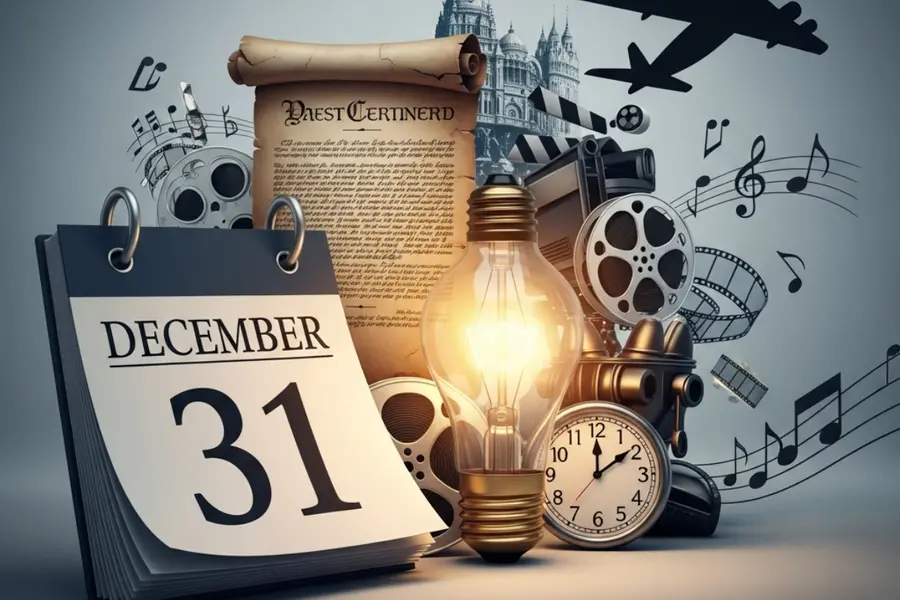
December 31 is often viewed as a symbolic pause between one year and the next, but history shows it has been a day of lasting consequence. Across centuries, the final hours of the year have witnessed decisions and events that altered political power, transformed technology, reshaped culture and left deep marks on collective memory.
One of the most influential milestones linked to December 31 dates back to 1600, when Queen Elizabeth I granted a royal charter to the British East India Company. What began as a trading venture laid the foundations for British commercial expansion in Asia and eventually colonial rule in India, shaping the subcontinent’s political and economic history for centuries.
Also Read

The date is also associated with technological change. On December 31, 1879, Thomas Alva Edison publicly demonstrated his incandescent electric lamp by illuminating a street in Menlo Park, New Jersey. The demonstration marked a turning point in everyday life, accelerating the spread of electric lighting and altering how cities functioned after dark.
Modern history, too, bears the imprint of December 31. In 1999, the seven-day hostage crisis involving Indian Airlines Flight IC 814 came to an end on the last day of the year, when passengers and crew were released in Kandahar after intense negotiations. The episode had long-term implications for India’s security policy and counter-terrorism discourse.
December 31 is also a date tied to influential lives in politics, arts and popular culture. It marks the birth anniversary of Krishna Ballabh Sahay, a freedom fighter and former chief minister of undivided Bihar, as well as global cultural figures such as actor Val Kilmer and South Korean musician Psy, whose work reshaped cinema and pop culture in different eras. The day also records the passing of significant personalities, including historian Vishwanath Kashinath Rajwade, political leader Ravi Shankar Shukla and veteran actor and writer Kader Khan, whose contributions continue to influence scholarship, governance and Indian cinema.
Beyond historical memory, December 31 frequently carries practical significance in public life. In India, it often coincides with major administrative and financial deadlines, such as the closing window for filing revised income tax returns, reinforcing the day’s association with closure, accountability and transition.
Taken together, December 31 emerges as more than a festive endpoint. It is a date where innovation, power, crisis, creativity and regulation converge, reminding us that history does not always unfold on dramatic anniversaries alone. Sometimes, it takes shape quietly, on the very day the world pauses to count down to a new beginning.
Published: 31 Dec 2025, 08:13 am IST
Related Topics
Disclaimer: Kindly avoid objectionable, derogatory, unlawful and lewd comments, while responding to reports. Such comments are punishable under cyber laws. Please keep away from personal attacks. The opinions expressed here are the personal opinions of readers and not that of Mathrubhumi.