
A growing rift has emerged in Indian aviation as Adani Group presses the Centre to expand foreign airline flying rights, a move strongly opposed by Air India and IndiGo over competition and fare concerns.
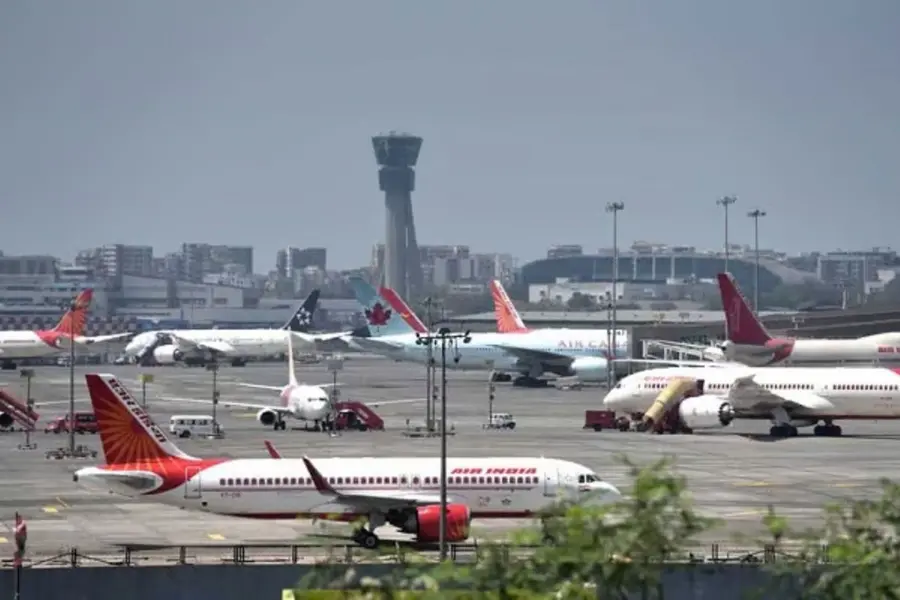
India’s aviation sector is heading toward a high-stakes policy battle, with Adani Group pushing the government to allow more international flights even as the country’s largest airlines warn of long-term damage to domestic carriers.
Adani Airports Holdings Ltd, which operates eight airports across India, has urged the Centre to expand international flying rights under bilateral agreements with countries including the UAE, Saudi Arabia, Qatar, Singapore, Indonesia and Malaysia.
The group argues that without additional foreign airline capacity, its massive investments in airport infrastructure risk being underutilised.
The conglomerate, which opened the Navi Mumbai airport to commercial operations on Christmas Day, plans to invest $11.1 billion by 2030 to upgrade terminals, runways, aircraft-handling facilities, and passenger amenities. According to Adani executives, higher international traffic is essential if Indian cities—especially Mumbai—are to emerge as global aviation hubs.
“This would be a criminal waste of assets being built by airports and would penalise Indian customers with higher fares due to a lack of flights,” an Adani Group official said, stressing that airport development should not hinge solely on when Indian airlines are ready to compete globally.
However, the push directly conflicts with the position of Tata-owned Air India and IndiGo. Both carriers have cautioned the government against opening Indian skies too quickly, warning that deep-pocketed West Asian airlines could overwhelm domestic players.
Air India has repeatedly described this as “unfair competition,” arguing that Gulf carriers funnel Indian passengers to Europe and North America through their hubs using large wide-body aircraft.
Under India’s current policy, international flying rights are granted on a reciprocal basis and expanded only when Indian airlines utilise at least 80% of their existing capacity.
This approach, formalised in the 2016 National Civil Aviation Policy, was designed to protect Indian carriers and help local airports evolve into transit hubs comparable to Dubai or Singapore’s Changi.
However, the restrictions have had side effects. Despite a surge in passenger demand, overseas airlines have been unable to add seats on key routes, contributing to rising airfares. Notably, capacity on India–Dubai routes has not increased since 2014, even though both Indian airlines and Gulf carriers have exhausted their existing entitlements.
Air India CEO Campbell Wilson recently defended the government’s cautious stance, noting that more than 70% of traffic carried by some foreign airlines from India is transit traffic. “It’s in India’s interests to ensure liberalisation does not undercut investments being made by Indian entities,” he said.
Critics argue that without aggressive expansion plans from Air India or IndiGo, airports could be left with excess capacity, slowing India’s ambition to become a global aviation hub. For passengers, the policy deadlock could mean fewer choices and persistently high ticket prices.
Published: 31 Dec 2025, 07:47 am IST
Related Topics
Disclaimer: Kindly avoid objectionable, derogatory, unlawful and lewd comments, while responding to reports. Such comments are punishable under cyber laws. Please keep away from personal attacks. The opinions expressed here are the personal opinions of readers and not that of Mathrubhumi.
