
A new UNDP report warns that the ongoing Middle East conflict is set to trigger a significant economic blow to India.
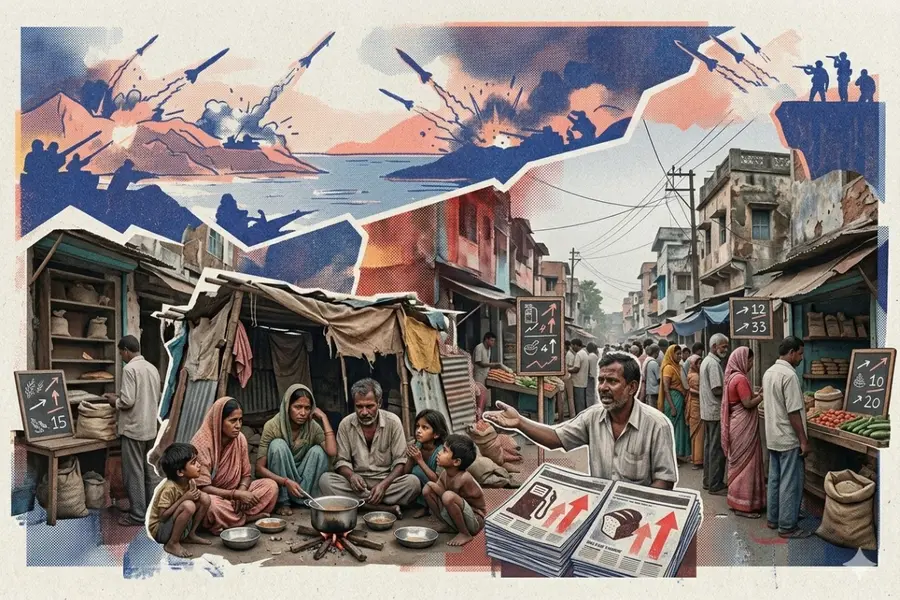
A war happening thousands of kilometres away in the Middle East is about to hit the common Indian in the pocket — and the United Nations is now saying it loudly with numbers.
The United Nations Development Programme (UNDP), which is the UN's organisation that works on improving people's lives worldwide, has released a report called 'Military Escalation in the Middle East: Human Development Impacts Across Asia and the Pacific'. The findings are deeply worrying for ordinary Indians.
So what exactly is happening?
The ongoing Iran conflict is pushing up the prices of fuel, transport, and everyday goods across Asia. When fuel becomes expensive, everything becomes expensive — from the vegetables in your local sabzi mandi to the auto-rickshaw fare you pay every morning. Your money simply buys less than it used to. This is what economists call a loss of buying power, and it hits the poor the hardest.
How does this affect India?
The UNDP report says that because of this conflict, anywhere between 4 lakh and 25 lakh more Indians could fall into poverty. Think about that — 25 lakh people. That is not a statistic. That is 25 lakh families struggling to put food on the table, 25 lakh households cutting back on medicines, school fees, and basic necessities.
India's poverty rate, which currently stands at 23.9%, is expected to climb to 24.2%. It may sound like a small number on paper, but it translates to roughly 24.65 lakh additional people slipping below the poverty line. The total number of poor people in India is projected to rise from 351.57 crore to 354.03 crore.
The report also warns that India's overall human development progress — meaning improvements in health, education, and standard of living that we have worked hard to achieve over decades — may face a setback.
Is India alone in this?
No. The entire Asia-Pacific region is feeling the heat. The UNDP estimates the conflict could cost Asia-Pacific countries up to $299 billion, which is roughly ₹28.1 lakh crore. Globally, around 88 lakh people are at risk of being pushed into poverty because of this war.
South Asia as a whole is the worst-hit region, with the number of newly poor people expected to jump from 17 lakh to over 80 lakh. This is mainly because South Asian countries have large populations and their incomes are more sensitive to price shocks.
Even China, with all its economic strength, is expected to see over 6 lakh people at risk of poverty because of this conflict.
The bottom line for the common Indian
You do not need to understand international geopolitics to feel this war. You will feel it every time you refuel your vehicle, every time grocery bills seem higher than last month, and every time government schemes seem stretched thin.
A war nobody voted for is quietly making life harder for millions who simply want to live with dignity.
(Girish Linganna is an award-winning science communicator and a Defence, Aerospace & Geopolitical Analyst. He is the Managing Director of ADD Engineering Components India Pvt. Ltd., a subsidiary of ADD Engineering GmbH, Germany.)
Published: 16 Apr 2026, 03:59 pm IST
Related Topics
Disclaimer: Kindly avoid objectionable, derogatory, unlawful and lewd comments, while responding to reports. Such comments are punishable under cyber laws. Please keep away from personal attacks. The opinions expressed here are the personal opinions of readers and not that of Mathrubhumi.
