
The conflict escalated after Pakistan launched airstrikes against TTP militants it claims are hiding in Afghanistan
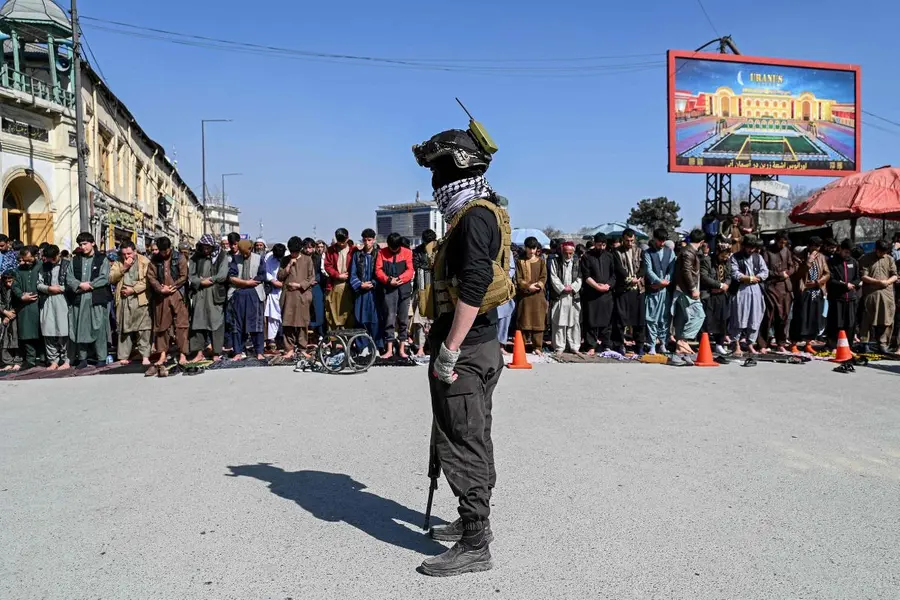
Two neighbouring countries, both Islamic, both once friends — Pakistan and Afghanistan — are now at war. And the whole world is watching nervously. But what exactly happened? Why are they fighting? And where does India stand in all this? Let us understand this step by step, in simple language.
How Did It All Start?
Pakistan and Afghanistan share a long border of 2,640 kilometres called the Durand Line. This border was drawn back in 1893 during British rule. Both countries have always had arguments over this line, but things were mostly managed through talks and truces.
When the Taliban took back control of Afghanistan in 2021, Pakistan was actually happy about it. Pakistan's then Prime Minister Imran Khan even said that the Afghan people had "broken the chains of slavery." Pakistan thought the Taliban would be friendly neighbours and cooperate with them. But that hope quickly turned into frustration.
Pakistan believes that a dangerous militant group called the Tehreek-e-Taliban Pakistan, commonly known as TTP or the Pakistani Taliban, is hiding inside Afghanistan. This group has been carrying out deadly attacks inside Pakistan — bombing markets, mosques, military bases, and police stations for years. In 2012, this very group shot schoolgirl Malala Yousafzai in the head. She survived and later won the Nobel Peace Prize. That is the kind of group Pakistan is dealing with.
On 16 February 2026, a deadly attack in the Bajaur district of Pakistan killed 11 security personnel and two civilians. Pakistan said an Afghan national was behind it. The TTP took responsibility. That was the last straw.
What Did Pakistan Do?
On 22 February 2026, Pakistan launched massive airstrikes on Taliban military bases, command centres, and weapons storage areas deep inside Afghanistan — including in Kabul, Kandahar, and Paktia. Pakistan called this Operation Ghazab lil-Haq, meaning "Righteous Fury."
Pakistan's Defence Minister Khawaja Asif openly declared it an "open war." The Taliban fought back. Explosions were heard in Kabul. Both sides claimed heavy casualties. Pakistan said it killed 133 Taliban fighters. The Taliban said they killed 55 Pakistani soldiers. Neither number has been officially confirmed by outside sources.
Why Does the Taliban Fight Back?
The Taliban are not silent either. They accuse Pakistan of sheltering fighters from ISIS, which is the Taliban's own enemy inside Afghanistan. They deny allowing TTP to use Afghan soil. Both sides blame each other. Both sides are suffering.
Countries like Saudi Arabia, Russia, and China have asked both sides to stop fighting and talk. Turkey and Qatar had helped arrange a ceasefire earlier, but it didn't hold for long. The situation remains very tense even today.
How Strong Are Both Sides Militarily?
Here the difference is huge. Pakistan has over 6,00,000 active soldiers, more than 6,000 armoured vehicles, over 400 combat aircraft, and — most importantly — nuclear weapons. Pakistan is a proper military superpower in the region.
ALSO READ | Russia steps in: Moscow moves to broker peace as Pakistan, Afghanistan enter all-out war
The Taliban, on the other hand, have around 1,72,000 fighters. They have a few aircraft and helicopters, but nobody is sure if those are even working properly. They have no real air force and no nuclear weapons. On paper, Pakistan is nearly three times more powerful. But guerrilla warfare in mountain terrain is a different game altogether. Taliban fighters are experienced fighters who have battled the US army for 20 years. That makes them dangerous even without heavy weapons.
Where Does India Stand?
India is watching this very carefully. New Delhi has officially condemned Pakistan's airstrikes inside Afghanistan, calling them a violation of Afghan sovereignty and saying civilians were harmed. India supports Afghanistan's independence and territorial integrity.
At the same time, India has made it very clear — it is not militarily involved and will not be. India firmly rejected Pakistan's claim that India is somehow behind Afghanistan's actions as a proxy.
Why will India not jump in? Because the risks are simply too high. Both India and Pakistan have nuclear weapons. Any military move by India near the border could explode into something uncontrollable. India's focus is stability, not adventure.
However, India is using this crisis diplomatically. New Delhi can now point to the world and say — look, Pakistan's decades-long support for militant groups has now turned against Pakistan itself. India is positioning itself as a responsible, peace-loving regional power.
India is also quietly keeping communication open with Russia, Iran, and Central Asian countries to make sure no extremist group uses this chaos to sneak into Indian territory.
What Does This Mean for Citizens?
This war, if it continues, can push thousands of Afghan civilians into refugee camps. Extremist groups can fill the power vacuum. China may deepen its grip over Pakistan. The region could spiral into long-term instability.
In geopolitics, patience and restraint are sometimes the most powerful weapons. That is exactly what India is choosing right now. The war next door is a warning — for everyone.
(The author is an award-winning science communicator and a Defence, Aerospace & Geopolitical Analyst)
Published: 27 Feb 2026, 05:40 pm IST
Disclaimer: Kindly avoid objectionable, derogatory, unlawful and lewd comments, while responding to reports. Such comments are punishable under cyber laws. Please keep away from personal attacks. The opinions expressed here are the personal opinions of readers and not that of Mathrubhumi.
