
US Vice President JD Vance's criticism of Israeli ministers has highlighted growing tensions between Washington and Tel Aviv over the new US-Iran agreement and the conflict in Lebanon.
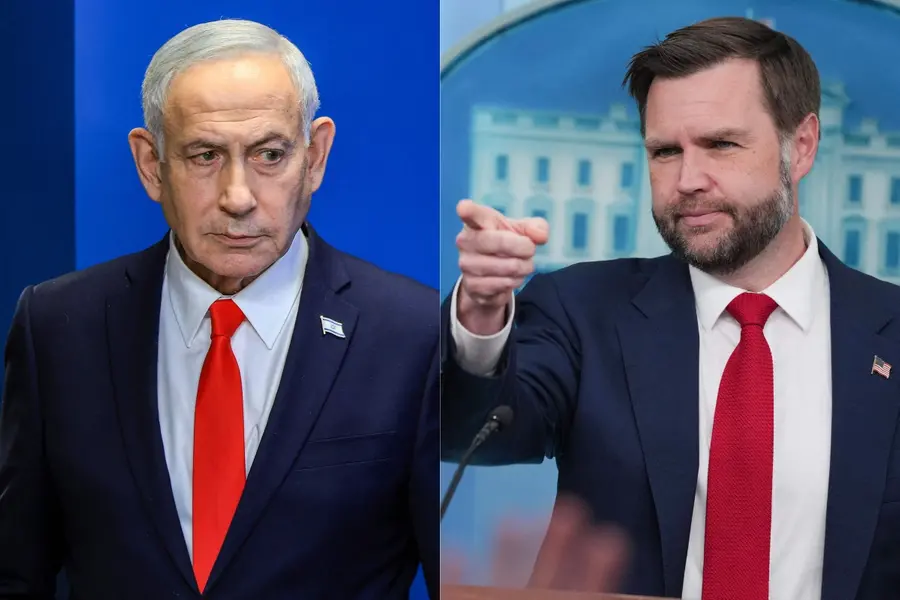
America and Israel have always been close friends. But these days, something unusual is happening between them. After Donald Trump signed a new agreement with Iran, the two old allies have started pulling in different directions, and the gap between them is slowly becoming wider.
The trouble began when US Vice President JD Vance openly criticised the Israeli government. He was upset because some Israeli leaders were speaking against Trump's deal with Iran. Vance even warned Prime Minister Benjamin Netanyahu's cabinet (the team of top ministers) not to publicly attack or insult the American government over this matter.
Also Read

Interestingly, both countries had recently fought together against Iran. But once the fighting cooled down, their goals stopped matching. What America now wants and what Israel wants are no longer the same, and that has created fresh tension.
Inside Israel too, Netanyahu is facing heavy pressure. Many Israelis feel the deal gives too much to Tehran (the capital of Iran, often used to mean the Iranian government). They believe Israel has given up too many "concessions" — meaning special favours or compromises — and that this looks like surrendering to Iran's demands.
Speaking on June 18, Vance said plainly, "This concerns me." He pointed out that certain ministers in Netanyahu's cabinet had not only criticised the agreement but had also made personal attacks against President Trump himself.
Vance then gave Israel a strong reminder. He said Israel should never forget that America is one of its most important friends, with huge influence across the world. Most of Israel's weapons and military help come through Washington. In fact, he revealed that over the past three months, around two-thirds (about 66%) of the defensive weapons protecting Israel were made in America and paid for by American taxpayers' money. His message was clear: Israel should value this support and stop treating the US President as its biggest enemy.
According to Vance, Trump is presently the only world leader who is firmly standing with Israel and showing real sympathy during this difficult time.
Vance was careful not to attack Netanyahu directly. But in an interview with The New York Times, he targeted two ministers — Itamar Ben-Gvir (National Security Minister) and Bezalel Smotrich (Finance Minister) — for speaking against the Washington–Tehran agreement. To them, Vance had a sharp question: "What exactly is your alternative plan?" He explained that not every security problem can be solved through war or by killing enemies. Sometimes, other peaceful solutions are needed.
Now, about the deal itself. It was signed on Wednesday, June 17, by Donald Trump and Iran's President Masoud Pezeshkian. Its very first point says that America, Iran, and their allies will immediately and permanently stop all military operations, including the fighting going on in Lebanon.
Here lies the problem. Israel has been attacking its northern neighbour Lebanon while battling Hezbollah (an armed militant group active there). But Israel is not part of this new agreement. Still, Israel and Lebanon have held talks, with America's Marco Rubio acting as the middleman to bring both sides closer.
Smotrich, however, was not happy. On Monday, he wrote on X (formerly Twitter) that the Israeli army (IDF) should have full freedom to push Hezbollah far away from Israel's borders. He even called the Iran deal harmful for Israel and for the whole free world.
This Israel–Hezbollah fighting kept shaking the fragile ceasefire between America and Iran, which had been holding since April 8. A few times, it almost broke the agreement completely.
On June 18, Trump posted on Truth Social (his own social media platform) that America stays committed to peace. He requested all countries and groups in the Middle East to keep supporting the talks, and said he expects a full ceasefire on every front — including between Lebanon, Hezbollah, and Israel.
Trump's frustration came out openly on June 17 at the G7 Summit (a meeting of the world's seven richest democratic nations). Speaking in Évian-les-Bains, a small French town near Switzerland, he admitted there were differences with Israel over Lebanon. He felt Netanyahu should act more carefully instead of launching a big attack every time one Hezbollah member is spotted.
Earlier, before the agreement on June 14, Trump had already criticised an Israeli airstrike on Beirut, calling it far too strong a reply to a minor attack. Vance, too, urged Israel to respect the peace process, saying it benefits Israel and the entire region.
(Girish Linganna is an award-winning science communicator and a Defence, Aerospace & Geopolitical Analyst. He is the Managing Director of ADD Engineering Components India Pvt. Ltd., a subsidiary of ADD Engineering GmbH, Germany.)
Published: 19 Jun 2026, 10:42 am IST
Related Topics
Disclaimer: Kindly avoid objectionable, derogatory, unlawful and lewd comments, while responding to reports. Such comments are punishable under cyber laws. Please keep away from personal attacks. The opinions expressed here are the personal opinions of readers and not that of Mathrubhumi.