
Israel says it is not bound by the US-Iran memorandum as Prime Minister Benjamin Netanyahu seeks to influence negotiations while military operations in Lebanon continue.
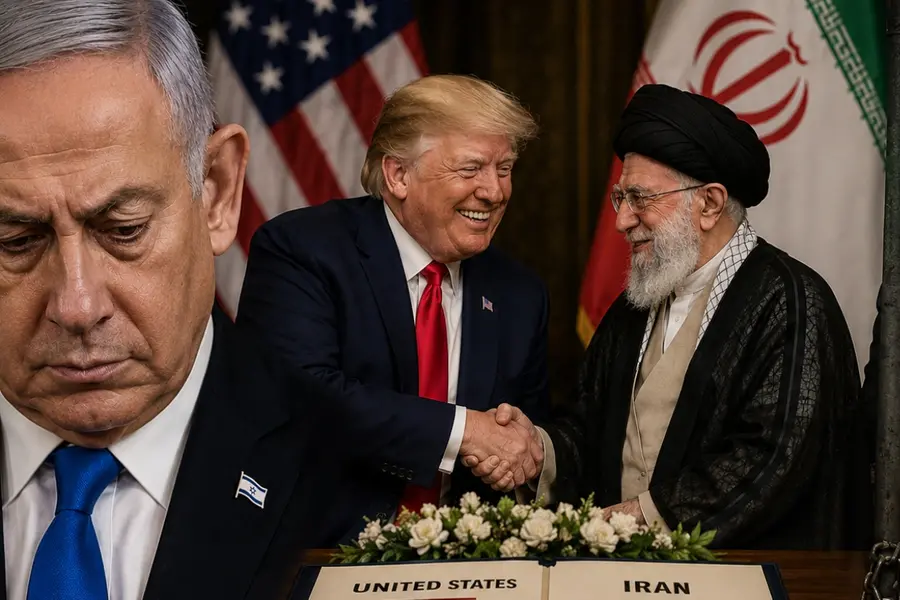
Beirut: A day after the United States and Iran signed a memorandum of understanding launching a 60-day negotiation process, Israeli Prime Minister Benjamin Netanyahu reportedly signalled that Israel does not consider itself bound by the agreement, raising fresh questions about the future of regional stability and the implementation of a proposed ceasefire in Lebanon.
US and Iran begin new negotiation process
Also Read

US President Donald Trump and Iranian President Masoud Pezeshkian have formally launched a 60-day negotiation process following the signing of a memorandum of understanding aimed at reducing tensions between Washington and Tehran.
The agreement is being viewed as a significant diplomatic breakthrough after months of regional instability and military escalation. However, several contentious issues remain unresolved, particularly concerning Iran's nuclear programme and the future of conflicts involving Iran-backed groups across the Middle East.
While Washington has presented the agreement as a path toward de-escalation, not all regional actors appear ready to embrace its terms.
Netanyahu reportedly seeks to influence final agreement
According to reports, Netanyahu has informed Trump that Israel does not consider itself bound by the memorandum. The Israeli leader reportedly remains sceptical of Iran's intentions and believes Tehran is unlikely to accept meaningful restrictions on its nuclear activities.
The report suggests Netanyahu is attempting to shape opinion in Washington by engaging conservative media figures and pro-Israel lawmakers. His objective appears to be influencing the final form of any future agreement that emerges from the ongoing negotiations.
The Israeli prime minister has long maintained that Iran poses a serious nuclear threat, repeatedly warning over the years that Tehran was nearing the capability to develop nuclear weapons. Those warnings have remained a central feature of Israeli security policy despite varying assessments from international monitoring agencies and intelligence services.
Political support for the deal grows in Washington
Despite opposition from some pro-Israel commentators, support for diplomatic engagement with Iran appears to be growing among sections of the US political establishment.
Some Republican lawmakers who previously advocated a tougher military approach towards Iran have recently welcomed the agreement. The shift highlights changing attitudes in Washington, where diplomatic solutions are increasingly being discussed as an alternative to prolonged confrontation.
The evolving political landscape could make it more difficult for Netanyahu to rally broad opposition against the negotiations, even as he continues lobbying American policymakers.
Lebanon emerges as a key point of contention
One of the most debated sections of the memorandum concerns Lebanon. The document calls for the immediate and permanent termination of military operations on all fronts, including Lebanon, and emphasises respect for Lebanese sovereignty and territorial integrity.
However, the agreement leaves several crucial questions unanswered.
Israel is not a party to the memorandum, which was signed exclusively by the United States and Iran. As a result, the mechanism through which a ceasefire would be enforced remains unclear.
The agreement also does not specify whether Iran would be required to end its support for Hezbollah, one of its most influential regional allies. Similarly, the future role of Iran-backed groups across the Middle East is largely absent from the document.
These omissions have generated uncertainty about how effectively the agreement can reduce tensions on the ground.
Israel insists security concerns remain
Israeli officials have continued to emphasise that national security considerations remain their top priority.
Netanyahu recently stated that threats to Israel persist not only from Iran but also from its regional allies. He highlighted what he described as security zones established around Israel in Gaza, Lebanon and Syria.
Israeli Defence Minister Israel Katz reinforced that position, saying Israeli forces would remain in security zones in Lebanon, Syria and Gaza for an unlimited period to protect Israeli communities from potential threats.
The comments suggest that Israel has no immediate plans to alter its military posture despite the diplomatic breakthrough between Washington and Tehran.
Israeli strikes continue in Lebanon
Military activity has continued despite the signing of the memorandum.
According to Lebanese media reports, Israeli drone and missile strikes targeted southern Lebanon on Thursday, resulting in the deaths of three people. The strikes occurred just one day after the US-Iran agreement was announced.
The continued violence highlights the challenge facing diplomats seeking to translate political agreements into lasting security arrangements. While the memorandum outlines ambitions for de-escalation, events on the ground suggest that significant obstacles remain.
Based on the report you shared, Netanyahu appears to be pursuing three main objectives:
1. Influence the final US-Iran agreement
Although the US and Iran have signed a memorandum of understanding, the actual negotiations will continue for 60 days. Netanyahu reportedly wants to shape the final deal by lobbying pro-Israel lawmakers, conservative media figures and influential voices in Washington.
His goal is to ensure that any final agreement places stricter limits on Iran's nuclear programme and does not provide Tehran with economic or political gains without significant concessions.
2. Keep military pressure on Iran's regional allies
Netanyahu has indicated that Israel does not consider itself bound by the US-Iran agreement. This means Israel intends to retain freedom of action against perceived threats from Iran-backed groups such as Hezbollah in Lebanon.
The continuation of Israeli strikes in Lebanon after the deal announcement suggests Israel is signalling that its security operations will continue regardless of ongoing US-Iran diplomacy.
3. Preserve Israel's security zones and deterrence strategy
Israeli leaders have repeatedly stated that the military will maintain security zones in Gaza, Lebanon and Syria. Netanyahu's government appears concerned that a diplomatic breakthrough between Washington and Tehran could limit Israel's ability to act against Iran's regional network.
By stressing that Israel is not a signatory to the agreement, Netanyahu is reinforcing the message that Israeli security decisions will remain independent of US-Iran negotiations.
The broader concern
Netanyahu's central concern appears to be that the agreement could ease pressure on Iran without fully addressing Israel's key demands, particularly:
- Permanent restrictions on Iran's nuclear activities.
- Limits on Iran's support for Hezbollah and other allied groups.
- Guarantees regarding Israel's security interests.
In short, Netanyahu is not necessarily trying to stop the negotiations outright. According to the report, he is trying to influence the outcome so that any final US-Iran deal aligns more closely with Israel's security priorities while preserving Israel's freedom to act militarily if it believes threats remain.
What happens next?
The next 60 days will be critical as US and Iranian negotiators attempt to transform the memorandum into a broader agreement. At the same time, Israel's efforts to influence the process could shape discussions in Washington and affect the final outcome.
Whether the negotiations can address concerns surrounding Iran's nuclear programme, Hezbollah's future role and the ongoing conflicts in Lebanon and elsewhere remains uncertain.
For now, the agreement has opened a diplomatic pathway, but the continuation of military operations and disagreements among key regional players underscore how fragile the situation remains.
Published: 19 Jun 2026, 08:58 am IST
Related Topics
Disclaimer: Kindly avoid objectionable, derogatory, unlawful and lewd comments, while responding to reports. Such comments are punishable under cyber laws. Please keep away from personal attacks. The opinions expressed here are the personal opinions of readers and not that of Mathrubhumi.