
India is reportedly exploring the acquisition of up to 200 Russian regional aircraft as airlines look for more affordable options to support rapid aviation expansion.
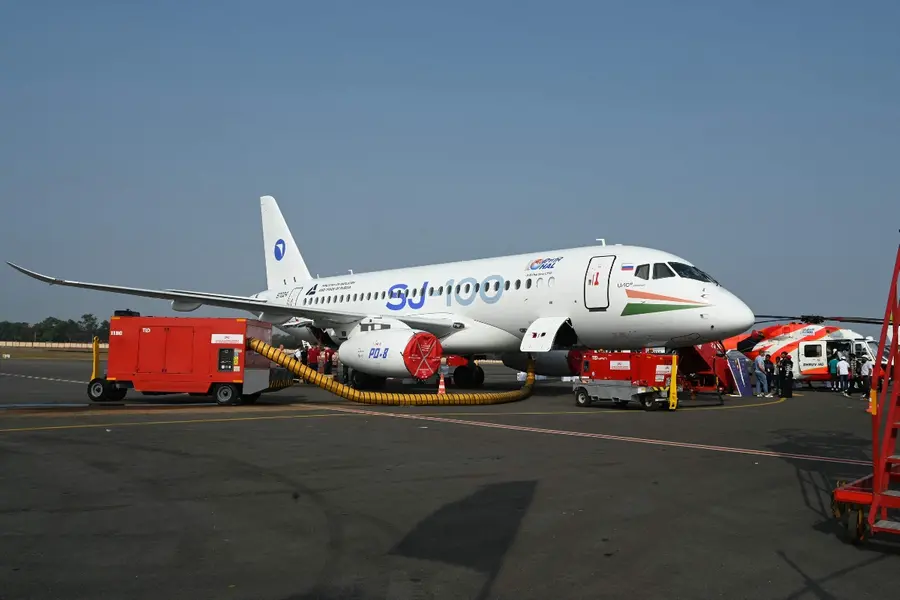
India's booming aviation market could be on the verge of a significant new partnership with Russia, as Indian airlines have reportedly expressed interest in acquiring up to 200 Russian-made regional aircraft. Beyond the aircraft themselves, the proposal could potentially lead to the manufacturing of complete passenger aircraft in India, a first for the country's civil aviation sector.
According to Vadim Badekha, Chief Executive Officer of Russia's United Aircraft Corporation (UAC), Indian airlines have shown strong interest in the SJ-100 regional jet and the Il-114-300 turboprop aircraft. Speaking ahead of the St. Petersburg International Economic Forum (SPIEF) 2026, Badekha said the potential demand from India alone could range between 100 and 200 aircraft.
The interest follows UAC's participation at the Wings India 2026 aviation exhibition in Hyderabad, where the company showcased both aircraft to Indian airlines, aviation stakeholders and government officials.
Two aircraft targeting India's regional aviation boom
The Russian aircraft are designed for the fast-growing regional aviation segment, which is expected to play a crucial role in India's next phase of aviation expansion.
The SJ-100, also known as the Superjet 100, is a twin-engine regional jet capable of carrying up to 100 passengers. The aircraft is intended for short- and medium-haul routes and can connect smaller cities with major aviation hubs.
The Il-114-300 is a 68-seat turboprop aircraft designed for regional operations, particularly on shorter routes where operating economics are critical. Turboprop aircraft are often preferred for connecting smaller airports due to their lower operating costs and ability to operate from shorter runways.
As India expands air connectivity to Tier-2 and Tier-3 cities through initiatives such as the UDAN scheme, demand for aircraft in this category is expected to rise significantly.
India's growing need for regional aircraft
India has emerged as one of the world's fastest-growing aviation markets. In 2025, the country became the world's third-largest domestic aviation market and continues to witness strong passenger growth.
The expansion of airport infrastructure reflects this growth. India had only 74 airports handling scheduled commercial flights in 2014. Today, that number has increased to around 160, with several more airports under development.
Industry forecasts suggest India will require approximately 2,200 new commercial aircraft between 2025 and 2035 to support both growth and fleet replacement requirements. Within this larger demand, the regional aircraft segment alone is expected to require between 300 and 400 aircraft over the next two decades.
Currently, India's regional aviation market is dominated by aircraft from ATR, Embraer and Bombardier. The entry of Russian aircraft would provide airlines with an additional option at a time when aircraft availability has become a growing concern globally.
Could cost become the biggest attraction?
One of the strongest selling points of the SJ-100 could be its relatively low acquisition cost.
While official pricing varies depending on configuration and support packages, industry estimates suggest the SJ-100 could be priced in the range of $30-40 million per aircraft. By comparison, an Airbus A320neo typically carries a list price exceeding $110 million, while a Boeing 737 MAX can cost more than $120 million before discounts.
Although the SJ-100 is a smaller aircraft and does not directly compete with the A320neo or 737 MAX in terms of passenger capacity, the difference highlights the affordability of the Russian jet.
For Indian airlines looking to open new routes or connect underserved cities, a lower-cost aircraft could significantly reduce capital expenditure and improve route economics. This becomes particularly important as airlines seek to expand into smaller markets where passenger volumes may not justify larger aircraft.
If production eventually takes place in India, the economics could become even more attractive through lower logistics costs, local supply chains and easier access to maintenance and technical support.
Manufacturing passenger aircraft in India
The proposed cooperation extends beyond aircraft sales.
In October 2025, UAC signed a Memorandum of Understanding (MoU) with Hindustan Aeronautics Limited (HAL) to explore licensed production of the SJ-100 in India. Badekha has previously stated that the first Superjet could be manufactured in India within three years if the project moves forward as planned.
UAC estimates that producing 20 to 40 aircraft annually in India would represent a sustainable manufacturing rate. The company has also projected potential demand of between 200 and 300 aircraft across India and neighbouring markets.
If realised, the project would represent a landmark achievement for India's aerospace sector. While India has developed military aircraft, helicopters and aerospace systems, it has never established large-scale production of a commercial passenger airliner.
The Russian manufacturer is also exploring the possibility of localising production of the Il-114-300 in India as part of broader industrial cooperation between the two countries.
Localisation and the 'Make in India'
India has consistently encouraged foreign aerospace manufacturers to establish local assembly and production facilities rather than simply exporting aircraft into the country.
A domestic production programme would support the government's Make in India initiative by creating skilled jobs, developing local suppliers and strengthening India's aerospace manufacturing ecosystem.
The benefits would extend beyond production. Local manufacturing would likely create opportunities in maintenance, repair and overhaul (MRO), engineering services, pilot training, component manufacturing and aftermarket support.
In a separate development, UAC has already signed a preliminary agreement with Indian private aviation company Flamingo Aerospace for the supply of six Il-114-300 aircraft, indicating that discussions with Indian industry are moving beyond initial exploratory stages.
Certification remains major challenges
Despite the optimism surrounding the project, several important challenges remain.
The SJ-100 is currently progressing through certification with Russian aviation authorities following a major redesign programme that increased the use of domestically manufactured Russian systems and components. Certification remains a critical milestone before large-scale commercial operations can begin.
Beyond certification, Indian airlines will closely evaluate factors such as aircraft reliability, maintenance costs, spare parts availability, financing options and long-term operational support.
Another challenge will be building confidence among airlines, lessors and financiers, many of whom typically prefer aircraft with established global support networks and proven operational track records.
The success of the programme will therefore depend not only on competitive pricing but also on the establishment of a robust support ecosystem that can meet airline expectations throughout the aircraft's operational life.
Will SJ-100 be a game-changer for India?
While firm aircraft orders have yet to be announced, the reported interest in up to 200 Russian aircraft highlights the scale of India's aviation ambitions and the opportunities available to global manufacturers.
More importantly, the discussions point to a broader shift in India's aviation strategy from being primarily a buyer of aircraft to potentially becoming a manufacturer of commercial passenger aircraft.
If the proposed partnerships move forward and local production becomes a reality, the project could mark one of the most significant milestones in the history of India's civil aviation industry, while also creating a new chapter in aerospace cooperation between India and Russia.
Published: 04 Jun 2026, 02:02 pm IST
Related Topics
Disclaimer: Kindly avoid objectionable, derogatory, unlawful and lewd comments, while responding to reports. Such comments are punishable under cyber laws. Please keep away from personal attacks. The opinions expressed here are the personal opinions of readers and not that of Mathrubhumi.
