
The Ministry of Defence has stated that the 12 aircraft will have 62.6% indigenous content, supported by the localisation of a number of components through the Indian defence industry. More Indian-made components mean a larger role for domestic manufacturers, suppliers and engineering companies.
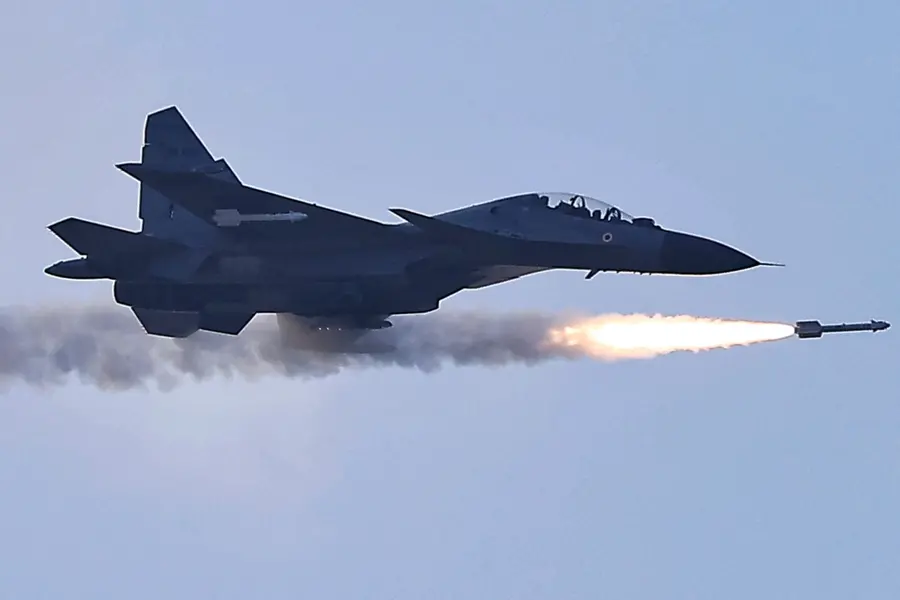
The return of Sukhoi production to Nashik is about more than 12 new fighter jets. It is also a move to strengthen India’s defence manufacturing, indigenous supply chains and long-term support for one of the IAF’s most important combat aircraft.
India is taking another step towards strengthening its fighter aircraft fleet, with Hindustan Aeronautics Limited (HAL) reviving Su-30MKI production at its Nashik facility in Maharashtra.
Also Read

The move comes at a time when the Indian Air Force (IAF) is facing pressure to increase the number of operational fighter aircraft while also keeping its existing fleet effective for longer. The Su-30MKI remains one of the most important aircraft in the IAF’s combat fleet, making both new production and modernisation of the aircraft strategically important.
The Ministry of Defence signed a contract with HAL in December 2024 for 12 additional Su-30MKI aircraft at a cost of about ₹13,500 crore, including taxes and duties. The aircraft are to be manufactured at HAL’s Nashik division and will have an indigenous content of 62.6%.
A production line returns
The Nashik facility has a long history with the Su-30MKI. HAL began manufacturing the aircraft there under licence and delivered its first locally produced Su-30MKI to the IAF in 2004.
The facility ultimately produced 222 Su-30MKI aircraft, with the final batch completed around 2019–20. After the earlier production programme ended, Nashik increasingly focused on repair and overhaul activities as well as production of other aircraft.
The return of Su-30MKI production, therefore, gives the facility a fresh role in India's fighter aircraft ecosystem.
Importantly, Nashik is not simply an aircraft assembly location. The facility has also developed experience in supporting the Su-30MKI fleet through repair and overhaul. HAL established a dedicated Su-30MKI repair and overhaul facility at Nashik in 2014.
This combination of manufacturing and maintenance capability could become increasingly valuable as India looks at the complete lifecycle of its fighter fleet.
Why Su-30MKI matters
The Su-30MKI is a twin-engine, multirole fighter and forms a major part of India's combat aircraft capability. India has already invested heavily in the aircraft and its supporting infrastructure. That makes extending the life and improving the capability of the existing fleet an important part of the IAF's broader modernisation strategy.
The new aircraft will add to the fleet, but the larger challenge is ensuring that the existing Su-30MKI aircraft remain operationally relevant for many years. This is where the planned upgrade programme becomes important.
A major upgrade
India is also working on an extensive modernisation programme for the existing Su-30MKI fleet. The programme has been estimated at around ₹60,000 crore and is aimed at improving the aircraft's sensors, avionics, electronic warfare capabilities and weapons systems.
HAL has been working as the lead system integrator for the indigenous upgrade programme. The proposed modernisation includes systems such as an indigenous mission computer, improved sensors, AESA radar, electro-optical/infrared systems, an improved electronic warfare suite, indigenous weapon-control systems, larger displays and sensor-fusion capabilities.
The upgrade is significant because it can improve the capability of the existing fleet without waiting for entirely new fighter platforms to replace every aircraft. In other words, India is pursuing two tracks at the same time, adding new aircraft and making the existing aircraft more capable.
One of the most important aspects of the new Su-30MKI production programme is the increase in indigenous content. The Ministry of Defence has stated that the 12 aircraft will have 62.6% indigenous content, supported by the localisation of a number of components through the Indian defence industry.
More Indian-made components mean a larger role for domestic manufacturers, suppliers and engineering companies. Over time, this can help India develop deeper capabilities in areas such as avionics, structures, components, systems and maintenance.
For the aerospace industry, that is particularly important because a fighter aircraft programme creates demand throughout its lifecycle. Components need to be inspected, repaired, replaced and upgraded. Engines require maintenance and overhaul. Avionics and electronic systems need regular upgrades.
The bigger picture
The Su-30MKI programme also connects with India's wider effort to strengthen indigenous support for the aircraft.
In September 2024, the Ministry of Defence signed a ₹26,000-crore contract with HAL for 240 AL-31FP aero engines for the Su-30MKI fleet. The engines are being manufactured by HAL's Koraput division, with deliveries planned over eight years. The programme is also expected to involve Indian MSMEs and private-sector companies and increase indigenous content in engine production and repair, and overhaul activities.
This shows why the Su-30MKI programme is becoming more than an aircraft-production exercise.
India is gradually building a wider ecosystem around the fighter covering aircraft manufacturing, engines, components, upgrades, repair and overhaul and supply-chain support.
Nashik's changing role
The revival of Su-30MKI production also comes as the Nashik facility is transforming. The plant has historically been associated with Soviet and Russian-origin fighter aircraft, including the MiG-21 and Su-30MKI. At the same time, it has increasingly become part of India's move towards manufacturing indigenous platforms.
The facility has also been involved in Light Combat Aircraft production, giving Nashik a broader role in India's military aviation manufacturing network.
India cannot depend on a small number of manufacturing centres if it wants to significantly expand domestic aircraft production. Building capabilities across different locations can create a larger industrial base and provide more opportunities for private-sector suppliers and smaller aerospace companies.
Beyond 12 aircraft
The 12 additional Su-30MKI aircraft may appear modest when viewed purely as a fleet-strengthening measure. But their importance is much larger when seen as part of India's broader defence aerospace strategy. The programme combines new aircraft production, higher indigenous content, fleet modernisation, engine manufacturing and MRO capability.
For IAF, strengthening the availability and capability of a critical fighter fleet is the immediate objective and for HAL and India's aerospace industry, the longer-term objective is developing the ability to support a complex combat aircraft throughout its operational life with a growing domestic industrial base.
The Su-30MKI may have originated from a foreign design and licence-production programme, but its future in India is increasingly being shaped by Indian manufacturing, engineering, upgrades and maintenance capabilities.
That could ultimately be the most important outcome of Nashik's production-line revival, not simply 12 more fighters, but a stronger ecosystem capable of keeping India's existing and future combat aircraft flying, relevant and operational for decades.
Published: 11 Aug 2026, 04:58 pm IST
ABOUT THE AUTHOR
Related Topics
Disclaimer: Kindly avoid objectionable, derogatory, unlawful and lewd comments, while responding to reports. Such comments are punishable under cyber laws. Please keep away from personal attacks. The opinions expressed here are the personal opinions of readers and not that of Mathrubhumi.