
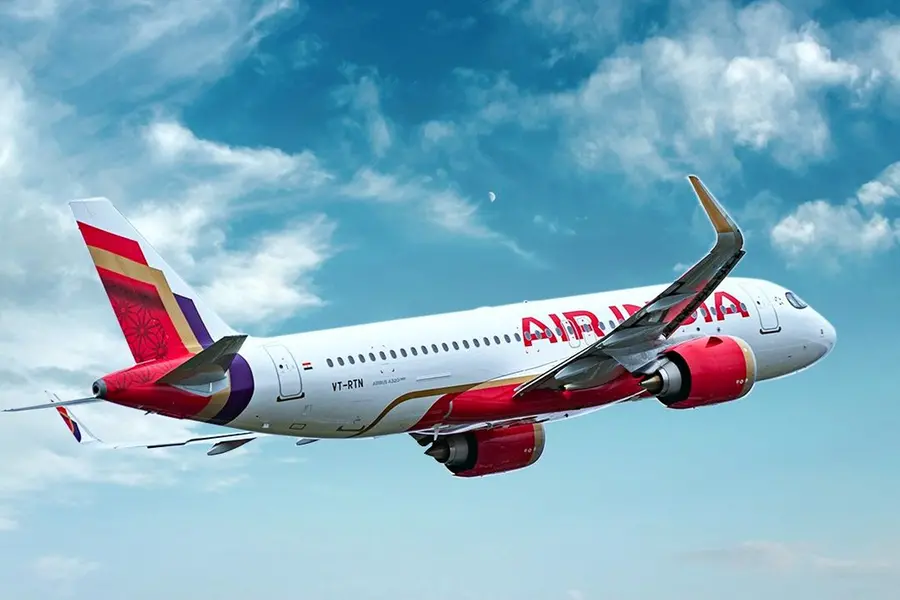
Air India was in shambles, neck-deep in debt when the Tata Group brought the airline from Indian government in January 27, 2022, just as the scars of COVID-19 pandemic were receding.
In the first year of take-over the airline restored its grounded aircraft and hired new talent. For the airline, the first year was all about making structural changes and fixing the basics. Once the foundation was established, the airline accelerated the process of making India into a world-class airline.
Also Read

Air India unveiled its five-year transformation plan, Vihaan.AI, on September 15, 2022. The plan is focused on five main areas: customer experience, robust operations, talent development, industry leadership, and commercial efficiency. Vihaan.AI is intended to turn Air India into a world-class airline with an Indian heart.
To prove its point, Air India placed a historic aircraft order of 470 aircraft in February 2023 at Paris Air Show and a new brand identity was unveiled in August 2023.
Air India’s 5-year transformational plan
However, Tata faced certain very basic core issues like flight delays on long-haul routes, broken seats, non-functional in-flight entertainment systems in 777s and 787s. The core areas were identified, it was impossible to fix those seats and IFE systems as manufacturers had stopped its production. The only visible solution was refurbishment of its legacy aircraft, and that’s exactly what the Tata did. Steadily, Tata fixed small parts, panels and assemblies manufactured from Tata Technologies much before the actual revamp started.
Then came the historic launch of Vihaan -- Air India’s 5-year transformational plan. This involved starting a five-year roadmap Vihaan.AI -- Sanskrit for dawn of a new era. The immediate focus was on fixing basics (Taxiing Phase) and then becoming a global leader (Take Off & Climb). It will also strive for at least 30 per cent domestic (8 per cent now), bigger international pie.
In April 2023, the airline achieved its first three goals and started its Phase II – Vihaan 2.0 focussing on developing the platforms, processes and systems needed to build toward excellence.
Commenting on the conclusion of the Taxi phase, Campbell Wilson, chief executive and managing director, Air India said: "The first six months of our transformation journey has engaged and united Air Indians behind a common cause and made great strides in tackling many issues that had built up over the years. During this Taxi phase, we have also come a long way in establishing foundations for growth. Our record-setting aircraft order, the commitment of $400m to completely refurbish existing aircraft, the investment of $200m in new IT, and the recruitment of literally thousands of staff are but a few of the significant investments being made to restore Air India to the upper echelons of global aviation."
These investments bear fruit as the airline moves into its Take Off phase, Wilson said.
Transformation Process Phase 2: Consolidation
The second phase focused on building the right platforms and will also witness the consolidation of the group airlines -- AirAsia India and Air India Express. Vistara will also be merged with Air India following the grant of regulatory approval. The development of a world-class training academy will take shape as also the future direction and configuration of the airline’s line and base maintenance.
Fast-forward to today, upon completion of six months into Vihaan 2.0, Wilson has expressed satisfaction in his recent letter to the airline staff. He wrote: 'Transformation plan is bearing fruit as the airline has expanded its network and managed to cut down its losses.'
Air India Takes Significant Strides
Air India's market share in domestic routes increased from 24 per cent to 27 per cent on a year-on-year basis in FY 2024. On international routes, the airline's share grew from 21 per cent to 24 per cent in 2024 due to network expansion and service improvements.
In the past two years, the airline launched 35 new routes and added eleven new destinations with induction of new aircraft.
The current operational fleet size of Air India is 142 aircraft, which includes six new A350s, 36 leased aircraft and 85 of Air India Express, which provides for 35 new B737s.
Air India added 5,000 new crew members and 4,000 new employees across departments, reducing the average age at the airline from 54 to 35.
Air India more than halved its net loss to Rs 4,444 crore during in FY24, from Rs 11,388 crore recorded in FY23, as per its annual report. Its standalone revenues jumped 24 per cent to Rs 38,812 crore from Rs 31,377 crore posted in FY23.
Just as Air India announced completion of second year of transformation plan, Wilson said: "When we consider that the financial year in question covered only the early part of our transformation programme, before most of the initiatives we have been working on were implemented, these early results should encourage us that the effort is bearing fruit. Work has of course continued apace in the six months since the financial year ended, and the strong momentum has continued."
Going ahead, Air India will soon merge Vistara and upgrade all its narrow-body aircraft by mid-2025.
Air India still has a long way to go
Overall, the airline has achieved everything that it intended to achieve in the first two phases of its transformational journey under Vihaan. But it still has a long way to go.
We still read random social media posts about unhappy passengers complaining about Air India’s worn-out-seats, broken IFEs and bad catered food. Just recently a passenger’s post on Air India’s long haul Chigaco-Delhi flight went viral which explained his bad experience on the flight. The airline promptly did some damage control by refunding his entire flight fare. So, yes things are not completely perfect, but the airline is working hard to make things right for its passengers.
The airline has promised retrofit of its widebody aircraft as soon as the seat vendors start supplying seats. The airline also claims that it has restored its First and Business Class In-Flight Entertainment (IFE) to over 99 per cent and Economy Class IFE to 90 per cent for the legacy fleet. Also, it has restored 75 per cent of unserviceable seats across legacy widebody aircraft.
Running an airline is not an easy business, especially in India, where airlines are already operating on wafer-thin margins. Air India is doing the best it can. It only expects its passengers to be a bit more patient with them as they promise to deliver a world-class product for the passengers in a few more months from now.
Published: 22 Sept 2024, 10:00 am IST
Related Topics
Disclaimer: Kindly avoid objectionable, derogatory, unlawful and lewd comments, while responding to reports. Such comments are punishable under cyber laws. Please keep away from personal attacks. The opinions expressed here are the personal opinions of readers and not that of Mathrubhumi.