
Pakistan, Saudi Arabia and Turkiye have signed the Makkah Joint Defence Agreement. Here's what the pact says, why it matters and what changes.
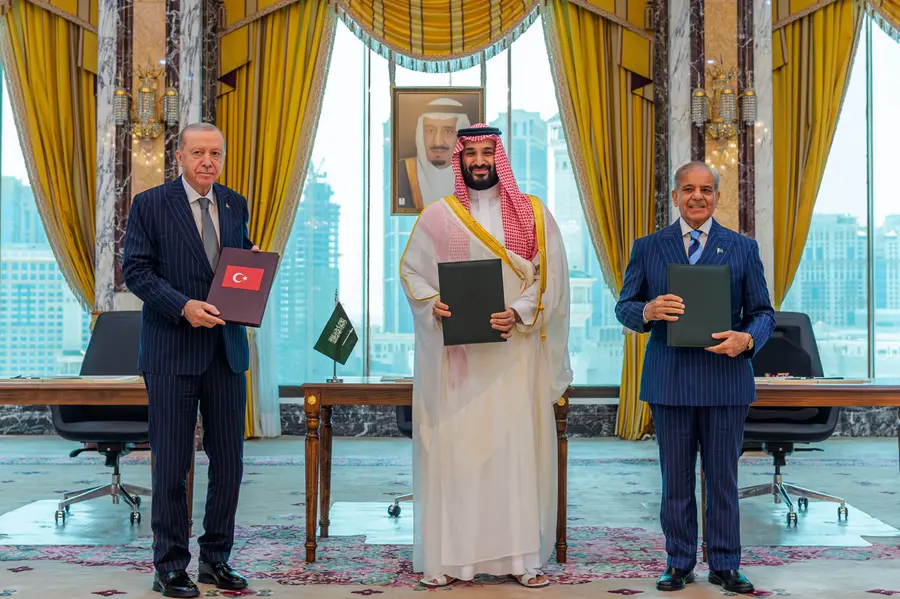
Pakistan, Saudi Arabia and Turkiye have signed a new trilateral defence pact that commits the three countries to treat an armed attack on any one of them as an attack on all. Called the Makkah Joint Defence Agreement, the deal marks one of the most significant security arrangements among the three nations and comes as tensions continue to rise across West Asia.
The agreement was signed on Friday by Pakistan Prime Minister Shehbaz Sharif, Saudi Crown Prince Mohammed bin Salman and Turkish President Recep Tayyip Erdogan after the Makkah Al-Mukarramah Summit for Joint Defence held at Al-Safa Palace in Mecca.
What does the agreement say?
At the heart of the agreement is a collective defence commitment.
According to the joint statement, any armed attack against Pakistan, Saudi Arabia or Turkiye will be regarded as an attack against all three countries. The pact is intended to strengthen collective deterrence against aggression while expanding defence cooperation in all areas.
Beyond the military commitment, the three governments said the agreement reflects their shared goal of promoting regional peace, security and stability while strengthening long-term strategic cooperation.
Why is the deal significant?
The timing of the agreement is as important as its contents.
The pact comes amid growing instability in West Asia, where the conflict has expanded beyond Gaza to affect multiple fronts, including the Red Sea and the Bab al-Mandeb Strait. The security of these waterways has become a major concern because they are among the world's busiest routes for global trade and energy supplies.
Against this backdrop, countries in the region have been looking to strengthen defence coordination and improve their ability to respond to potential security threats.
The agreement also brings together three strategically important countries with different strengths:
- Pakistan, the only nuclear-armed Muslim-majority country.
- Saudi Arabia, home to Islam's holiest sites and one of the world's largest oil exporters.
- Turkiye, a NATO member with a significant regional military presence.
Together, the three countries say they aim to deepen defence cooperation while presenting a stronger collective security framework.
How does it fit into recent regional developments?
The agreement follows a series of defence and security initiatives involving the three countries.
Last week, Saudi Arabia proposed a Multinational Maritime Defence Coalition (MMDC) to protect commercial shipping and energy supply routes through the Red Sea and the Bab al-Mandeb Strait after Saudi vessels were attacked by Iran-backed Houthi rebels in Yemen. Pakistan was among 14 countries that backed the proposal.
Pakistan has also said it is working to bring the United States and Iran back to the negotiating table under the Islamabad Memorandum of Understanding signed on June 18.
At the same time, tensions between Turkiye and Israel have continued to grow in recent months, adding another layer to the region's evolving security landscape.
Builds on an earlier Pakistan-Saudi defence pact
The new trilateral agreement also expands on defence cooperation that already existed between Pakistan and Saudi Arabia.
In September last year, the two countries signed the Strategic Mutual Defence Agreement, under which an attack on either nation would be treated as an act of aggression against both.
That framework led to increased defence cooperation, including the deployment of Pakistani military personnel and aircraft to Saudi Arabia for joint training and security support.
By bringing Turkiye into a similar arrangement, the latest agreement broadens that cooperation into a three-country security partnership.
What the pact could mean for the region?
The joint statement says the agreement is guided by the longstanding historical ties, shared strategic interests and defence cooperation among the three countries.
During the summit, the leaders reviewed bilateral relations and discussed regional and international issues of mutual interest.
Prime Minister Shehbaz Sharif is on a three-day visit to Saudi Arabia until August 8, accompanied by Chief of Defence Forces Field Marshal Asim Munir, Deputy Prime Minister and Foreign Minister Ishaq Dar, Defence Minister Khawaja Asif and other senior officials.
While the agreement does not announce immediate military action or the creation of a joint force, it establishes a formal collective defence framework that could shape future military cooperation and regional security coordination among Pakistan, Saudi Arabia and Turkiye.
With AP inputs
Published: 07 Aug 2026, 08:19 pm IST
ABOUT THE AUTHOR

Related Topics
Disclaimer: Kindly avoid objectionable, derogatory, unlawful and lewd comments, while responding to reports. Such comments are punishable under cyber laws. Please keep away from personal attacks. The opinions expressed here are the personal opinions of readers and not that of Mathrubhumi.