
Tharoor defends Nehruvian ideals in an exclusive interview, discussing his vision for India and comparing it with PM Modi`s policies
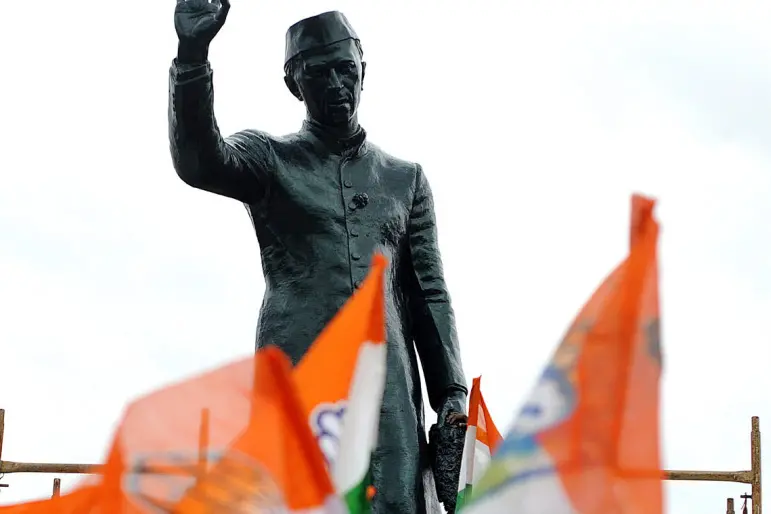
Shashi Tharoor has been in the eye of a storm for speaking his mind on Operation Sindoor and PM Narendra Modi's foreign policies. His candid remarks have sparked intense debates within political circles, drawing both support and criticism from various factions. But he says in an interview to Mathrubhumi that he has never given up on the Nehruvian legacy. Nehru's vision of a pluralistic secular democracy remains core to his ideological footing. Excerpts from the interview:
You started your political journey inspired by Rajaji's visions and perspectives. It is a known fact that Rajaji was highly critical of Nehru. What made you a Nehruvian despite this background?
I have often said that I am a fan of Nehru, but not an uncritical one. My political journey did indeed begin with a deep respect for C. Rajagopalachari: his intellectual integrity was unmatched, and his warnings about the stifling 'License-permit Quota Raj' were remarkably prescient. However, while I believe Rajaji was right about the economy, Nehru was right about the soul of India. In those fragile early years, Nehru's vision of a pluralistic, secular democracy was the essential glue that prevented our fractured nation from coming apart at the seams. I am a Nehruvian today because I believe the institutional foundations he laid are the only ones capable of sustaining an India that belongs to all of us.
Also Read

What is the most important feature that marks Nehru as the architect of India in contrast with other towering personalities like Subhash Chandra Bose, Sardar Patel, and Rajaji?
If you look at the towering figures of our independence, each was indispensable. Patel gave us the map; Bose gave us the energy; Rajaji gave us the dissent. But Nehru gave us the political culture. His most singular achievement was the institutionalization of democracy. In an era where post-colonial leaders across the globe were declaring themselves 'Presidents for Life,' Nehru spent seventeen years painstakingly nurturing parliamentary habits. He treated the Leader of the Opposition with a respect that is, alas, missing today. He subordinated the military to civilian rule-a feat for which we should be eternally grateful when we look at our neighbors.
You have penned the biographies of both Nehru and Ambedkar. There is an observation that Ambedkar was the epitome of everything that Nehru didn't represent in terms of the fight for social justice that germinated from the conflict between the elite and the subaltern. Do you concur with the view that Nehru failed to address the glaring gap between political democracy and social democracy?
In my biography of Dr. Ambedkar, I did not shy away from the tension between the 'elite' reformer and the 'subaltern' revolutionary. It is true that Nehru's approach was often seen as top-down and paternalistic, while Ambedkar spoke from the lived reality of the oppressed. However, I don't believe Nehru 'failed' to address the gap; rather, he was constrained by the conservative elements of his own party. His relentless push for the Hindu Code Bill was a profound attempt to bring social justice to the fore. I see Nehru and Ambedkar as two sides of the same coin: Ambedkar gave us the 'software' of rights, and Nehru built the 'hardware' of the state to protect them.
The most common complaint from the right wing against Nehru is that he turned a blind eye towards the Hindu ethos and sentiments in his pursuit of modern India. They raise the critique that Nehru wanted the Somnath temple to be a relic of the past and not a living place of worship. Nehru knew the legacy of ancient India but it didn't reflect on his world view. What is your take?
This critique stems from a fundamental misunderstanding of Nehru's secularism. He was not anti-religious; he was state-neutral. When he opposed the President's official participation in the Somnath ceremony, it wasn't because he wanted it to be a 'relic,' but because he believed that in a land of many faiths, the government should not be seen as the patron of any one religion. His 'Discovery of India' - both the book and my own journey through his writings - tells me that Nehru loved our ancient heritage deeply. He simply feared that state-sponsored religious revivalism would alienate our minorities and derail the modernization India so desperately needed.
There were many spectacular leaders in Congress apart from Nehru. But they were denied their due after the Nehru family became the centre of power. The allegation is that the Nehru family turned Congress into their fiefdom. Do you think that this was one of the fundamental issues that gave the right wing the most significant tool to fight against the grand old party?
I have been quite candid about this: the trend toward dynastic politics in India is a concern I take seriously. Nehru was not in favour: he himself told an American journalist that 'I cannot rule from the grave'. While I defend the immense contribution and sacrifices made by the Nehru-Gandhi family, I acknowledge that our society is still inclined to reverence for a single leader and his family, as we have seen not only in the Congress but in many other parties, including Shiv Sena, DMK, Samajwadi, NCP and others. So to frame the political contest as 'meritocracy versus dynasty' is to ignore the social realities of India and how widespread the phenomenon is of careers literally being transferred down the gen pool! This is precisely why I have advocated for internal reforms and organizational elections in all parties. We in the Congress must reclaim our legacy as a party of merit and ideas, which was, ironically, the very essence of the Congress under Nehru's own leadership.
Nehru was alleged to be carried away by his haughty, imperious temperament. Was this his Achilles' heel?
Nehru was, by his own admission, a man of a hot temper and a sometimes 'imperious' temperament. He could be haughty and occasionally impatient with those he deemed intellectually inferior. Was this his Achilles' heel? Perhaps. But his greater qualities of head and heart, his access to ordinary citizens, his fondness for children and his sense of accountability to both Parliament and the Chief Ministers, all outweigh this relatively inconsequential flaw.
What would have been the history of India if Nehru were not the first Prime Minister?
It is my firm conviction that without Nehru's 'long innings' as our first Prime Minister, India would likely have gone wrong in multiple possible ways. We could have fragmented, as Yugoslavia did after Tito. We could have easily become a larger version of Pakistan - succumbing to military coups - or a collection of 'Stans' divided by language and religion. Nehru's seventeen years gave the 'Idea of India' enough time to take root in the soil. He gave us the time to become a nation.
Nehru could see through the various manifestations of authoritarianism and majoritarianism. He was unequivocal in his opposition against nazism and fascism. How do you place yourself in the larger fight against the Modi regime against the backdrop of this Nehruvian legacy?
I see myself as a foot soldier in the defense of the inclusive India that Nehru articulated. The current regime represents a shift toward a 'majoritarian nationalism' that defines belonging by faith. Nehru's legacy is my primary intellectual arsenal. When I speak in Parliament against the erosion of institutional independence, I am channeling the spirit of a man who believed that the Prime Minister is merely the 'first among equals' and that the state belongs to the man in the last row as much as the man in the front.
The Nehru Govt dismissed the EMS ministry way back in 1959. Why did Nehru take this undemocratic decision that tarnished his image as one of the most celebrated democrats in the world?
I have called this a 'rare and regrettable lapse' in Nehru's democratic record. The dismissal of the democratically elected Communist government in Kerala was a pity, even though it came in response to an intense popular agitation that many argued had made the state ungovernable. It was a moment where political calculations may be said to have triumphed over democratic principles. It serves as a reminder that even the greatest among us are susceptible to the pressures of their time.
Will the BJP regime succeed in erasing the memory and legacy of Nehru?
They can chip away at the stone, rename the schemes, and rewrite the textbooks, but they cannot erase Nehru. Every time an Indian satellite reaches orbit, every time an IIT graduate succeeds abroad, every time we take refuge in our possession of a nuclear deterrent or generate electricity from an atomic plant, and every time a citizen casts a vote in a free election, Nehru's legacy is reaffirmed. You cannot erase the man who built the very stage upon which you are currently standing. His footprints are not just on the monuments; they are in the very DNA of our Republic.
Published: 08 Feb 2026, 10:16 am IST
Related Topics
Disclaimer: Kindly avoid objectionable, derogatory, unlawful and lewd comments, while responding to reports. Such comments are punishable under cyber laws. Please keep away from personal attacks. The opinions expressed here are the personal opinions of readers and not that of Mathrubhumi.