

Explore the crisis at the Archaeological Survey of India. Is ASI upholding history or succumbing to political agendas? Case studies like Keeladi and Adichanallur reveal deep-seated issues
The Archaeological Survey of India (ASI), an institution meant to be the custodian of India’s rich history, is embroiled in a significant crisis of credibility. This isn't just about a few misplaced artifacts or a delayed report, which would be common enough in any bureaucratic institution under the government of India; it's about the very integrity of archaeological practice and its susceptibility to political agendas.
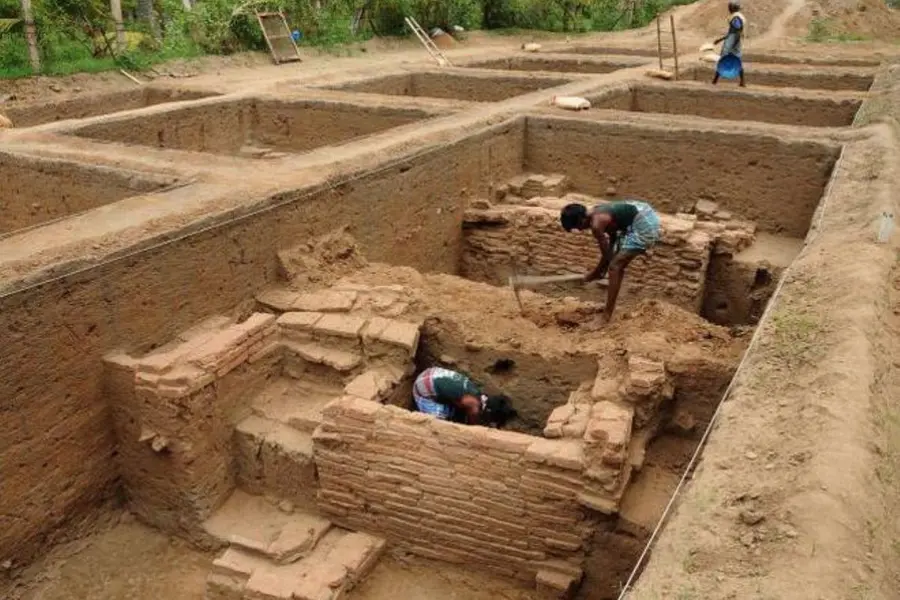
The recent controversy surrounding archaeologist K Amarnath Ramakrishna and the Keeladi excavation in Tamil Nadu lays bare this deep-seated issue. The excavation at Keeladi, which began in 2014 under Mr Ramakrishna's leadership, was hailed as a monumental discovery. It unearthed a sophisticated, literate urban society which predated what we know of the Indus Valley Civilization, and provided crucial evidence to bridge the historical gap between the Iron Age and the Early Historic Period.
However, the project took a dramatic and questionable turn when Mr Ramakrishna was abruptly transferred to Assam in 2017. This transfer, as noted by scholars Swarati Sabhapandit and C P Rajendran, who have written about the controversy, was widely perceived as an attempt to undermine the findings. Some people were said to be unhappy that a site in South India had acquired a historicity and a level of civilizational antiquity hitherto understood to be the preserve of the North.
Worse, following Mr Ramakrishna’s transfer, the ASI controversially claimed there were no significant findings at the site and halted the third phase of excavation. This forced the Madras High Court to intervene, transferring the site to the Tamil Nadu State Department of Archaeology, which has since unearthed thousands more artifacts, further substantiating the importance of the site – and casting serious doubt on the professional integrity of those at the ASI who had taken the earlier decision.
Even after Mr Ramakrishna returned to Tamil Nadu in 2021 and submitted a report on the initial phases, the ASI requested a revision, a move that critics suggest was aimed at downplaying the significance of the findings. Sabhapandit and Rajendran argue that this episode "underscores the politics in archaeological practice and reflects a credibility crisis facing the ASI."
The Union government's defence—that a single set of findings cannot substantiate new historical narratives without broader validation—is a valid principle of scientific inquiry. However, Sabhapandit and Rajendran point out the glaring inconsistency in the ASI's conduct. A similar pattern of neglect and delay was seen with the Adichanallur and Sivagalai sites in Tamil Nadu, where it took years and court intervention to publish findings on Iron Age artifacts.
In stark contrast to its treatment of Keeladi, the ASI's approach to an excavation in Rajasthan took a completely different, and arguably uncritical, turn. The discovery of an ancient paleochannel was quickly linked to the mythical Saraswati River mentioned in the Rig Veda, and a report even claimed connections to the "Mahabharata period."
This embrace of mytho-historical narratives, while entirely in keeping with the political agenda of some in the ruling establishment, is considered by objective scholars to be antithetical to the principles of scientific knowledge production. The ASI's selective rigour demonstrates a "trap of methodological nationalism," where it prioritizes a singular, state-sanctioned vision of India’s past over objective scholarship.
The irony is that others have argued the case for a southern origin of Indian civilization—rather than the traditionally accepted Indus Valley genesis—and the ASI has no reason to be close-minded about it. One book on this subject, The Beginnings of Civilization in South India by Clarence Maloney, challenges the mainstream narrative that Indian civilization began in the northwest with the Harappan (Indus Valley) culture. Instead, he posits that early urban centres with features like kingship, organized religion, and written script emerged in coastal Tamil Nadu, influenced by maritime trade with Sri Lanka and Southeast Asia. He draws on early Tamil and Ceylonese inscriptions and literature to support the idea that southern India had its own trajectory of civilizational development, independent of the Indus Valley.
In Journey of a Civilization: Indus to Vaigai, published in December 2019 by the Roja Muthiah Research Library in Chennai, R Balakrishnan, a retired Indian Administrative Service (IAS) officer who stepped down in 2018, proposes a Dravidian foundation for the Indus Valley Civilization, challenging the mainstream view that Indian civilization began solely in the northwest. He argues for a civilizational continuum between the Indus Valley and the ancient Tamil regions of the south, particularly the Vaigai river valley. The book draws on linguistic, archaeological, and literary evidence, including the Sangam corpus, to suggest that Tamil traditions may have deep roots connected to the Indus people. It also highlights migrations and cultural exchanges that bridged the spatial and temporal gaps between these regions. This work has been praised for offering a fresh lens on Indian prehistory and for attempting to bridge north-south civilizational narratives. If anything, the Keeladi excavations appear to confirm Balakrishnan’s thesis.
If you’re intrigued by alternative histories and cultural continuities, these books are compelling reading. Why does the Archaeological Survey ignore their evidence and arguments in dismissing the Keeladi findings? Can it be that the ASI leadership is not acting professionally but politically in its decisions? If so, is that what ASI should be about?
The issues plaguing the ASI are well-documented by scholars. The institution's closed internal review system and reluctance to publish findings in academic platforms hinder transparency and scholarly accountability. As Sabhapandit and Rajendran note, institutions in countries like Germany, France, and Japan regularly publish their research in academic journals, inviting global scrutiny and engagement. India, which rightly aspires to be seen at par with the best in the world, should do no less. Instead, the ASI has taken a retrograde approach, bringing discredit upon itself.
The structural problems are also not new. Scholars like Ashish Avikunthak have highlighted issues such as arbitrary transfers and inadequate infrastructure. More than two decades ago, Supriya Verma and Jaya Menon criticised the Ayodhya excavation project for its lack of scientific integrity. The ASI's continued reliance on outdated methods, as pointed out by Jürgen Neuß and Dilip Kumar Chakrabarti a quarter of a century ago, further impedes holistic interpretation.
The credibility crisis facing the ASI is a symptom of a larger problem: the erosion of its institutional autonomy and its increasing subservience to nationalistic fervour.
To restore its legitimacy, the ASI needs comprehensive reforms, greater financial autonomy, and a commitment to a robust, scientific framework that embraces the plurality of India's historical past, rather than seeking to enforce a singular, politically convenient narrative. It’s time that the government told them that India would gain far more from an ASI that is respected worldwide for its findings, than one obsessed with imagining what would please its masters.
Published: 13 Oct 2025, 10:28 am IST
ABOUT THE AUTHOR
Related Topics
Disclaimer: Kindly avoid objectionable, derogatory, unlawful and lewd comments, while responding to reports. Such comments are punishable under cyber laws. Please keep away from personal attacks. The opinions expressed here are the personal opinions of readers and not that of Mathrubhumi.