

Shashi Tharoor explores the deep, historical, and cultural ties between Kerala and Tamil Nadu, highlighting shared heritage and future collaboration.
I recently had the opportunity to inaugurate an Onam celebration not in Kerala but in the neighbouring state of Tamil Nadu, under the auspices of the Confederation of Tamil Nadu Malayalee Associations. It was a reminder of a rare kinship—the enduring bond between two neighbouring peoples who have shared geography, history, and destiny for countless centuries.
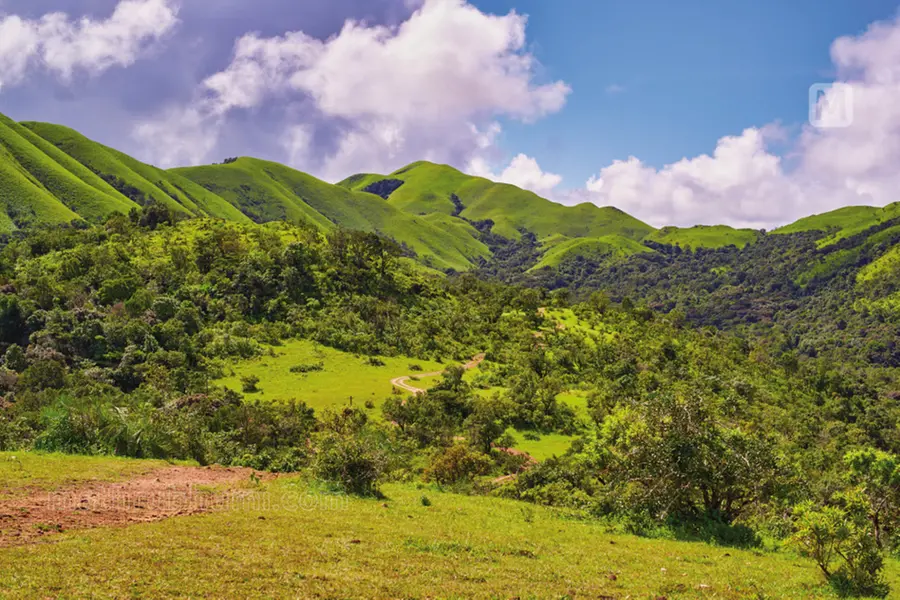
When we speak of Tamil Nadu and Kerala, it is easy to imagine the Western Ghats as a dividing line—the mountain wall that separates one state from another. But in truth, those hills have never been a barrier; they have been a bridge. The Palakkad Gap and the Aralvaimozhi Pass, along with gateways such as Tenkasi and Idukki, have for millennia connected the two lands. Through these openings travelled merchants and pilgrims, scholars and poets, stonecutters and weavers, administrators and soldiers. They carried not only goods but also ideas, languages, customs, and spiritual traditions. These mountain passes were not frontiers of separation but doorways of friendship.
Indeed, political unity and cultural exchange have defined our common past. The Ay dynasty, which flourished in the southern stretches, was shared by both present-day Kerala and Tamil Nadu. Later, under the British Raj’s Madras Presidency, Malabar was part of the same political unit as Coimbatore, Madurai, and Thanjavur. And even before the drawing of modern borders, the Travancore Kingdom extended deep into today’s Tamil Nadu, encompassing Vilavancode, Kalkulam, Thovala, and Agastheeswaram taluks. The majestic Padmanabhapuram Palace, with its unique blend of Kerala woodwork and Tamil architecture, stands today in Tamil Nadu but speaks profoundly of Kerala’s cultural genius. Eraniel and Kuzhithurai too bear testimony to this shared legacy, and even today Malayalam continues to be spoken in many parts of Kanyakumari district. Marthandam is virtually a Malayali town in Tamil Nadu!
In recent years, the excavations at Keezhadi in Tamil Nadu have opened a remarkable new window into our shared past. Keezhadi reminds us that long before modern boundaries were drawn, the Tamilakam region, embracing what is today Tamil Nadu and Kerala, was already part of a vibrant, literate, and interconnected civilisation. Kerala, too, offers its own testimony through the excavations at Pattanam, identified with the ancient port of Muziris. Just as Keezhadi speaks of urban brilliance inland, Pattanam tells the story of maritime exchange with the wider world. Together, they remind us that our ancestors lived not in isolation but in dialogue with each other and with distant civilisations, contributing to a shared heritage of knowledge, artistry, and commerce. These two sites—Keezhadi and Pattanam—stand as living symbols of continuity, proof that the Tamil and the Malayali are not separate streams but heirs to a single great civilisational current of the South, flowing outward to enrich the world.
Language, of course, is one of our strongest bonds. Tamil and Malayalam, both recognised as classical languages, are cousins that share roots, cadences, and rhythms. If Tamil gave the world Silappathikaram—the immortal epic of Ilango Adigal -- he himself hailed from Kerala. Together, these literatures do not compete; they converse. They reveal a shared imagination, a common aesthetic, and a profound moral universe. The many voices that illuminate the shared cultural space of Tamil Nadu and Kerala – from Neela Padmanabhan to K. V. Thikkurissi -- reflect the seamless cultural exchange that Tamil and Malayalam literature have long sustained. The Malayali and Tamil imagination have never been confined by state borders; instead, they converse, challenge, and enrich one another, adding lustre to the literary heritage of all of South India.
Our tribal communities too remind us of our common inheritance. The Kaani tribe, for instance, lives both in Tamil Nadu and Kerala, their lives interwoven with the forests that straddle our states. Our rituals also cross borders. The great Attukal Pongala of Thiruvananthapuram, one of the largest gatherings of women in the world, has echoes of the Tamil Pongal harvest festival. Faith and tradition, far from dividing us, have braided our cultures into one fabric.
Our religious and social identities, likewise, carry similar imprints. Jainism and Buddhism once flourished in both lands, leaving behind stupas, sculptures, and philosophical influences that shaped later Hindu and even Christian traditions. The Sri Padmanabha Swamy Temple in Thiruvananthapuram was built in the Dravidian style of Thanjavur, an architectural homage to Tamil genius. Pilgrims continue to flow both ways—Malayalees to Palani and Rameswaram, Tamilians to Sabarimala and Guruvayur—reminding us that devotion recognises no borders. Similarly with our Christian brothers and sisters -- Malayalis flock to Velankanni and Tamilians throng Kurushimala.
Economic exchange has always deepened our interdependence. Tamil Nadu has long been the granary of Kerala, supplying rice, vegetables, and flowers. In return, Kerala’s rivers and dams have quenched the thirst of Tamil Nadu’s rain-shadow districts. The Neyyar, Mullaperiyar, Parambikulam, and Aliyar projects symbolise not rivalry, but the life-giving bonds between our two states. Our labour too has flowed freely. Once, Kerala’s construction, weaving, and temple arts were enriched by workers from Tamil Nadu. The chiselled stone of Kerala’s temples carries the mark of Tamil craftsmen; the woven cloth of Kerala’s festivals recalls Tamil looms.
And what shall we say of personalities? They too show us how inseparable our destinies have been. M.G. Ramachandran, one of Tamil Nadu’s greatest leaders, and M.N. Nambiar, the beloved actor, were both Malayalees by origin. In return, Ramayyan Dalava, the brilliant Prime Minister of Travancore, and Sir CP Ramaswami Aiyar, the last Dewan, were Tamilians whose reforms and actions transformed Kerala. In Thiruvananthapuram, commercial establishments flourished under Tamil entrepreneurship, while in Chennai, Malayali business families created opportunities and prosperity. Today, the flow continues in every field—from cinema to commerce, bureaucracy to industry.
Our contributions to science and intellect also reflect this synergy. Tamil Nadu gave the world Nobel laureates like C.V. Raman and Venkatraman Ramakrishnan, while Kerala gifted M.S. Swaminathan, the father of the Green Revolution; Verghese Kurien, the architect of India’s White Revolution; and Janaki Ammal, the pioneering botanist. Together, we have shaped modern India’s scientific and agricultural destiny. Politically too, we have produced leaders whose vision transcended state boundaries—Chettur Sankaran Nair and V.K. Krishna Menon from Kerala, C. Rajagopalachari and K. Kamaraj from Tamil Nadu, and many others who fought for the Indian nation as a whole.
Even in our kitchens, the connections abound. We share not only spices but also the ritual of eating on a banana leaf. The magnificence of idli, the tang of sambar, the fragrance of avial, the sweetness of payasam, the warmth of appam, and the crispness of dosa—they mingle on both sides of the Ghats, reminding us that food is the most democratic of cultural bridges.
Above all, it is our people who have woven this relationship. Our IT professionals work side by side in Bengaluru and Chennai, in Kochi and Coimbatore, and indeed across the world. Our film industries inspire and borrow from one another—Mani Ratnam directing in Tamil and Malayali actors gracing his frames; Malayalam cinema influencing Tamil new-wave directors. The arts, the sciences, the professions—all testify that when Malayalis and Tamils come together, wonders happen.
What does this tell us? It tells us that we are not two separate communities reluctantly coexisting side by side. We are, in truth, branches of the same tree, flowers of the same garden, children of the same civilisation. Distinct in our colours, yes, but united in our roots and nourished by the same soil. The Western Ghats may appear as a mountain wall, but in reality, they are a green spine that holds us together. Malayali and Tamilian, Kerala and Tamil Nadu, are inseparable partners in destiny. Together, we have the brains, the skills, the creativity, and the resilience to make wonders. Our past is shared, our present is interdependent, and our future—if we are wise—will be one of even greater collaboration. In an era where divisions are too easily emphasised, festivals such as this remind us of what truly matters: unity, respect, and shared pride.
Published: 01 Nov 2025, 09:32 am IST
ABOUT THE AUTHOR
Related Topics
Disclaimer: Kindly avoid objectionable, derogatory, unlawful and lewd comments, while responding to reports. Such comments are punishable under cyber laws. Please keep away from personal attacks. The opinions expressed here are the personal opinions of readers and not that of Mathrubhumi.