
The discussion turned into a close look on why humans invent monsters, machines, and impossible worlds, and why we might need them now more than ever
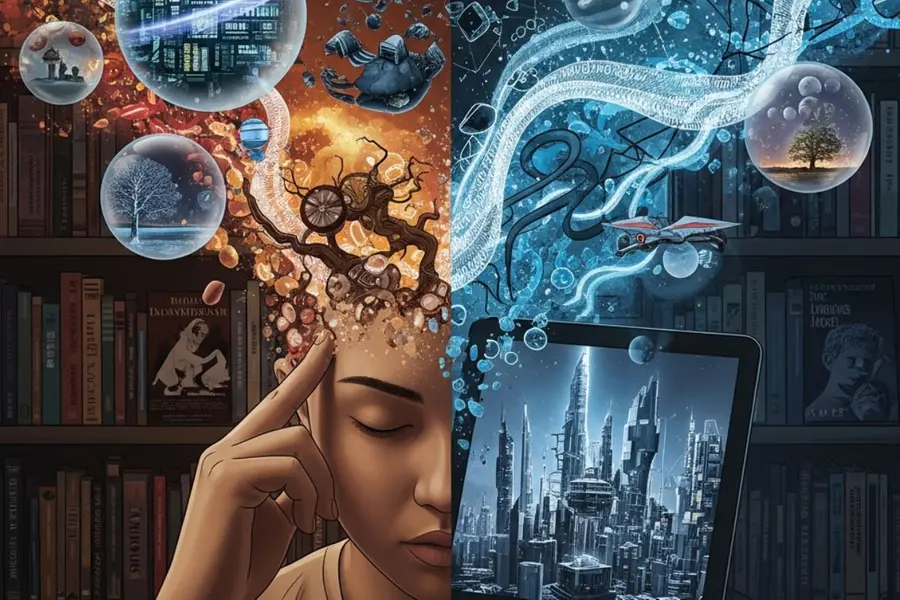
Can a dream grow into a novel? Can fantasy tell the truth more sharply than realism? At the 7th edition of the Mathrubhumi International Festival of Letters, a session titled 'Half Truth, Half Dream: The Curious Life of Science Fiction' explored these questions, dissolving the line between the imagined and the real. The session featuring Indra Das, writer and editor known for his speculative and cross genre fiction. The session was moderated by Niranjana Devi RV.
The discussion turned into a close look on why humans invent monsters, machines, and impossible worlds, and why we might need them now more than ever. He revealed that one of his works was born directly from a dream in which he saw his grandmother showing him a plant, whose seed pods opened to reveal the wings of a tiny dragon. This memory gave him both euphoria and melancholy and it was these emotions that later shaped his storytelling.
For him, speculative fiction is not an escape from reality but another way of entering it. "All fiction builds a world,” he noted, arguing that realist and speculative writing differ less than people assume. Both are acts of imagination grounded in emotional truth.
ALSO READ | 'I write to be free...' Hoshang Merchant on the radical liberation of the gay voice
The conversation also examined why science fiction and fantasy remain a small category in Indian English publishing despite a strong readership. Das pointed to market forces, publishers’ comfort zones, and the dominance of realist fiction and mythology retellings.
Yet he observed a shift in cultural tastes, with anime, manga, and global streaming content making the fantastical more mainstream for younger audiences. He mentioned how got inspired from the lyrical, spiritual tone of Studio Ghibli films in which the stories for adults that remain accessible to children.
A significant part of the session focused on technology and creativity. Das spoke critically about generative AI, calling it a simulation of art rather than art itself, because it lacks lived experience and human intention. He stressed that "art is communication and a way of entering another mind."
When asked whether fantasy is “necessary” in a fast, distracted world, the answer was philosophical, "nothing in art is strictly necessary like food or shelter, but without art, human life would be poorer and harsher." Stories, whether realistic or fantastical, help people process contradictions like love and destruction, beauty and cruelty, hope and despair.
ALSO READ | When a writer is born into a family, the family is finished
Audience questions ranged from the decline of science fiction to the need for more regional language speculative writing, including Malayalam. The discussion acknowledged that genres rise and fall with market trends, but imagination itself never disappears.
The session ultimately left listeners with a simple but resonant idea that even in chaotic times, whether it is about dragons or dystopias art becomes a form of emotional survival. Between half truth and half dream lies a space where literature continues to reinvent how we see the world.
Published: 02 Feb 2026, 08:12 pm IST
Related Topics
Disclaimer: Kindly avoid objectionable, derogatory, unlawful and lewd comments, while responding to reports. Such comments are punishable under cyber laws. Please keep away from personal attacks. The opinions expressed here are the personal opinions of readers and not that of Mathrubhumi.
