
The session delved into the "exhaustion" of modern cultural work, where the average museum visitor spends a mere seven seconds looking at a text panel
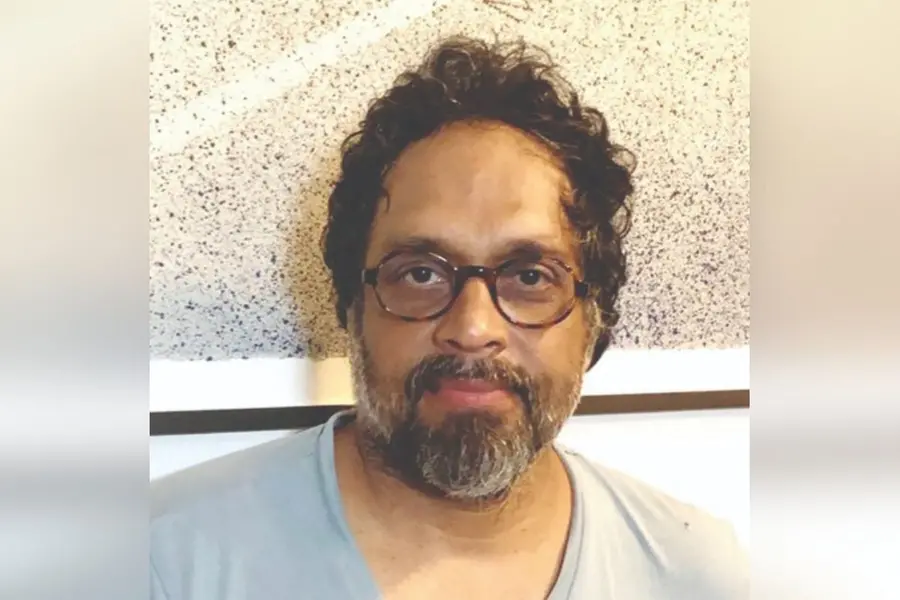
"When the late designer MP Ranjan visualized India's craft map for his book Handmade in India, he marked Kerala not with a specific artifact, but with the symbol of the warp and the weft. It implies that this is a land beautifully woven together."
With this striking imagery, artist and Kochi-Muziris Biennale co-founder Riyas Komu set the tone for a compelling session titled 'Against the Clock: Art, Craft and Conscious Growth' at the 7th Mathrubhumi International Festival of Letters (MBIFL). Moderated by artist Fathima Hakkim, the discussion became a meditation on slowness in a frenetic world, dismantling the modern obsession with speed to reveal why true culture requires the luxury of time.
For Komu, craft is far more than an aesthetic pursuit; it is a political tool. "Craft is actually a site to dissent," he remarked, explaining how his work with wood, a material that demands a contemplative, year-long patience allows him to re-register the multicultural spirit of his village against the "immaterial culture" of today.
ALSO READ | The 1% under the microscope: Keshava Guha on why the elite’s moral crisis matters
The sentiment of uncompromising integrity was echoed by Sivan Santosh, the founder of Neytt, the brand famously responsible for the 2023 Met Gala’s red carpet. Santosh spoke of the immense pressure to scale up, to copy designs, or to swap hand-knotted traditions for faster, cheaper tufted alternatives.
"Time is something we work with, and not work against," Santosh noted, emphasizing that the "muscle memory" required for a hand-knotted rug cannot be accelerated by machines or mandates.
Through initiatives like "Know Your Rug," he attempts to educate a consumer base that often cannot distinguish between a bamboo silk heirloom and a mass produced viscose sheet. But the responsibility also lies in modernizing the ecosystem around the artisan. He argued that to keep the next generation interested, the workspace must become aspirational, removing the drudgery without killing the art. “When speed is demanded, it is not the craft that has to change, but everything around it,” he said.
ALSO READ | 'That’s when I started saying no': Shabana Azmi on why some roles aren’t worth the applause
The session delved into the "exhaustion" of modern cultural work, where the average museum visitor spends a mere seven seconds looking at a text panel.
Pramod KG, co-founder of Eka Archiving Services, highlighted the ethical weight of the archivist’s clock. He spoke of the "uncomfortable material" held in the dark of history -- colonial photography that objectifies indigenous communities or museum galleries dedicated to weapons designed for bodily harm. Pramod often chooses to pause or even shy away from showcasing such items if they cannot be properly contextualized for a modern audience. Accuracy and sensitivity, he argued, are far more vital than the rush to exhibit.
The panelists collectively pushed back against the idea that craft is a dying relic. Instead, they framed it as a "catalyst for change." Komu pointed to the Kochi-Muziris Biennale as a site of "anti-colonial performance," where the residual memories of Portuguese, Dutch, and British history are repurposed through art to create a new ecosystem of dialogue. He believes the power of imagination lies in the "amphibious nature" of our times -- finding ways to survive and speak truth through the very materials we touch.
The session concluded not with a solution to the "fast pace" of modern life, but with a quiet acceptance of the power of delay. Whether it is the knot of a rug, the cataloging of a museum, or the stroke of a painting, the speakers agreed that cultural work struggles to survive when stripped of its duration. In a world demanding instant gratification, the most radical thing an artist or artisan can do is simply take their time.
Published: 02 Feb 2026, 08:32 pm IST
Related Topics
Disclaimer: Kindly avoid objectionable, derogatory, unlawful and lewd comments, while responding to reports. Such comments are punishable under cyber laws. Please keep away from personal attacks. The opinions expressed here are the personal opinions of readers and not that of Mathrubhumi.
