
From historical investigations to modern retellings, these books continue the journey long after Odysseus reaches Ithaca.
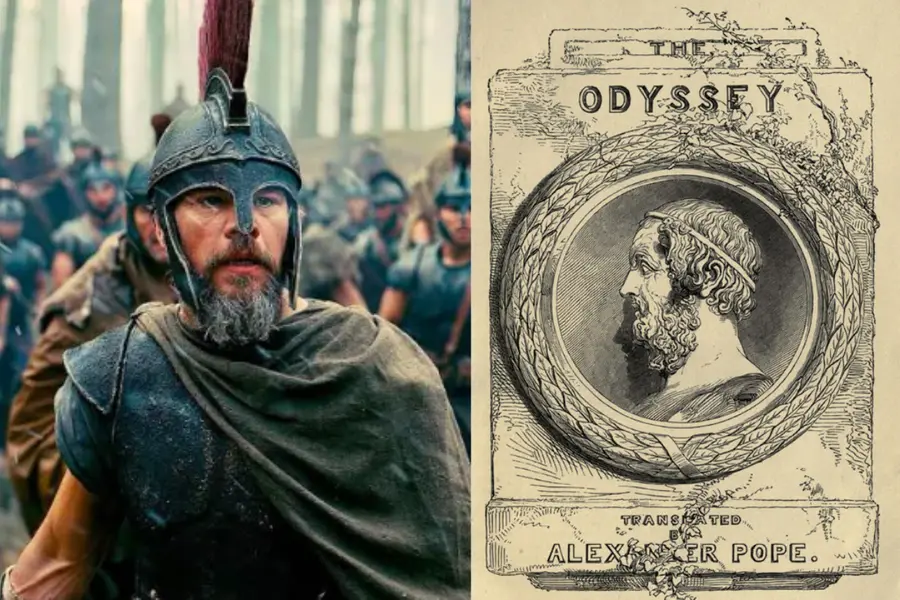
Christopher Nolan's ‘The Odyssey’ has re-introduced audiences to one of literature's greatest epics. Based on Homer's ancient poem, the film follows Odysseus as he struggles to return to Ithaca after the Trojan War, facing monsters, gods, temptations and impossible choices along the way.
If the film leaves you wanting to explore more, there is plenty to discover beyond Homer's original work. Some books explain the real history behind the Trojan War, others retell familiar myths from new perspectives, while a few completely reinvent the ancient stories in modern settings.
Also Read

Here are ten books worth adding to your reading list.
1. ‘The Trojan War: A New History’ by Barry Strauss
Before Odysseus began his long voyage home, there was the Trojan War.
Historian Barry Strauss examines the evidence, separating archaeological discoveries from centuries of storytelling. He questions what readers have debated for generations, Was Helen of Troy a real person? Did the famous Trojan Horse actually exist? Using historical research alongside Homer's ‘Iliad’, Strauss offers an accessible look at what may have really happened during one of history's most famous conflicts.
2. ‘Heroes’ by Stephen Fry
Not every great Greek story begins or ends with Odysseus. Stephen Fry's ‘Heroes’ introduces the larger cast of legendary figures who shaped Greek mythology, from Perseus and Atalanta to Jason and Heracles.
With humour, clarity and plenty of historical context, Fry untangles stories that can often feel overwhelming, making this an ideal companion for anyone who wants to venture beyond The Odyssey without getting lost in centuries of mythology.
3. ‘Circe’ by Madeline Miller
In Homer's poem, Circe appears only briefly, yet she remains one of its most unforgettable figures. Madeline Miller imagines everything the epic leaves unsaid, turning the powerful witch into the heroine of her own story. From her lonely childhood among the Titans to her encounters with gods, monsters and heroes including Odysseus himself.
‘Circe’ explores what it means to be feared, misunderstood and determined to choose your own fate. It's a fresh perspective on Greek mythology that never loses sight of the magic that made the original stories endure.
4. ‘The Penelopiad’ by Margaret Atwood
Every hero's journey leaves someone waiting at home. In ‘The Penelopiad,’ Margaret Atwood hands the story back to Penelope, the wife who spent twenty years holding Ithaca together while Odysseus wandered the seas.
Speaking from the Underworld with wit and honesty, Penelope revisits her marriage, the relentless suitors and the legends that history got wrong. It's a clever retelling that asks whose version of a myth survives and whose gets forgotten.
5. ‘Ulysses’ by James Joyce
Few novels have paid tribute to ‘The Odyssey’ as boldly as James Joyce's ‘Ulysses’. Set over the course of a single day in Dublin, the novel swaps Odysseus' stormy voyage for the routines of everyday life, following Leopold Bloom and Stephen Dedalus through streets, conversations and passing thoughts.
Its reputation for being difficult often scares readers away, but beneath the experimental prose is a surprisingly funny, deeply human story that rewards patience. If you want to see how Homer's epic inspired one of literature's greatest masterpieces, this is where to begin.
6. ‘Cold Mountain’ by Charles Frazier
You don't need gods or sea monsters to tell an Odyssey. Charles Frazier changes the ancient homecoming to the American Civil War, where wounded soldier Inman deserts the battlefield and begins the long journey back to the woman he loves.
Along the way he faces violence, hardship and strangers who shape his understanding of survival, while Ada learns to rebuild a life of her own. Like Homer's epic, it's as much about the people we become on the road home as the destination itself.
7. ‘Ilium’ by Dan Simmons
If you've ever wondered what Homer would look like as science fiction, ‘Ilium’ has the answer. Dan Simmons writes the Trojan War on Mars, where post-human gods recreate the ancient conflict for their own amusement.
When events begin to stray from Homer's original tale, a resurrected 20th-century Homer scholar is called in to figure out what's gone wrong. The result is a wildly imaginative blend of mythology, space opera and literary history that's full of unexpected turns.
8. ‘Autobiography’ of Red by Anne Carson
Anne Carson takes one of Greek mythology's lesser-known monsters and turns him into one of modern literature's most known voices. Her Geryon is no longer simply the giant defeated by Herakles, but a shy, artistic young man navigating love, identity and heartbreak.
Written in lyrical verse with ancient myth, contemporary fiction, ‘Autobiography of Red’ is unlike any other retelling you'll encounter.
9. ‘Tales From Ovid’ by Ted Hughes
Once you've read the heroes of Greece, it's worth crossing over to Rome. Ted Hughes revisits Ovid's ‘Metamorphoses’, selecting twenty-four of its most memorable myths from Narcissus and Arachne to Pyramus and Thisbe and retelling them in powerful modern verse.
Rather than translating the original word for word, Hughes attains its energy and emotion, making these timeless stories feel surprisingly immediate.
10. ‘Talking Classics’ by Mary Beard
If ‘The Odyssey’ leaves you wondering why stories written nearly three thousand years ago still debate today, Mary Beard has an answer. In ‘Talking Classics’, the celebrated historian shows the lasting influence of Greece and Rome by how ancient literature continues to shape modern culture, politics and art.
It's less about memorising history than understanding why these stories continue to find new audiences, generation after generation.
Compiled by Liya Shanawas
Published: 18 Jul 2026, 11:10 am IST
Related Topics
Disclaimer: Kindly avoid objectionable, derogatory, unlawful and lewd comments, while responding to reports. Such comments are punishable under cyber laws. Please keep away from personal attacks. The opinions expressed here are the personal opinions of readers and not that of Mathrubhumi.