

Homer's Odyssey is not really about monsters, gods or ancient Greece. It's about the strange journey of becoming human
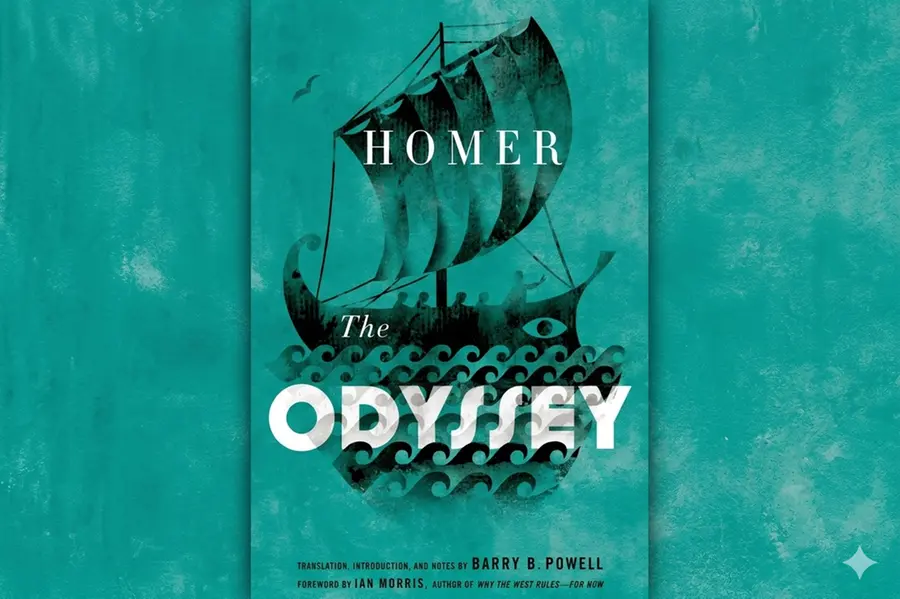
There is a reason people are still reading ‘The Odyssey’ nearly 3000 years after it was written. It is not because they are interested in ancient ships or they want to memorise Greek mythology. And it is certainly not because they enjoy reading about one man taking ten years to get home.
People still read ‘The Odyssey’ because, beneath the cyclopes, sea monsters and angry gods, Homer understood an uncomfortable truth. Most of life is not about arriving somewhere. It is about finding your way back to yourself.
That idea feels surprisingly modern.
In a world obsessed with moving faster, becoming richer, travelling farther and achieving more, ‘The Odyssey’ asks a completely different question: What if the real challenge isn't getting somewhere new and what if it's knowing where home is?
1. Odysseus is basically the first burnt-out adult
Everywhere he goes, someone offers Odysseus an easier life. A goddess offers him immortality, a princess offers him power. Entire islands tempt him with comfort, pleasure and escape. Yet he keeps choosing the harder path.
He wants to go home.
Today we are surrounded by our own versions of those temptations. Better jobs, cities, opportunities and mostly, better versions of ourselves.
The question Homer asks is startlingly relevant: How much should you sacrifice before success stops feeling like success?
2. It's one of the first stories about Identity
When people think of The Odyssey, they remember the monsters. What they forget is that Odysseus spends much of the poem disguised, hidden or pretending to be someone else.
He lies about his name, changes his appearance and becomes anonymous. Sound familiar? In an age of personal brands, curated feeds and online personas, Homer was already asking whether a person can lose themselves while trying to survive.
The real journey isn't across the Mediterranean. It's figuring out who you are when nobody is watching.
3. It understands that intelligence matters more than strength
Unlike Achilles in ‘The Iliad’, Odysseus isn't the strongest man in the room. He wins because he thinks, adapts, improvises and solves problems.
Long before the modern world celebrated creativity, strategy and emotional intelligence, Homer was suggesting that brains often matter more than brute force.
The hero isn't the loudest person. It's the one who knows what to do next.
4. It invented the idea of the long way home
Nearly every great story owes something to The Odyssey. From road-trip movies and survival dramas to fantasy epics and space adventures, countless stories follow the same pattern: Someone leaves home and something changes them. They return as a different person.
The structure is so common that we barely notice it anymore. Homer didn't just write a great story. He helped invent the blueprint for storytelling itself.
5. It is full of monsters that feel surprisingly familiar
The monsters in The Odyssey are rarely just monsters. The Lotus-Eaters represent distraction, Sirens represent temptation, Scylla and Charybdis represent impossible choices.
Even the Cyclops represents something recognisable: the danger of seeing the world only from your own perspective.
Three thousand years later, we still face the same challenges. Only now the lotus flower is your phone.
6. It might be the world's first self-help book
Not in the modern sense. Nobody in The Odyssey is teaching morning routines or optimisation hacks. But Homer is obsessed with questions that still dominate bestseller lists today: How do you become resilient? How do you deal with uncertainty? How do you respond when life doesn't go according to plan? How do you keep going when the finish line keeps moving?
The difference is that Homer explores these questions through story rather than advice. And stories tend to stay with us longer.
7. It understands that home is more than a place
When Odysseus finally reaches Ithaca, he discovers something important. Home isn't simply where you live. It's where you belong. It is memory, identity, responsibility and community.
The idea relates today because many people spend years moving between cities, jobs and relationships trying to figure out where they fit.
The journey home never really stopped. It just looks different now.
8. It asks questions that still don't have answers
Some books become outdated because they answer yesterday's questions. The Odyssey survives because it asks timeless ones.
Do we control our lives or are we controlled by forces beyond us? Can justice ever truly be achieved? What makes a good leader? What makes a good life?
Technology changes but human nature doesn't.
9. It shows that growing up is not just for children
Most readers focus on Odysseus. But one of the poem's most interesting stories belongs to his son, Telemachus. At the beginning, he is uncertain, passive and overlooked.
By the end, he has learned how to act. His story is a reminder that maturity isn't something that happens automatically. It is something we choose, and many adults are still learning it.
10. Because it is ultimately about being human
Strip away the gods, remove the monsters, ignore the mythology and what remains is surprisingly simple. A person trying to get home. A family waiting. A world full of distractions. A series of difficult choices. A search for meaning.
Three thousand years separate us from Homer.
Yet the distance feels strangely small. Perhaps that is why ‘The Odyssey’ continues to endure. Not because it tells us about ancient Greece, maybe, but because it tells us about ourselves.
The greatest trick Homer ever pulled was convincing generations of readers that they were following the adventures of Odysseus.
In reality, they were reading their own story.
Published: 18 Jun 2026, 03:03 pm IST
ABOUT THE AUTHOR
Related Topics
Disclaimer: Kindly avoid objectionable, derogatory, unlawful and lewd comments, while responding to reports. Such comments are punishable under cyber laws. Please keep away from personal attacks. The opinions expressed here are the personal opinions of readers and not that of Mathrubhumi.