
The two PSLV failures are real, Mr Doval's visit is real, the attrition is real, the government intervention on resignations is real, and the decision to move launch vehicle manufacturing towards industry is real. What is not established is that they are all parts of the same operation
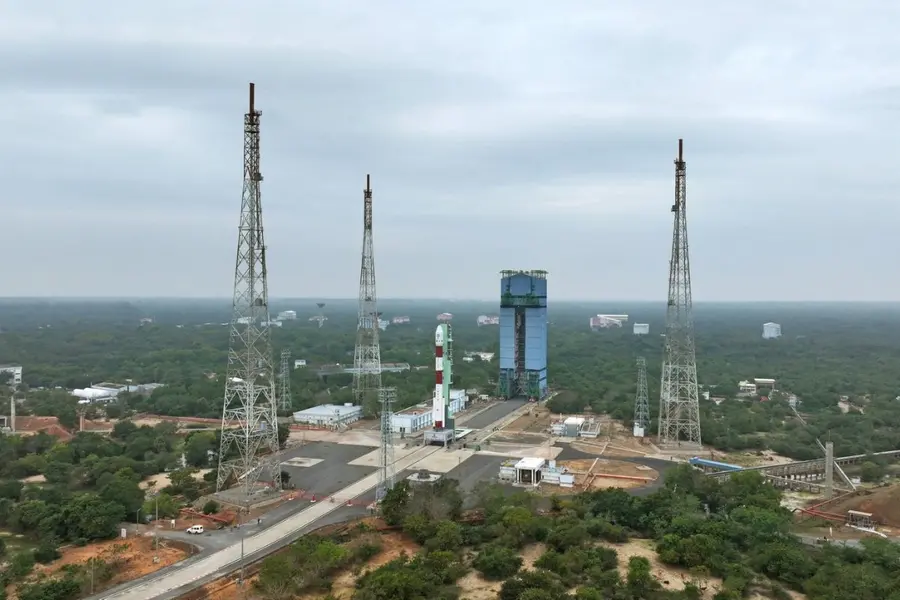
India has always had a slightly peculiar relationship with ISRO. We treat every successful launch as proof that Indian genius has once again triumphed over the laws of physics, bureaucracy and, occasionally, gravity itself. When something goes wrong, however, we become amateur intelligence analysts overnight. A failed rocket is no longer a failed rocket, but a clue. A resignation is no longer a resignation, but becomes disappearance. A closed door is no longer a closed door, but evidence that something enormous is being hidden behind it. The latest ISRO conspiracy theory has all the necessary ingredients.
Two consecutive PSLV failures, a visit by National Security Advisor Ajit Doval to the Vikram Sarabhai Space Centre, an alleged manipulation of recommendations following the first failure, more than a hundred scientists and engineers leaving the organisation, the government subsequently tightening the rules governing their departure, and now the announcement that ISRO itself will eventually stop manufacturing launch vehicles and hand the job to private industry and PSUs. That makes a pretty delicious story, which is precisely why we should be suspicious of it.
Also Read

The underlying facts, however, are real. PSLV C61 did fail in May 2025 while carrying EOS 09. PSLV C62 failed in January 2026 while carrying EOS N1 and other payloads. Both failures involved anomalies during the third stage. Then came Ajit Doval. The NSA reportedly visited VSSC on January 22, shortly after the second failure. The New Indian Express reported that he examined technical aspects of the vehicle and that the possibility of sabotage was among the issues considered. It subsequently reported that the government ruled out sabotage following the assessment. This is indeed interesting, but considerably less mysterious than the conspiracy merchants would have us believe.
If two consecutive failures occur in a launch vehicle of national importance, the NSA would be failing in his duty if he did not ask whether sabotage was possible. Investigating sabotage is not evidence of sabotage. Otherwise every detective would be Sherlock Holmes.
Then there is the alleged senior scientist who supposedly altered the recommendations of the investigation into the first failure. This is where the story begins to wobble badly. The allegation is extraordinarily serious, yet the evidence supplied for it is extraordinarily flimsy. We are apparently expected to accept the existence of an unnamed scientist, from an unnamed neighbouring state, occupying an unnamed position, who altered unnamed recommendations for reasons that are themselves unnamed! That is like a murder mystery in which the suspect has not been named, the weapon has not been produced and the crime scene may not even exist. There could eventually be evidence for the allegation, and if there is, it deserves the most serious investigation. But until then, it should remain precisely what it is, an allegation.
The attrition story is different. I had written earlier about the alarming loss of experienced personnel from ISRO, arguing that the real danger was not merely the number of people leaving but the institutional knowledge walking out with them. A scientist who has spent twenty years understanding propulsion, satellite integration or mission planning cannot simply be replaced by hiring a few young graduates and giving them a motivational presentation.
Reports in July put departures from key centres at roughly 100 to 120, including around 80 from URSC and at least 20 from VSSC. The Department of Space subsequently tightened the approval process for resignations and voluntary retirement among Group A scientific and technical personnel working on Gaganyaan and other important missions. That is, of course, serious, but again, does not prove a purge.
There is a considerably more prosaic explanation. India's private space sector is expanding; salaries are higher and experienced scientists suddenly have somewhere else to go. The private sector was invited into space precisely to create innovation, investment and new opportunities. They need experienced people, and where exactly were they supposed to find them? Naturally they went to ISRO. The organisation therefore faces the rather splendid paradox of being a victim of its own success.
India created a private space industry and then discovered that the private space industry wanted to employ the people who had built the public one. But that is not espionage; that is what we call capitalism!
And this is where the latest announcement becomes genuinely important. Pawan Goenka, chairman of IN SPACe, has said that ISRO will eventually stop manufacturing launch vehicles and that production will move to the private sector or PSUs. The transition has already begun with the SSLV, whose technology and production rights have been transferred to HAL. The PSLV and LVM3 are expected to follow, while ISRO concentrates increasingly on research, advanced technologies and specialised missions. That is not ISRO giving up on rockets. It is ISRO changing what it thinks its job should be.
For decades, ISRO designed, developed, manufactured and launched its own vehicles. That model made perfect sense when India was building a space programme from scratch, but it makes less sense when India wants a large commercial space industry. The real question, therefore, is not why ISRO is handing manufacturing to industry. It is whether it can do so without losing the institutional knowledge that made the organisation successful in the first place. That is where the attrition story acquires a new significance.
Imagine an organisation simultaneously transferring mature manufacturing capabilities to industry, expanding its scientific ambitions, undertaking human spaceflight, developing reusable launch systems and losing experienced personnel. That is not evidence of a conspiracy, but evidence of an organisation undergoing an enormous structural transition.
An institution does not need to be infiltrated; it merely needs to lose the people who know how it works. This is why the government's response to attrition deserves scrutiny. Making it harder for scientists to leave may preserve manpower in the short term, but it does not necessarily preserve commitment, morale or excellence.
A scientist who stays because a memorandum prevents him from leaving is not quite the same thing as one who stays because the institution gives him compelling reasons to do so. A space agency should not become a bureaucratic monastery in which scientists are forbidden to resign because the government has suddenly discovered that their accumulated knowledge is valuable.
There may be a conspiracy, or there may be sabotage, and there may even be something far more sinister than any of us really know. But at present, we do not know it, and that is the distinction between journalism and conspiracy theory. While the conspiracy theorist looks at five events and draws a line between them, the journalist should ask whether the line actually exists. The two PSLV failures are real, Mr Doval's visit is real, the attrition is real, the government intervention on resignations is real, and the decision to move launch vehicle manufacturing towards industry is real. What is not established is that they are all parts of the same operation.
There is one question, however, that is entirely legitimate. If India is transferring the manufacture of its launch vehicles to industry while simultaneously losing large numbers of experienced scientists and engineers, who will ensure that the knowledge, standards, institutional memory and strategic safeguards accumulated inside ISRO over decades do not leave through the same door as the scientists? That question is considerably less exciting than asking who the mole is. It is also considerably more important.
Rockets can be rebuilt, factories can be expanded, technologies can be transferred, but institutional memory is rather harder to manufacture. And if Delhi really has discovered something alarming inside India's space establishment, the public deserves evidence eventually. Until then, perhaps we should resist the national temptation to turn every closed door into a secret chamber.
Sometimes a rocket fails because a rocket failed. Sometimes a scientist resigns because somebody else is willing to pay him more. And sometimes a government changes an institution because it has finally realised that the institution it built for yesterday's ambitions is not necessarily the institution it needs for tomorrow's. The truth may be less cinematic than the conspiracy, but it may also be much more consequential.
(The author is a National Award winner for Best Narration and an independent political analyst. Views expressed are personal.)
Published: 24 Aug 2026, 01:47 pm IST
Related Topics
Disclaimer: Kindly avoid objectionable, derogatory, unlawful and lewd comments, while responding to reports. Such comments are punishable under cyber laws. Please keep away from personal attacks. The opinions expressed here are the personal opinions of readers and not that of Mathrubhumi.