
Indian cinema, call it Bollywood or regional cinema, mainstream, middle-of-the-road or off-mainstream, are often inspired by original works of literature to present these as films by very famous and not so famous filmmakers
A film is a composite of concrete, audio-visual images. This sets it in a completely different class from the novel or the play composed of abstract written or spoken words. A film is a kind of writing, but picture writing. It can even express completely abstract ideas provided they are adapted to the nature of the medium and formulated in concrete, pictorial terms.
Geoffrey Wagner divided film adaptation into three ‘modes’: the transposition, in which a novel is directly given on the screen with a minimum of apparent interference; the commentary, where an original story is taken and either purposely or inadvertently altered in some respect; the analogy, which must represent a considerable departure for the sake of making another work of art, DeWitt Bodeen, co-author of the screenplay for Peter Ustinov Billy Budd (1962), claims that: 'Adapting literary works to film is, without a doubt, a creative undertaking, but the task requires a kind of selective interpretation, along with the ability to recreate and sustain an established mood'.
Also Read

Indian cinema, call it Bollywood or regional cinema, mainstream, middle-of-the-road or off-mainstream, are often inspired by original works of literature to present these as films by very famous and not so famous filmmakers. This is true of all Indian films across the language, time and cultural barriers. The interpretation of a piece of literature may present the perspective of the filmmaker which might be distanced from the original piece of work. Or, it may be an original translation from word to picture and with the different degrees of difference between these two polar opposites.
Literature’s presentation through the audio-visual magic cinema is famous for, is a challenge many filmmakers love to take. Or, they simply might find the literary piece of work inspiring to turn into film. Or, they might invest their own transposition into something very different from the original. So different that you cannot recognize the original literary piece as you watch the film. A classic example of this last one is Anurag Kashyap’s Dev D which turned Sarat Chandra Chattopadhyay’s classic Devdas on its head to give a very different interpretation distanced from the original classic. And it turned out to be a big box office hit! On the other hand, Satyajit Ray has repeatedly said that for his first film Pather Panchali, the original source – Bibhuti Bhushan Bandopadyay’s novel helped him tremendously because the author had woven visual images with great artistry and in minute detail. It made it smoother and easier for Ray to create the shooting script of his film with the original literary work as his frame of reference. Incidentally, this writer recently discovered that Sarat Chandra Chattopadhyay is probably the world’s only author whose novels, and not Devdas alone, have been turned into films the maximum number of times beating the record of William Shakespeare.
A little peep into the world of South Indian cinema which is currently the box office favourite of most Bollywood filmmakers, will show that South Indian filmmakers are not behind Bollywood or other regional filmmakers, both mainstream and off-mainstream, in finding inspiration from works of literature.
Thakhazi Sivasankara Pillai was a powerful source for Adoor Gopalakrishan for some of his films. He wrote more than 400 short stories and over 40 novels. His most remembered novel made into a film in Malayalam is Chemeen which explored the lives and superstitions of a coastal fishing community. t was adapted into a screenplay by S. L. Puram Sadanandan, directed by Ramu Kariat, and produced by Babu Ismail Sait under the banner Kanmani Films.Among other awards, it bagged the National Award for the Best Malayalam film in 1967.
Said Adoor in an interview, “Thakazhi wrote mostly about Kuttanad, an area of backwaters and rice fields where he was born and where he lived practically all his life. His writings are largely about this land and its people. They are true to life apart from being insightful. I re-read his works a couple of years ago with the idea of finding interesting material for a film. Instead of one, I found stories for two films. For Four Women, I have kept the stories independent of each other and at the same time worked on an internal thematic connection between them – that of a growing awareness among women.”
Adoor’s Four Women are four short stories. The social comments evolve from within the women themselves. The prostitute is not allowed to lead a life of normal dignity because the police will not let her. In the Virgin, a young woman duped into marriage to an impotent man is deserted by him, leaving her to cope with her virginity in a sham marriage. The Housewife and the Spinster are simultaneous explorations of a woman’s unfulfilled desires of lack of motherhood and lack of a normal sex life presented in two different ways. In these films, Adoor’s mastery over cinema is an expression of his intense emotional attachment towards his chosen medium backed by his mastery over the craftsmanship it demands.
Another Basheer story Adoor turned into a film was Mathilukal (1990) which has no female presence though the female character is very much present across the wall, with her sensuous voice breaking the barrier of the wall that separates her from her 'lover' on the other side who we never see in the film and the absence identifies with Basheer’s personal experience when he was in jail during the British rule. It is an autobiographical novel which featured Mammooty in the lead role of Basheer.
Govind Aravindan was known for a meditative, script-less directorial style that drew heavily on classical texts, folklore, and modern literature rather than traditional cinematic formulas. His landmark films adapted or re-interpreted foundational literary works and legends, such as Kanchana Sita (1977), based on C.N. Sreekantan Nair’s play reimagining the Ramayana, as well as visual and narrative works influenced by Kerala's rich artistic and literary traditions. His last film Vaastuhara, was based on a story by Sreeraman, deals with the trauma of displacement, exile, and the Partition of India. It reflects a mature, novelistic density where historical tragedy converges with intimate emotional dispossession. But the film received a very cold audience and critical response mainly because of wrong marketing and ill-timed release.
Girish Kasaravali, who remains the most talented doyens of Kannada cinema, did not believe in literal transpositions of literature to cinema but rather, believed in letting the core emotional and thematic essence of a literary work inspire a distinct cinematic structure. His debut film Ghatashraddha was inspired by a famous novella by U.R. Ananthamurthy, exploring rigid caste hierarchies and moral decay through the eyes of a young boy.Tabarana Kathe was based on the celebrated story by Poornachandra Tejaswi, charting an aging pensioner's agonizing bureaucratic struggle. Charu Hasan in the main role makes this an immortal film.
The history of South Indian films prides on a plethora of literature-inspired films. Till this day, we find many films in the South adapted, interpreted and inspired from literature not only from South Indian sources but globally. Sarat Chandra Chattopadhyay’s Bengali novel Nishkriti was made into a film named Todi Kadallu (1957) in Telugu directed by Adurthi Subba Rao.
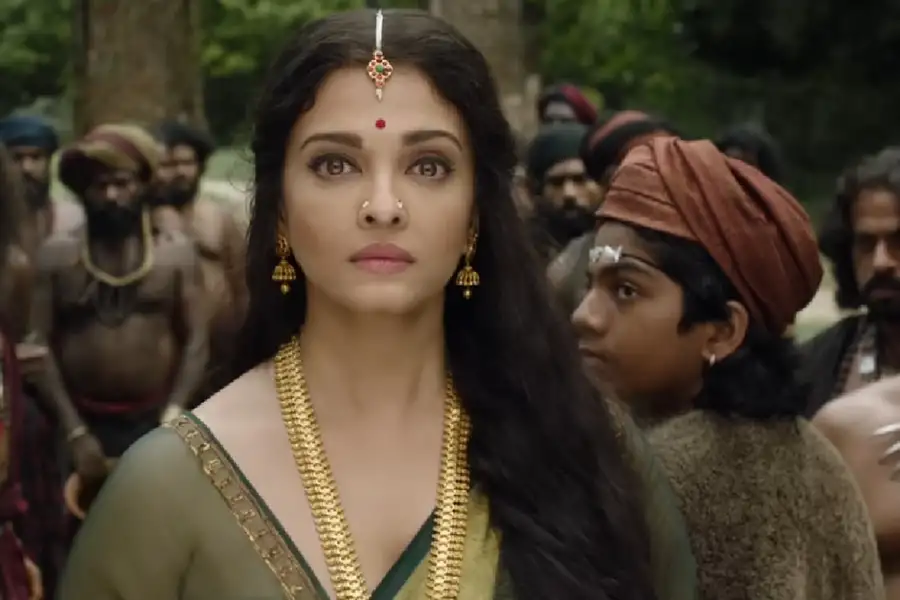
Ponniyin Selvan: I & II, a historical epic is adapted from Kalki Krishnamurthy’s iconic 1955 Tamil novel Ponniyin Selvan in Tamil, chronicling the rise of the Chola dynasty was made by none other than one of the most outstanding filmmakers of South Indian cinema – Mani Ratnam who co-wrote the story for the film alongwith Elango Kumaravel and B. Jeyamohan. Ponniyin Selvan: I released on 30 September 2022 worldwide. It was released in Tamil along with the dubbed versions of Hindi, Kannada, Telugu and Malayalam languages. It became the first Tamil film to release in IMAX format. However, though the film turned out to be a thumping hit mainly because of the multi-starred extravaganza, it went a little over the heads of non-South Indian audiences unaware of te Tamil novel. Ponniyin Selvan was initially involved in a controversy about ignoring the Shaivite nature of the Cholas and using the Sricharanam instead of Tripundra on the forehead. It was later resolved. The Ananda Vikatan Cine Awards bestowed the Best Actress in a Negative Role award to Aishwarya Rai Bachchan.
Asuran (2019) was based on Poomani's critically acclaimed Tamil novel Vekkai, dealing with caste oppression and generational revenge. Directed by Vetrimaaran, this gritty action-drama dealt with caste oppression and generational revenge. The Indian Express critic wrote, “With this Dhanush starrer, Vetrimaaran proves he's one of the finest directors in Indian cinema, yet again. Only a few filmmakers like him can pull off a mainstream cinema, balancing 'realism' and commercial elements.”
Kandukondain Kandukondain (2000), directed by by Rajiv Menon, this romantic drama is a modern Tamil adaptation of Jane Austen’s 1811 novel Sense and Sensibility. The film featured an ensemble casting comprised of Mammootty, Ajith Kumar, Tabu, Aishwarya Rai and Abbas. Veterans Manivannan, Srividya and Raghuvaran play supporting roles. Shankar Mahadevan bagged the National Award as Best Male Playback Singer the following year while the film bagged two Filmfare Awards for Best Tamil Film and Best Tamil Director. The script of Kandukondain Kandukondain was translated into English and published as a book by Westland Publishers in October 2000.
B. Ajithkumar directed Eeda, a political romance adapted from William Shakespeare’s Romeo and Juliet set against political conflict in Malabar. Says the editor-turned-director: "It is inspired by Romeo and Juliet. The entire focus is on how Aiswarya, a student from Mysuru, falls for the character played by Shane Nigam."
A film is a composite of concrete images. This sets it in a completely different class from the novel or the play composed of abstract written or spoken words. A film is a kind of writing, but picture writing. It can even express completely abstract ideas provided they are adapted to the nature of the medium and formulated in concrete, pictorial terms.i
In sum, when we say an adaptation has been ‘unfaithful’ to the original, the very violence of the term generates disappointment when a film adaptation fails to capture what we see as the fundamental narrative, thematic and aesthetic features of its literary source.ii But this premise is based on the audience’s familiarity with the original literary text and its ability to sustain the memory of the original story even if it has read it. Otherwise, the film based on the novel opens a window to the fact that a literary text was written and does exist somewhere and the audience receives this information from the film.
Published: 06 Nov 2026, 03:31 pm IST


Disclaimer: Kindly avoid objectionable, derogatory, unlawful and lewd comments, while responding to reports. Such comments are punishable under cyber laws. Please keep away from personal attacks. The opinions expressed here are the personal opinions of readers and not that of Mathrubhumi.