
Netanyahu’s political vulnerability also brings his corruption trial back into focus. He has been on trial since 2020 on charges involving bribery, fraud and breach of trust
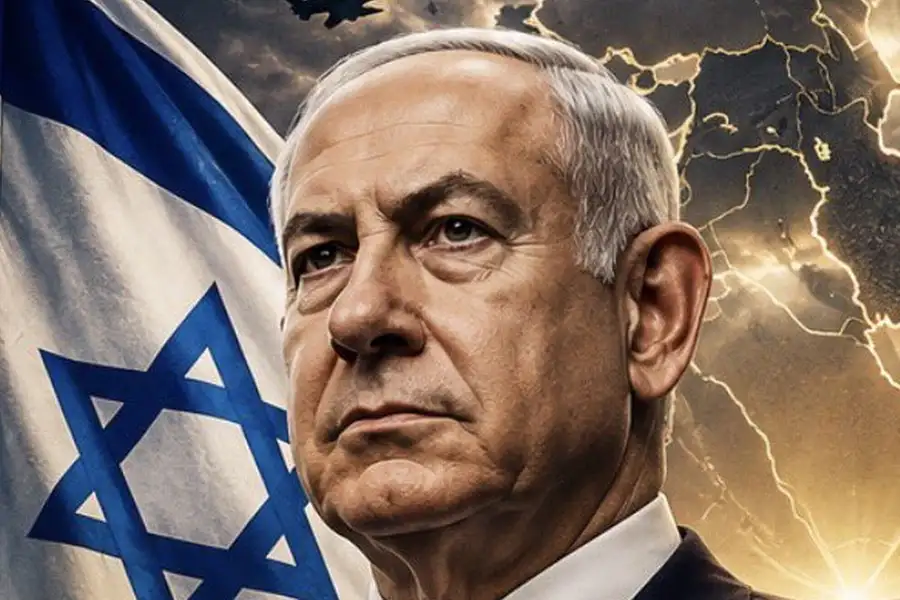
Benjamin Netanyahu has spent much of his political life cultivating an image of himself as indispensable to Israel’s survival. He has presented himself as the man who understands the existential threats confronting the country, the one statesman capable of navigating its enemies, and the one politician whose removal from office would supposedly leave Israel at the mercy of its adversaries. It is an impressive sales pitch, particularly when delivered from a podium with a suitably grave expression and a map of the Middle East behind him. But even the most elaborate political theatre cannot indefinitely conceal the increasingly uncomfortable question. Who, precisely, is protecting Israel from Benjamin Netanyahu?
The October 27 election results have dealt a serious blow to his political ambitions. Likud remains the largest party, with 27 seats, but the broader religious nationalist bloc has secured only 53 in the 120-member Knesset, well short of the 61 required for a majority. The opposition grouping led by Gadi Eisenkot has 48, while the Arab parties have secured a remarkable 19 seats. The arithmetic is complicated, but the political message is much simpler. Netanyahu has lost the majority that sustained his government, and the prospect of his departure is no longer confined to his opponents' wishful thinking. President Isaac Herzog has begun consultations on government formation, while an ultra-Orthodox ally's withdrawal of support has further weakened Netanyahu’s position.
Yet the most consequential development may not be taking place in the Knesset. It concerns the reported confrontation between Netanyahu and the Chief of Staff of the Israel Defence Forces, Lieutenant General Eyal Zamir, over a proposed military action connected with Iran in the days immediately preceding the election. According to reports from sources familiar with the discussions, Zamir resisted an instruction from the political leadership, sought further deliberation, and reportedly demanded written documentation of the legal authorisation for the proposed action. Netanyahu dismissed the account as nonsense, while Defence Minister Israel Katz denied any serious disagreement. The allegations remain contested, and the precise nature of the proposed operation has not been publicly established. But the very possibility of such a confrontation should trouble any democracy in which civilian authority over the military is supposed to operate within constitutional and legal boundaries.
The controversy acquired another dimension when Avigdor Lieberman, hardly a political dove and certainly no habitual admirer of the Israeli left, asked Attorney General Gali Baharav-Miara to initiate a criminal investigation into Netanyahu. Lieberman accused the Prime Minister of trying to provoke a confrontation with Iran to improve his electoral prospects and avert political defeat. He invoked the possibility of treason, an exceptionally serious allegation that should not be mistaken for an established offence in this particular case. His request is not proof of Netanyahu’s intentions, nor does it establish that he issued an unlawful order. Nevertheless, when a senior opposition politician alleges that the country’s security establishment was being pressured towards a military adventure for partisan advantage, the matter cannot simply be waved away as another instalment of Israel’s interminable political circus. There is, of course, a distinction between using military action to advance national security and exploiting a security crisis to advance one’s political fortunes.
The first is a government obligation; the second is an abuse of the public trust. Establishing which, if either, occurred requires evidence and an independent investigation, not partisan declarations and television theatrics. Reports that Netanyahu had pressed Donald Trump for a joint American-Israeli strike against Iran before the election, which both Washington and Jerusalem have treated with varying degrees of denial or qualification, make the questions more pressing, not less. A country cannot afford to have its foreign policy conducted as an extension of its incumbent leader’s electoral campaign.
The shadow of October 7, 2023, hangs over all of this. The Hamas attack was not merely a catastrophic intelligence failure or a military disaster. It was a profound failure of political leadership, and the public is entitled to know how a state with Israel’s formidable intelligence and security apparatus could have been so comprehensively surprised. Netanyahu has resisted establishing a statutory State Commission of Inquiry, an independent mechanism that could compel testimony and examine responsibility across the political and military establishments. Instead, the country has been offered competing narratives, selective disclosures and the familiar spectacle of politicians explaining why the moment is not quite right for accountability.
An investigation published by Yedioth Ahronoth and Ynet in October alleged that Netanyahu’s own account of the warnings preceding the attack omitted significant material and altered the context of earlier security discussions. That finding, if substantiated, demands scrutiny; although it does not, by itself, prove that Netanyahu knew the attack was imminent or deliberately allowed it to happen. This distinction is indispensable, which is why an independent inquiry is necessary. The public should not have to choose between accepting the Prime Minister’s version of events and embracing the most extravagant conspiracy theory circulating on social media.
Netanyahu’s political vulnerability also brings his corruption trial back into focus. He has been on trial since 2020 on charges involving bribery, fraud and breach of trust, all of which he denies. Losing office would not make him guilty, nor would it automatically send him to prison. But it could deprive him of some of the political leverage and institutional protection that have helped him navigate years of legal and political turbulence. For a leader who has repeatedly presented his personal survival as synonymous with the survival of the state, the prospect of having to answer in court as an ordinary defendant must definitely be an especially unwelcome change of scenery.
Other questions deserve answers too. The attempted attack aboard Flydubai flight FZ1073, bound for Israel, in which the co-pilot allegedly assaulted the captain with an axe, has been described by UAE prosecutors as an attempted terrorist attack. The UAE is leading the criminal investigation, while Saudi Arabia has initiated a separate aviation safety inquiry and the United States has assigned a representative.
Israel has reportedly offered to participate but has not been invited. The investigation remains ongoing, and no credible evidence has established a connection between the incident and Netanyahu or his government. Yet the episode raises legitimate questions about aviation security, intelligence sharing and the handling of an incident involving an aircraft carrying a substantial number of Israeli passengers. Political change in Jerusalem cannot dictate the findings of investigators elsewhere, but it could create more space to scrutinise Israel’s own response.
None of this means that an Eisenkot-led government would usher in a new age of enlightened foreign policy. Israel’s political opposition is hardly united around a radically different security doctrine, and a change of prime minister would not automatically transform its approach to Iran, Lebanon or the Palestinians. Nor should the 19 seats won by Arab parties be romanticised as an instant transformation of Israeli politics. Their parliamentary leverage is significant, but other parties' willingness to accept their support remains uncertain. Even so, their electoral success is a reminder that Israel’s Arab citizens cannot simply be treated as an inconvenient footnote in a political system that claims democratic legitimacy.
The central issue, then, is larger than Netanyahu’s survival. Democracies are measured not merely by how often they hold elections, but by their institutions' ability to hold powerful people accountable between elections. A prime minister cannot claim an unlimited mandate to wage war, demand unquestioning obedience from the military, evade scrutiny over a national catastrophe and treat criminal proceedings as an inconvenience imposed by political enemies. Netanyahu may yet find a way to assemble a government. Israeli coalition politics has rescued more improbable arrangements than this one, and he speaks the arithmetic of survival fluently. But even if he manages to cling to office, the questions will remain. Who knew what before October 7? What exactly was being contemplated in the days before the election? Did the military leadership face pressure to undertake an operation whose timing and purpose were politically questionable? And why has an independent inquiry into the gravest security failure in Israel’s history remained so difficult to establish?
The state of Israel is older than Benjamin Netanyahu, and it will outlast him. That elementary truth is perhaps the one he has found most difficult to accept. A country cannot indefinitely be held hostage to the political fortunes of one man, however loudly he insists that he alone can save it. The real test of Israel’s democracy will not be whether Netanyahu survives another round of coalition negotiations. It will be whether, when the political dust settles, the country finally has the institutional courage to ask its leaders the questions they have long avoided.
(The author is a National Award winner for Best Narration and an independent political analyst. Views expressed are personal.)
Published: 06 Nov 2026, 01:27 pm IST


Related Topics
Disclaimer: Kindly avoid objectionable, derogatory, unlawful and lewd comments, while responding to reports. Such comments are punishable under cyber laws. Please keep away from personal attacks. The opinions expressed here are the personal opinions of readers and not that of Mathrubhumi.
