
Kerala High Court struck down the ban on women working in toddy shops. But excise rules still restrict women’s employment in bars, clubs and beer parlours.
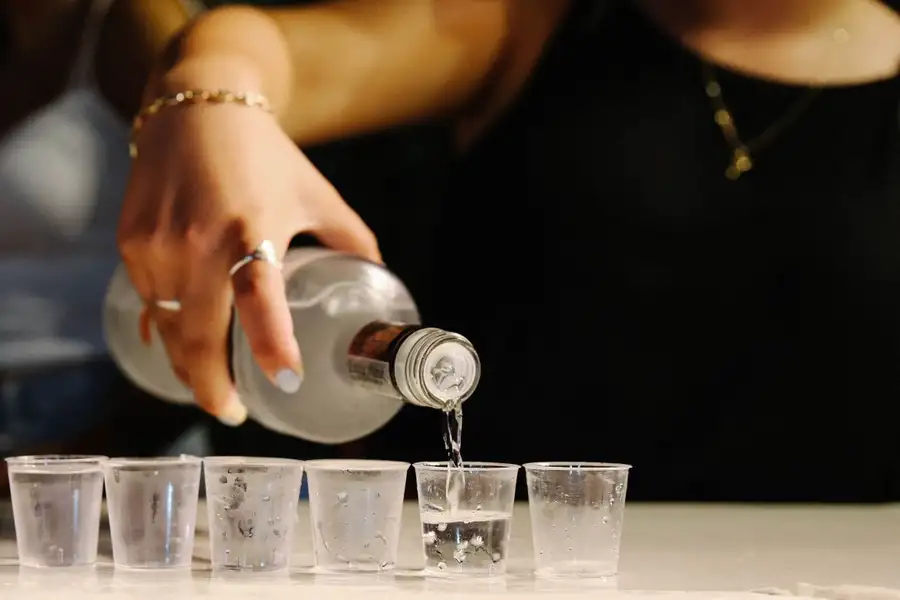
The Kerala High Court recently struck down a discriminatory provision in the State's excise rules that prohibited women from working in toddy shops. Rule 7(37) of the Kerala Abkari Shops Disposal Rules, 2002, does not allow women to be employed in a toddy shop in any capacity. The judgement is welcome, but it is far from the first of its kind.
In Dhanyamol CJ v State of Kerala (2015), the High Court struck down a similar provision, Rule 27A of the Foreign Liquor Rules, 1953, allowing women to work in bars and hotels. A year later, in B Sanuja & Others v State of Kerala (2016), the court set aside the restriction on women working in outlets of BEVCO, the government-owned corporation that runs the State's only retail liquor chain and recruits its staff through the Public Service Commission.
Why such laws, and why are they unfortunate?
Provisions of this kind rest on a protective rationale. Several of Kerala's laws governing the employment of women are prohibitory in character, closing certain occupations to women altogether. The State has defended them as a precautionary stance that shields women from workplaces it considers difficult or unsafe. The intent may be protection; the effect is exclusion.
Also Read: Sophy becomes Kerala’s first female toddy shop worker in 25-year gap
It is unfortunate that in a State which rightly takes pride in the achievements of its women in education and health, women must approach the courts each time to claim their right to equal employment.
Litigation has become the only route to reform, and each victory remains confined to the provision under challenge.
The restrictive provisions in the excise laws
A 2023 study by the Centre for Public Policy Research found that such restrictions run across Kerala's excise framework. Rule 27A of the Foreign Liquor Rules and Condition 9A of Form FL3, governing bar hotels, were held unconstitutional in 2015 but never deleted; excise officials cited them against a Kochi pub as recently as 2022.
Condition 20 of Form FL4A continues to bar women from employment in clubs. Similar bans remain in force in beer and wine parlours (Condition 17, Form FL11), beer retail outlets (Condition 17, Form FL12) and pub beer parlours (Condition 16, Form FL13), except where the licensee herself is a woman.
BEVCO alone has seen complete reform: following the Sanuja judgment, the rules were amended in 2018, and women now work in its outlets.
The rules do not hold together. A woman may own and run a beer parlour but may not be hired to serve in one. Women may serve liquor at private events under an FL6 licence, in airport lounges under FL7 and in BEVCO shops, but not across the bar of a star hotel. The safety rationale offered in 2013 cannot survive this pattern, and the High Court has said as much.
Why we need change?
The case for reform is both legal and economic. India's new Labour Codes, in force since November 2025, allow women to work in all establishments, including at night, with consent and safeguards. Kerala's excise rules are now out of step with national labour law.
Kerala's employment exchanges listed 22.98 lakh job-seekers in August 2025, 63.9 per cent of them women. The Periodic Labour Force Survey 2023–24 places unemployment among Kerala women aged 15–29 at 47.1 per cent, against 19.3 per cent among young men.
Meanwhile, the state's own Abkari policies are creating new hospitality jobs. The Abkari Policy 2023–24 promotes pubs in IT parks, MICE tourism and "Kerala toddy" in hotels. The Abkari Policy 2025–26 goes further: toddy shops recast as family-friendly dining spaces, toddy parlours in hotels of three-star category and above, event licences on dry days and bar licences for luxury cruise vessels. Unless the rules change, women will be legally shut out of many of the very jobs the State is working to create.
What must change?
As an immediate step, the government can, by executive order, include an equal-employment clause in the forthcoming Abkari Policy, stating that no licence category restricts employment on the basis of sex.
Rule amendments should follow: deletion of Rule 27A of the Foreign Liquor Rules and Condition 9A of Form FL3, already held unconstitutional; deletion of the bans in Forms FL4A, FL11, FL12 and FL13; and deletion of Rule 7(37) of the Abkari Shops Disposal Rules, so that women can work in toddy shops and toddy parlours as these are remade into family dining spaces.
Women should be protected through safeguards, not bans. Consistent with the Labour Codes, all licensed premises should ensure written consent for night work, safe transport, CCTV and security, and functioning Internal Committees under the POSH Act, 2013.
The government should also work with the Kerala Hotel and Restaurant Association on model guidelines for gender sensitisation and inclusive hiring in member hotels. Kerala need not choose between the safety of its women and their right to work. It must only stop treating one as the price of the other.
The state should not restrict choices of women in gaining employment, the time and place of work. It should move away from the paternalistic approach towards women to a liberal approach by ensuring that women have a safe working environment.
All the recent judgements by the Kerala High Court are pointing towards the need for amendments in the existing laws that affect women’s employment. Even after court judgements, the law remains the same on the statute book, without any repeal.
The author is Assistant Manager - Research and Project Management at the Centre for Public Policy Research in Kochi. Views expressed are personal.
Published: 10 Nov 2026, 12:51 pm IST


Related Topics
Disclaimer: Kindly avoid objectionable, derogatory, unlawful and lewd comments, while responding to reports. Such comments are punishable under cyber laws. Please keep away from personal attacks. The opinions expressed here are the personal opinions of readers and not that of Mathrubhumi.
