

May Operation Toofan become a model for the rest of India. May it protect our children. May it strengthen our families. May it make Kerala safer, healthier and more secure
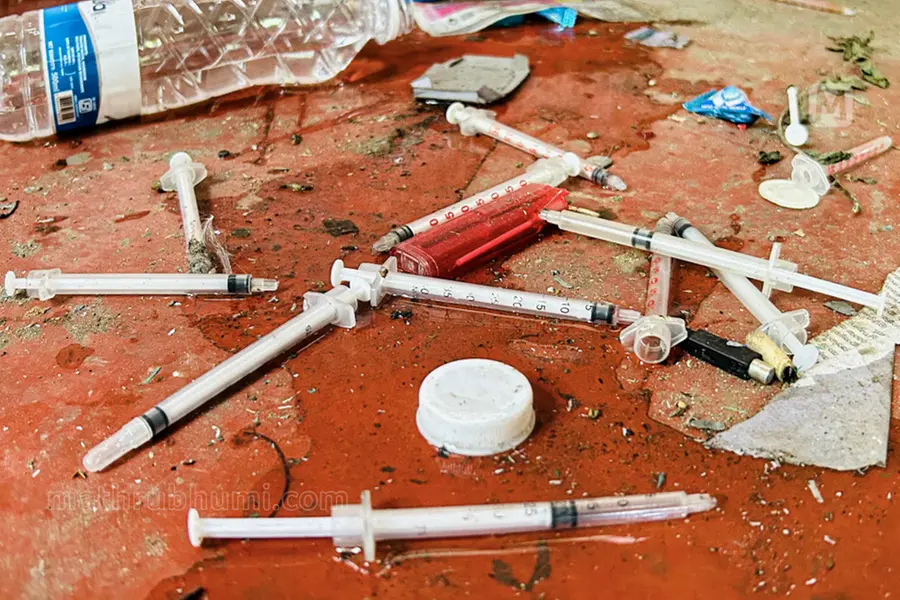
The challenge of drugs is not unique to Kerala. Across India, many states are confronting the same problem. The growth of synthetic drugs, the spread of interstate trafficking networks, and the rise of online drug markets have together made narcotics a truly national concern.
Our geography adds to the difficulty. India sits close to regions to both the northwest and the northeast that have historically been among the world’s major sources of narcotics. As a result, our law-enforcement agencies work continuously to keep drugs from entering our communities. The Government of India, the state governments, the police forces, the narcotics bureaus and the border agencies are all engaged in this effort.
Also Read
But enforcement alone, anywhere, has never been enough. The experience of state after state shows that success comes only when governments, educational institutions, families, community organisations and young people themselves work together. What is required is nothing less than a whole-of-society approach.
Drug abuse is a global challenge. No country — however rich, however developed — has wholly escaped it. From North America to Europe, from Latin America to Asia, governments are spending enormous resources to fight trafficking and addiction.
The international drug trade is worth many billions of dollars, and the criminal organisations behind it constantly change their methods. Technology has made the fight more complex still. Drugs can be ordered online, payments can be made digitally, and networks can operate across borders without ever meeting in person. For this reason, governments around the world are increasingly learning from one another and sharing what works. The fight against drugs has become a shared, global responsibility.
Part 1: Operation Toofan: A fight for Kerala’s youth, families and future
And here the world is engaged in an honest debate. Some nations have leaned almost entirely on punishment; others have leaned towards treating addiction as a question of public health. The lesson emerging from the most thoughtful among them is not that we must choose one or the other. It is that we must do both, and aim them at the right targets — to be hard, even merciless, with those who traffic, and humane with those who are trapped. That balance is difficult. But it is the mark of a mature society, and Kerala can be one.
What, then, have successful efforts taught us — here in India, and around the world?
First, strong enforcement matters. 95% of our arrests today are of users. But they are the victims. It is those who sold them the drugs who must be caught and those who supplied them who must be traced. Condign punishment for the criminals must follow. Traffickers must know, with certainty, that there will be serious consequences for their crimes. It is not the severity of punishment alone but the certainty of detection that deters.
Second, technology must be used intelligently. The criminals are doing it; so must the police. Data analysis, cyber-monitoring and intelligence-sharing allow agencies to map and dismantle whole networks, rather than merely catching one offender while ten others continue.
Third, community participation is essential. The most successful programmes anywhere involve parents, teachers, religious leaders, youth organisations and ordinary citizens. People must feel that the safety of their own neighbourhood is, in part, their own responsibility. Students must feel that informing on a friend who has started using drugs is not betraying a friendship but saving a friend’s future.
Fourth, awareness campaigns work best when they speak directly and honestly to the young. Young people do not respond to fear alone. They respond to facts, to role models, and to real opportunities. They must come to understand not only the dangers of drugs, but the deeper value of a healthy and meaningful life.
Fifth, treatment and rehabilitation are not an afterthought; they are central. Those trapped in addiction need support and compassion. The countries that combine firm enforcement with genuine rehabilitation are the ones that achieve lasting results.
Operation Toofan brings together many of these principles. It recognises that this is not merely a policing challenge but a social one. It focuses on our educational institutions. It promotes cooperation across state lines. It uses technology and intelligence. And it sets out to dismantle organised networks rather than simply reacting to individual incidents.
Most importantly, it sends a clear message: that Kerala will not surrender its future to drug syndicates.
The future belongs to our students, not to criminals. The future belongs to education, not addiction. The future belongs to hope, not despair.
Let me say one more thing about those who run this trade, so that there is no confusion about whom this storm is meant for. The man who sells these drugs to a schoolchild is not a businessman taking a risk. He is a predator. He profits from a child’s curiosity and a parent’s heartbreak. He calculates that a young life is worth a few rupees to him. We must answer that calculation with the full weight of the law, and with the full conviction of a society that refuses to let its children be sold.
At the inauguration of Operation Toofan, which took place in the largest girls’ school in Asia, Cotton Hill, I sought to ask something specific of each Keralite.
To our students: look out for one another. If you fear that a friend is in trouble, telling a trusted adult is not betrayal — it is loyalty. You may be saving the life of the person you care about.
To our teachers: you see our children for more hours than many parents do. Learn the early signs. Notice the bright student who suddenly fades, the cheerful one who turns silent. Your timely word can change a life’s direction.
To parents: talk to your children before the dealer does. Do not only watch them — listen to them. The home where a child can speak honestly is the home a drug finds hardest to enter.
To police and excise officers: pursue not only the peddler at the gate but the network behind him — the supplier, the financier, the route. Cut the root, and the weed will not return so easily.
And to all of us together: let us build the Kerala in which a young person does not need to escape from life, because life itself offers enough.
As someone who has had the honour of representing the people of Kerala, I know the strength of this society. We have overcome great challenges before. We have shown, again and again, that when government and society move together, remarkable things become possible.
I therefore congratulate the Chief Minister for making this campaign an early priority, the Home Minister, Ramesh Chennithala, form his leadership in this initiative, the Kerala Police, our educational institutions, and all those who have given themselves to this mission.
I began this (pair of columns with the meaning of the word Toofan — a storm). Let me end there as well. A storm does not last forever; that is not its purpose. Its purpose is to clear what has grown stagnant and to leave the air clean behind it. So let this Toofan be remembered not for its fury alone, but for the calm and the clarity that follow it — for the washed sky and the fresh earth in which a new generation can grow.
I wish Operation Toofan every success. May it become a model for the rest of India. May it protect our children. May it strengthen our families. May it make Kerala safer, healthier and more secure.
Let all of us extend our full cooperation to this mission. Together, we can ensure that the next generation inherits not a society weakened by drugs, but a Kerala strengthened by knowledge, discipline, opportunity and hope.
Published: 15 Jun 2026, 08:01 am IST
ABOUT THE AUTHOR
Disclaimer: Kindly avoid objectionable, derogatory, unlawful and lewd comments, while responding to reports. Such comments are punishable under cyber laws. Please keep away from personal attacks. The opinions expressed here are the personal opinions of readers and not that of Mathrubhumi.