

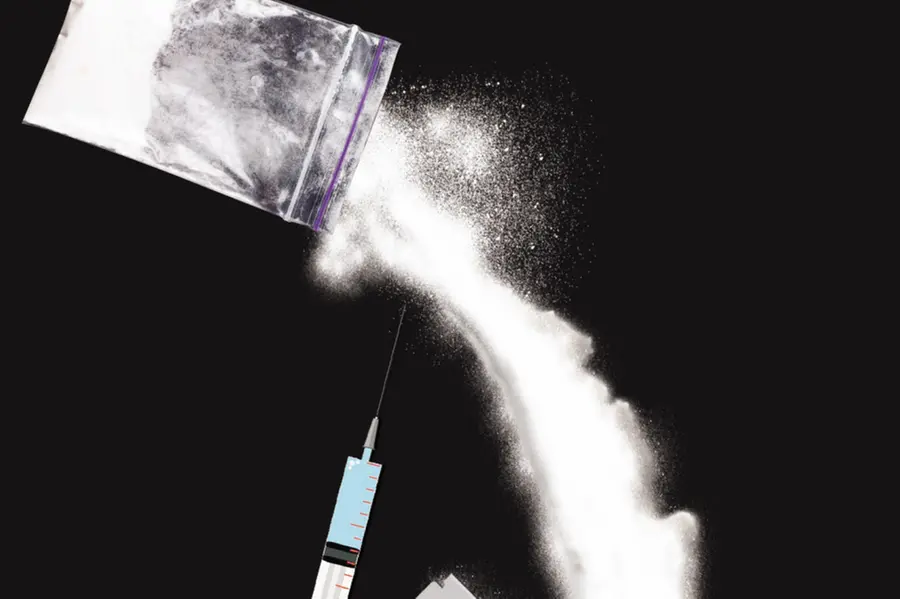
The drug trade, let us remember, is highly organised. Criminal networks use modern technology, social media, encrypted communication and interstate connections to spread their reach
I had the privilege of participating in the launch of Operation Toofan in Thiruvananthapuram – the first major new initiative of the new Government of Kerala.
The name Toofan means a powerful storm. And there is wisdom in that name. A storm is fierce. It is determined. It does not negotiate with what stands in its path. But a storm is also something more: it clears the stagnant air, it washes the sky, and it is followed by clean light and fresh earth. Today, Kerala is raising such a storm against one of the gravest threats facing our society — the menace of drugs. We raise it not only to destroy what is poisoning us, but to clear the way for what we wish to grow.
Also Read
Let me be clear about what this is, and what it is not. This is not merely a police operation. It is a social mission. It is a mission to protect our children, our families and our future.
Kerala has always been known for its high literacy, its social development and its quality of life. Our state has produced great scholars, scientists, artists, sportspersons and professionals who have made us proud across the world.
And yet, today, we face a serious challenge. Drug abuse has spread into many parts of our society. It is no longer confined to a few cities or a few groups. It has reached our villages, our small towns and our urban centres alike.
The nature of the problem has changed as well. Once, many people associated drug abuse mainly with cannabis. You could tell a drug user by the scent coming from what he was puffing. Today, dangerous synthetic drugs are becoming common — substances that are more addictive, more harmful, and far more difficult to detect. They are cheap to make, easy to hide, and increasingly sold to the young through the very social media on which they spend their days.
Why has this poison found such fertile ground in one of India’s most developed societies? The answer is not flattering, but it is true. The same openness that we are proud of, the same connectivity, the same prosperity and mobility — these are also the doors through which the poison enters. A society that is wealthy enough to spend, connected enough to be reached, and young enough to be tempted is precisely the society that the drug trade hunts. Our strengths, if we are not vigilant, can become our vulnerabilities. To accept this is not to weaken our pride in Kerala. It is to defend it intelligently.
The drug trade, let us remember, is highly organised. Criminal networks use modern technology, social media, encrypted communication and interstate connections to spread their reach. That is why our response must be equally modern, coordinated and determined. That is why an initiative like Operation Toofan matters.
There is a temptation, in a campaign run by the police, to speak only of seizures, of arrests, of consignments intercepted at our borders. These things matter enormously, and I will come to them. But we must start first with the victims. Otherwise, we will be back year after year, fighting the same storm.
Why does a young person reach for the drug in the first place? Sometimes it is a dare, peer pressure, curiosity, the wish to belong. More often it is something quieter and sadder — anxiety, loneliness, the crushing pressure of examinations, the fear of a future that feels uncertain, the ache of a generation that sometimes feels it must leave Kerala in order to find a life. Where there is a vacuum in a young person’s heart, the drug offers to fill it. The peddler does not sell a chemical alone. He sells the false promise of escape.
If that is true, then our task is larger than enforcement. We must fill the vacuum before the dealer does — with opportunity, with purpose, with someone to talk to, with the simple assurance that there is a future worth staying sober for. A campaign against drugs that ignores the reasons young people turn to them is a campaign that treats the symptom and forgets the wound.
The greatest concern, of course, is the impact on our young people. Every parent dreams of giving their children a better future. Every teacher enters a classroom hoping to shape responsible citizens. Every student carries hopes, ambitions and talents waiting to be realised. Drugs destroy these dreams.
A young person who first experiments with a drug may believe that “once is harmless”. But addiction does not remain a choice for very long. It seizes the body, then the mind, then the studies, then the family. Students who should be preparing for their examinations become trapped in dependency. Young people who should be building careers lose their direction. Families who have saved for a wedding or a degree spend it instead on hospitals and heartbreak.
Let me make this real, because behind every statistic there is a face. Picture a mother in any of our towns who notices her son growing distant, his eyes changing, his friends changing, the small things in the house beginning to disappear. She does not know whom to tell. She is afraid of the shame. And so she stays silent — until silence becomes too late. There are such mothers in every constituency in Kerala, including mine. We are not fighting an abstraction. We are fighting for that family, and for thousands like it.
Our schools and colleges, which should be sanctuaries of learning and growth, become vulnerable the moment peddlers begin to target their gates. This is why protecting our educational institutions must be among our highest priorities.
So let us remember the order of things. Prevention is always better than cure. Awareness is always better than regret. Education is always stronger than temptation.
We must be relentless against those who sell drugs. But we must be compassionate towards those who have fallen prey to them.
The young person caught in addiction is not first a criminal. He is first a patient. He is somebody’s son, somebody’s sister, somebody’s student. If our campaign teaches families that to admit a problem is to invite punishment and disgrace, then families will hide the problem until it can no longer be saved. But if our campaign teaches them that to ask for help is an act of courage — that the state extends an open hand and not only a closed fist — then they will come forward early, when help still works.
Addiction is not defeated by punishment alone. It is defeated by counselling, by medical care, by rehabilitation, and by the patient, unglamorous work of helping a human being rebuild a life. Let Operation Toofan be remembered as a storm that struck the trafficker hard — and that sheltered the victim.
To be continued
Published: 03 Jun 2026, 10:19 am IST
ABOUT THE AUTHOR
Disclaimer: Kindly avoid objectionable, derogatory, unlawful and lewd comments, while responding to reports. Such comments are punishable under cyber laws. Please keep away from personal attacks. The opinions expressed here are the personal opinions of readers and not that of Mathrubhumi.