
From secret lab tests to founding India’s first AIDS centre, these women revolutionized HIV awareness and care. Their legacy continues in every awareness campaign
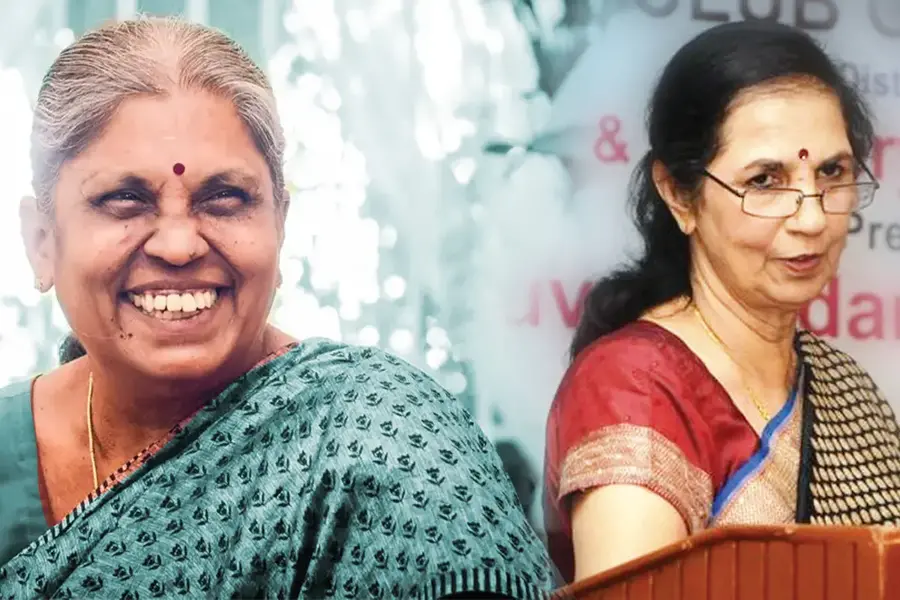
HIV is still on the list of deadly diseases that cannot be completely cured. The isolation and stoning that people face when they learn that they have AIDS were once a constant occurrence. There are also children in our country who were repudiated from society when the outside world found out that their parents were HIV-positive. However, through government awareness programs and proper preventive measures, we have been able to raise awareness and safety against HIV today. Two women are behind leading our society to such a place. Dr Suniti Solomon and her student Dr. Sellappan Nirmala. The beginning of HIV prevention efforts in India began with them.
First six - diagnosed
Dr. Suniti started her medical career at King's College Hospital in London. Later, she returned and started working as a microbiologist at Madras Medical College. The first human case of HIV was reported in 1981, in the world. In 1986, the first case was reported in India. But the authorities dismissed it as a common epidemic. Dr. Suniti felt from her medical experience that it was not an ordinary case. So she sent the blood samples of 100 female sex workers for testing. Six of them were HIV positive. That marked the beginning of the first HIV prevention studies in India. Sex workers didn't have an idea about this and also did not adopt safe methods. Many of them were homosexuals and shared needles to inject drugs. Moreover, the isolation felt by the HIV patients from society when the public learned these people had AIDS also forced them to hide their illness.
A study in secrecy
There was only a small temporary set up laboratory set up for HIV studies. There was no proper place to safely store the blood samples collected. So they even kept them in their own fridge. They barely even considered the risks. Among the first six people, one child was also infected with AIDS. When the authorities were informed, they were not ready to believe or take it into account. Dr. Suniti's work was secret because she did not get permission for the study. Suniti's research student Sellappan Nirmala also supported her and provided all possible assistance.
The village girl who is part of history
At that time Sellappan Nirmala was a microbiology student at Madras Medical College. While she was looking for a topic for her project, her professor and mentor Dr. Suniti Solomon told Nirmala about the presence of the HIV virus in India. But Nirmala also thought that there was no such thing until those samples were collected and sent and the results came.
Nirmala was an ordinary girl born and brought up in a conservative family in Tamil Nadu. She could only speak Tamil was married while pursuing the course and had a child. In an interview with the BBC, Nirmala once said that she wanted a normal life full of peace and happiness. But after she shared Dr Suniti's suggestion with her husband, Veerappan Ramamurthy, he gave her great support which was Nirmala's courage.
Nirmala collected blood samples from female sex workers in Chennai. Many of them had other deadly diseases transmitted through unprotected sex. Along with that, HIV infection too. But initially, the authorities were not ready to accept this discovery. 'Everyone turned against us, and we had to face the opposition of the society, saying that we were bad women,' - says Nirmala.
Later, after completing her studies, Nirmala worked as part of projects related to the production of various preventive medicines at the King Institute of Preventive Medicine and Research in Chennai.
Own home for HIV clinic
Dr. Suniti realised that people would not be willing to seek treatment once they were diagnosed with the disease. The difficulties faced by the patients were greater than the pain of the disease. With that, she opened the first HIV clinic in her home. She identified the patients and gave them the motivation to live and treatments to reduce the severity of the disease.
Dr Suniti welcomed patients who were given up by other hospitals with open arms. Along with medicine, she also provided psychological support for continuing life. She trained the health workers who came willingly at her own expense in HIV prevention. Dr. Suniti was the first to organize HIV awareness programs focusing on schools and colleges in the country.
In memory of her father
Dr. Suniti also founded India's first AIDS Resource Group at Madras Medical College (MMC). This was the first step towards conducting AIDS-related research and social services in India. In 1993, she founded the YR Gaitonde Centre for AIDS Research and Education (YRG CARE) in the name of her father. It was one of the first centres in India to provide services like HIV counselling and testing. Later, the country honoured her with the Padma Shri for her selfless services. Dr. Suniti Solomon, known as the 'AIDS Doctor of Chennai', passed away in 2015 at the age of 75.
Published: 23 Jun 2025, 09:58 am IST
Related Topics
Disclaimer: Kindly avoid objectionable, derogatory, unlawful and lewd comments, while responding to reports. Such comments are punishable under cyber laws. Please keep away from personal attacks. The opinions expressed here are the personal opinions of readers and not that of Mathrubhumi.
