
The Union Cabinet has approved two schemes worth Rs 7,185.10 crore to modernise India's statistical system and strengthen domestic processing of critical minerals.
New Delhi: In a twin push to strengthen India's data infrastructure and reduce dependence on overseas suppliers for critical minerals, the Union Cabinet on Wednesday approved two major schemes with a combined financial outlay of Rs 7,185.10 crore.
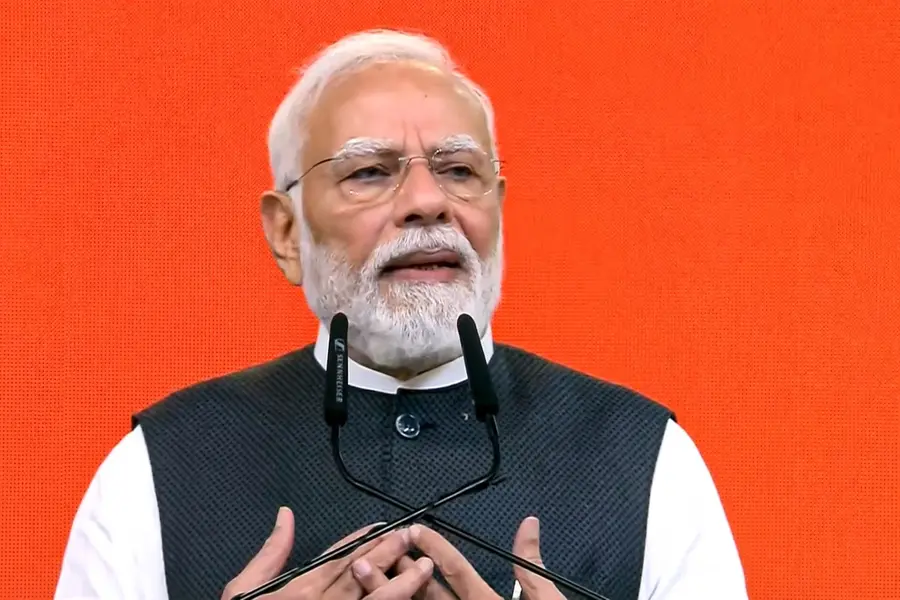
Prime Minister Narendra Modi announced the decisions, highlighting the government's focus on technology-driven policymaking and building domestic capabilities in strategic sectors.
The two initiatives include the Viksit Bharat Initiative for Statistical Transformation, Analytics & Research (VISTAR), aimed at modernising India's statistical system, and a capital expenditure support scheme to promote domestic processing of critical minerals such as lithium and nickel.
In a post on X, Modi said better data would lead to better decisions, policies and delivery of services to people.
He described the VISTAR scheme as an initiative to transform India's statistical ecosystem, with technology, artificial intelligence and a greater focus on granular data collection among its key features.
What is the VISTAR scheme?
The VISTAR scheme has been approved with an outlay of Rs 4,371.10 crore and will be implemented over five years, from 2026-27 to 2030-31.
It aims to establish a modern, integrated, AI-ready statistical architecture to improve the availability, accuracy, and timeliness of official data.
The Ministry of Statistics and Programme Implementation plans to conduct 59 surveys during the 16th Finance Commission cycle, compared with 43 major surveys conducted previously.
The initiative will also incorporate artificial intelligence and machine learning into data processing, validation and analysis.
The scheme will focus on strengthening statistical capabilities across states and Union Territories, enabling the generation of more detailed district-level and city-level estimates.
It also includes plans for the eighth Economic Census, which will collect information on non-farm establishments and their workforce down to the gram panchayat and municipal ward levels.
The government expects the initiative to improve evidence-based policymaking and help bridge existing data gaps across sectors.
Rs 2,814 crore push for critical mineral processing
The second Cabinet decision seeks to address India's dependence on imports of refined critical minerals, which are essential for electric vehicles, battery manufacturing, electronics and defence technologies.
Questioning whether India should continue depending on other countries for processing minerals that will power future technologies, Modi said he did not favour such dependence.
The Cabinet has approved the Capex Support Scheme to Promote Critical Mineral Processing with a financial outlay of Rs 2,814 crore. The scheme will be implemented over five years, from 2026-27 to 2030-31.
Under the initiative, the government will provide a capital subsidy of 30 per cent of eligible investment to establish four processing plants, comprising two lithium processing facilities and two nickel processing facilities.
The lithium plants will have a minimum capacity of 30,000 tonnes each, while the nickel plants will have a minimum capacity of 50,000 tonnes each.
Cobalt is also expected to be recovered as a by-product of nickel processing. The scheme aims to develop domestic capabilities to convert lithium and nickel ores and intermediate products into high-purity materials.
The initiative is expected to strengthen domestic value addition, encourage investment in mineral processing and improve supply chain resilience.
These materials are particularly important for sectors such as electric mobility, battery energy storage, electronics and defence.
Modi said the objective was to ensure India develops the capabilities needed to build future technologies.
Published: 04 Nov 2026, 07:30 pm IST


ABOUT THE AUTHOR

Related Topics
Disclaimer: Kindly avoid objectionable, derogatory, unlawful and lewd comments, while responding to reports. Such comments are punishable under cyber laws. Please keep away from personal attacks. The opinions expressed here are the personal opinions of readers and not that of Mathrubhumi.