
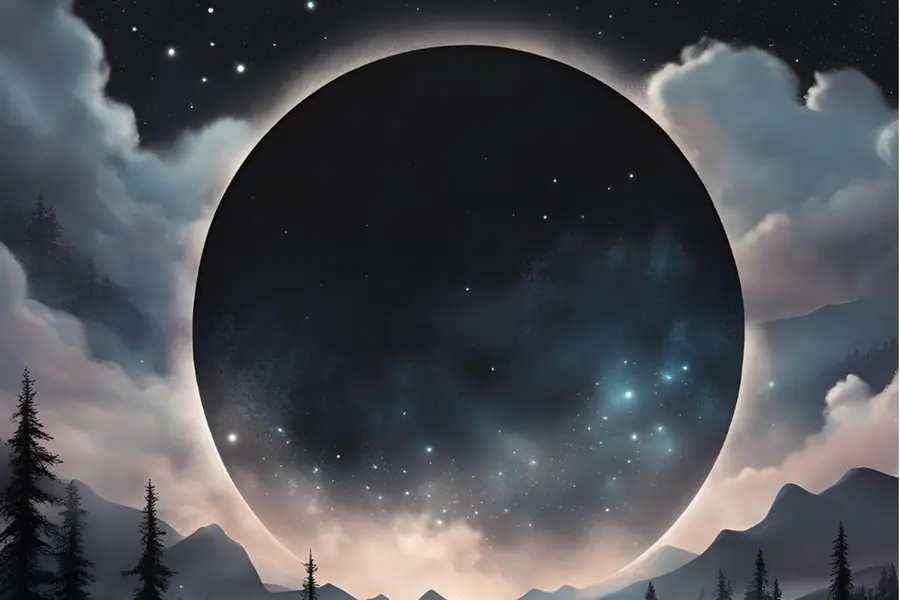
The Black Moon, a rare astronomical event, has intrigued skywatchers and stargazers alike, especially as it coincides with the New Year. This phenomenon occurs when there are two new moons in the same calendar month. While the term "Black Moon" is not officially recognized in astronomy and lacks a precise definition, it has gained popularity in recent years due to its rare occurrence and the intrigue surrounding it.
On December 31, the Black Moon was visible across several continents, including Europe, Africa, and Asia. In India, it was visible at 3:57 AM. During a Black Moon, the Sun and the Moon align at the same longitude, causing the Moon to be invisible to the naked eye from Earth. This happens because the Moon is positioned between the Earth and the Sun, making it difficult to observe. The Moon takes an average of 29.5 days to complete its orbit around Earth, which means that, in some months, two new moons can occur—this is what leads to the Black Moon.
This phenomenon is similar to the occurrence of two full moons in a month, which is known as a "Blue Moon." Interestingly, the Black Moon typically does not result in a visible eclipse, unless it coincides with a solar eclipse, which is a rare event in itself.
While the Black Moon presents a great opportunity for astronomers to observe distant stars, planets, and galaxies, it has also sparked superstitions in some communities. Some believe that black magic spells and other supernatural occurrences are more potent during the Black Moon, leading certain individuals to eagerly await its arrival.
Published: 31 Dec 2024, 10:33 am IST
Disclaimer: Kindly avoid objectionable, derogatory, unlawful and lewd comments, while responding to reports. Such comments are punishable under cyber laws. Please keep away from personal attacks. The opinions expressed here are the personal opinions of readers and not that of Mathrubhumi.
