
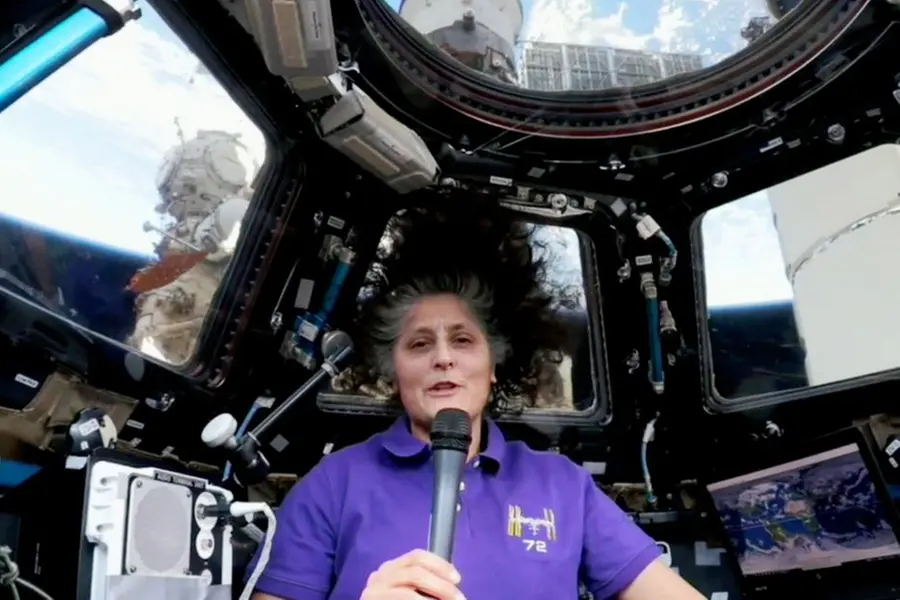
Even as their prolonged wait to return home finally nears its end, astronauts Sunita Williams and Barry 'Butch' E Wilmore will face an immense struggle the moment they set foot on Earth. After an extended nine-month stay in space, the duo may struggle to stand and walk upon their return to Earth on March 16, 2025.
Experts warn that the sudden shift from microgravity to Earth's gravitational pull will take a severe toll on their bodies, leaving them physically weakened. Medical teams are already preparing for their arrival, planning to place them on stretchers immediately and transport them for detailed health assessments.
It is opined that both will require an intensive rehabilitation period of up to six weeks. Their recovery will involve carefully structured exercises and a strict nutrition plan to help restore lost muscle strength and bone density.
Despite their disciplined routine of exercising for two hours daily aboard the International Space Station (ISS), the absence of Earth's gravitational force has led to inevitable physical deterioration.
NASA research suggests astronauts lose around 1-2% of their bone density each month in space, heightening their risk of fractures and osteoporosis. Their cardiovascular health also takes a hit, as blood circulation and fluid distribution shift in microgravity.
A hidden danger of radiation exposure
Beyond the immediate physical effects of microgravity, radiation exposure remains a major long-term threat. Astronauts aboard the ISS are exposed to radiation levels far higher than on Earth. Over their nine-month mission, Sunita and Barry have absorbed the equivalent of nearly nine years' worth of radiation exposure.
This prolonged exposure notably increases their risk of developing cancer, central nervous system disorders and cardiovascular diseases. NASA scientists are closely monitoring their condition while exploring new ways to mitigate these long-term risks.
A mission that lasted far longer than planned
Sunita and Barry were never meant to stay in space for this long. Originally, they were scheduled to spend just eight days on the ISS after launching aboard Boeing’s Starliner spacecraft on June 5, 2024. However, technical problems with the Starliner delayed their return indefinitely, leaving them stranded for months.
Due to persistent safety concerns with the spacecraft, NASA ultimately decided to bring them back using a different vehicle. While the ISS provided a stable environment, the unintended extension of their mission has had a profound impact on their health. Now, as they prepare to return, their journey is far from over—the real challenge will be adapting to life back on Earth.
Published: 11 Mar 2025, 05:33 pm IST
Disclaimer: Kindly avoid objectionable, derogatory, unlawful and lewd comments, while responding to reports. Such comments are punishable under cyber laws. Please keep away from personal attacks. The opinions expressed here are the personal opinions of readers and not that of Mathrubhumi.
