
A new app in China, originally called “Are You Dead?”, has become wildly popular among young adults living alone, allowing them to send quick proof-of-life updates
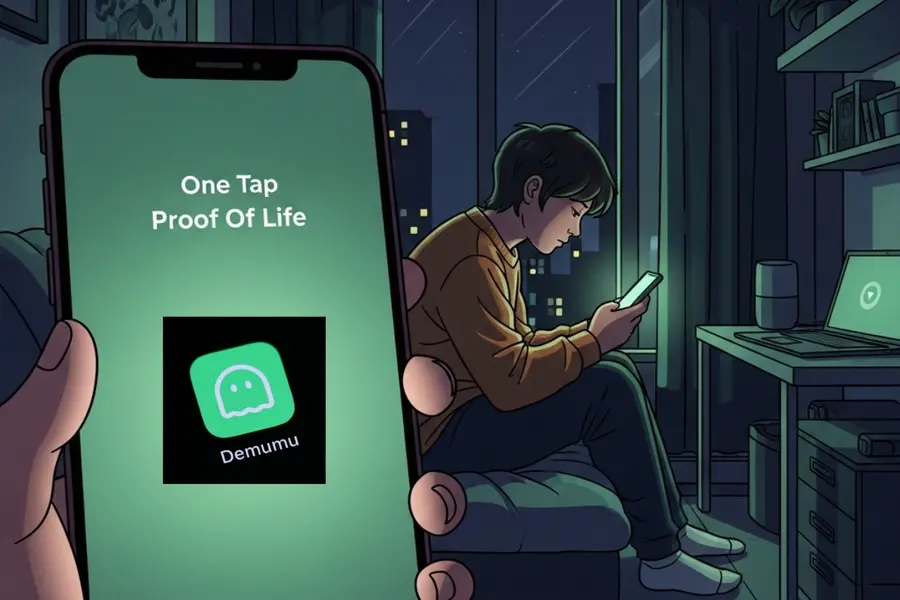
The app, designed by three young developers in their 20s, features a simple one-button interface. Users who live alone can tap a large green circle on their phone screen to send proof of life over the network to a chosen friend or relative. The service costs 8 yuan (around $1.10) per use. Its simplicity mirrors emergency alert devices for the elderly, such as the US “I’ve fallen” pendants, but targets young people navigating life in big cities.
Why it resonates with young urbanites
Also Read

China’s urbanisation and rapid economic growth have separated millions of young people from their families. Over 100 million households now consist of single occupants, according to China’s National Bureau of Statistics 2024 report. For individuals like developer Ian Lü, who lived alone in Shenzhen for five years, checking in daily with loved ones can be cumbersome, especially for introverts. The app offers a frictionless, socially acceptable solution.
Cultural context and public reaction
The app’s original name, “Are You Dead?”, is provocative in a country where death is culturally taboo. Despite this, it became the top paid app on Apple’s Chinese App Store and is gaining attention internationally. Users describe it as both a practical tool and a wry social gesture. Some see it as a darkly humorous metaphor highlighting the emotional isolation of contemporary youth.
Concerns and adaptations
Some users, especially women, have expressed concern over data privacy. To address public pressure, developers announced a tentative name change to “Demumu”, intended to appeal to solo dwellers worldwide. However, the new name did not gain widespread approval, prompting the team to invite public suggestions for a replacement, with a reward of 666 yuan ($96).
Social and technological significance
Beyond its safety function, the app offers a subtle social connection for people living alone. It reflects broader trends in technology addressing urban isolation, allowing users to signal their presence and wellbeing without traditional social interaction.
“Are You Dead?” has become a cultural phenomenon in China, highlighting the intersection of technology, urban living, and mental wellbeing. Its success shows a growing market for tools that combine safety, social reassurance, and a touch of humour, especially for young people navigating life alone in fast-paced cities.
Published: 15 Jan 2026, 04:08 pm IST
Disclaimer: Kindly avoid objectionable, derogatory, unlawful and lewd comments, while responding to reports. Such comments are punishable under cyber laws. Please keep away from personal attacks. The opinions expressed here are the personal opinions of readers and not that of Mathrubhumi.