
When John Milton wrote his epic Paradise Lost, William Blake commented on how Milton was ‘of the devil’s party without knowing it’. What this means is that when trying to describe the story of the fall of man, Milton inadvertently glorified Satan and made God secondary. It was to make up for this that the poet then wrote Paradise Regained, which, however, could never match up to the legacy of its predecessor.
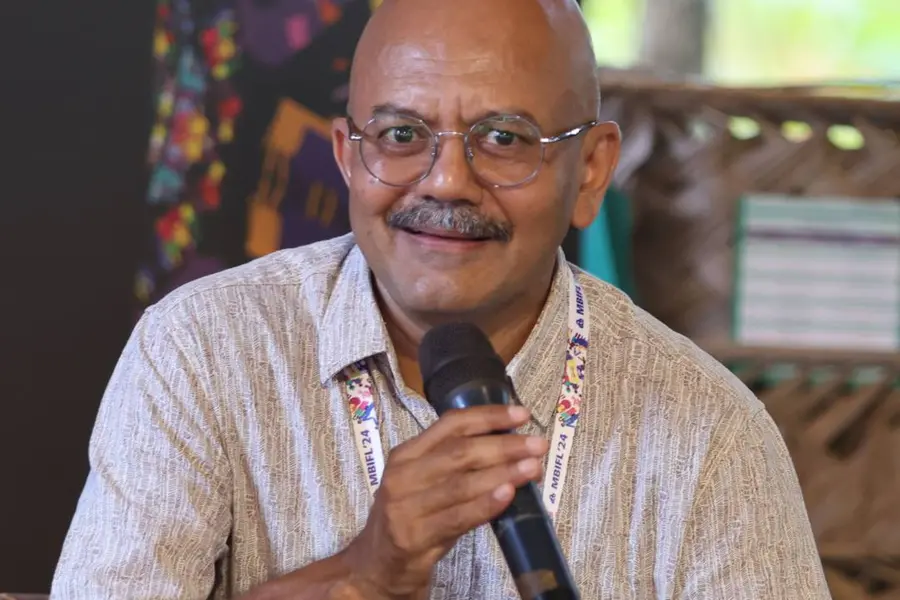
How does one maintain this fine balance of telling a story, one with sin and crime, without taking sides or glorifying wrongdoing? Author and journalist Shevlin Sebastian talks with Mathrubhumi.com about maintaining this fine balance and the fascination with true crime stories.
Why did you choose crime as your genre?
The one reason publishers like crime books is that people are fascinated by crime. Every time they see a crime, they wonder, how could a person do this? How could this man or woman muster the courage to commit this? Even in newspapers, most people will read a crime story because it is inherently fascinating. That is also why most of the bestsellers of publishers are books on crime. I happened to come across one crime story. It was called ‘The Stolen Necklace’ and I got a mainstream publisher for this story.
Is your next book also a crime thriller?
My next book is on an interesting theme. It is about a priest who spends 30 years counselling prisoners in jail all over Kerala. He also spent three years in Tihar jail. He interacted with the four accused in the famous Delhi Nirbhaya rape case. He has counselled many hardcore criminals. He would tell them to turn a new leaf and better themselves for the sake of their families. The book has a lot of real-life anecdotes of the prisoners. There is also an expose of what happens in the parishes.
There has always been a fascination with true crime series and documentaries. Would you agree?
Yes, they are inherently fascinating. Even in OTT, they show many true crime series and documentaries. The advantage of writing about crime is that a lot of OTT platforms are interested in turning these stories into a visual form. So the writer can make some money if he writes a good crime thriller with a lot of imagery.
How difficult was your transition from being a journalist to an author?
As a journalist, it was not easy for me to move into writing books as I’m used to writing very fast. I have a daily deadline and need to keep it brief. But writing a book is the opposite. When I first started writing, my literary agent told me that I needed to stop writing like a journalist. I used to listen to tutorials on how to write non-fiction books. However, publishers always prefer journalists because they are good at keeping deadlines. Slowly, I started realising that I just needed to relax and write.
Do you ever fear that you might be helping a potential criminal by describing crimes so vividly?
I admit that. But now the internet is accessible to all. If anyone is planning anything, they can just google it. There’s nothing a writer can do. What we can do is portray the damage that ensues. In my book, I try to show how a life of crime is romanticised. But it is horrific in reality. If you see a jail once in your life you will never commit a crime. Because you will see how they are living, how depressed they are, the lack of facilities, privacy, and hopelessness. I am writing crime to sensitise readers about the dangers of crime.
Criminal is not a hero. When I write, I do not take the side of the criminal, nor do I take the side of the law enforcement. I tell the story without taking sides. Neither am I glamourising the crime nor the law enforcement. I am just describing what happens in a vivid manner so as to create an impression in the reader’s mind.
How relevant is reading in today’s day and age?
People say reading is not happening but books are being sold out. Wherever you go, you can always spot people reading. Some may have hard copies and others might be on their Kindle, but they are reading. I feel reading is coming back into relevance. People are now tired of mindless scrolling. When you are reading, you are forced to imagine. So I would advise young people to read for at least 20 minutes per day.
Published: 20 Feb 2024, 03:22 pm IST
Related Topics
Disclaimer: Kindly avoid objectionable, derogatory, unlawful and lewd comments, while responding to reports. Such comments are punishable under cyber laws. Please keep away from personal attacks. The opinions expressed here are the personal opinions of readers and not that of Mathrubhumi.
