
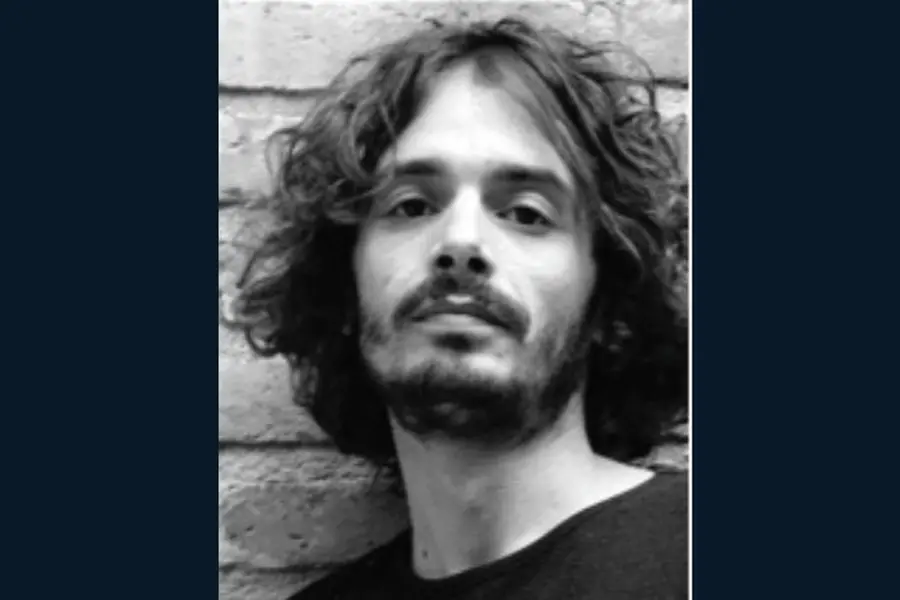
Many years later, after these magical words from Colombian Nobel laureate Gabriel Garcia Marquez changed world literature, his grandson Mateo Garcia Elizondo, remembers that day in 2016 when his grandfather’s ashes were laid to rest in the cloister of the University of Cartagena.
On that solemn occasion, Garcia Elizondo read chapter six of Marquez’s memoirs, ‘Living to Tell the Tale’.
He was a constant companion of García Márquez in his final days, holding his hand on some of the last occasions in which he appeared in his garden in Mexico City. He recalls his grandfather teaching him to value the classics in literature and film.
García Elizondo is warmly welcomed to MBIFL's fourth edition as he proudly stands on his own as a writer.
García Elizondo was born of two great literary legacies, the grandson of the revered Márquez and Salvador Elizondo Alcalde. In a world where names carry weight, García Elizondo quietly crafted his own tale before the burden of his familial fame could catch up to him. His father, a graphic designer and mother, a photographer, birthed him in Mexico City under the stars in September 1987.
His debut novel, ‘A Date With Lady’, takes the reader to Zapotal, a forgotten village on the edge of the rainforest, where a young man flees the city to hide away in a room. There, he finds solace in his ample reserves of opium and heroin, writing down the final moments of his life in a little notebook. With the first inhale of opium smoke, he is transported into a magical realm of dreams.
Critics see in his novel the influence of the Mexican novelist Juan Rulfo rather than García Márquez, both of whom explored the boundary between life and death. The protagonist creates his own universe, ‘El Rincón de Juan’, where the lost souls of the village converge, but as the memory gaps multiply and the drug reserves dwindle, death lingers just beyond reach.
García Elizondo's travels and love of literature from around the world inform his work, which often deals with themes of identity and Mexico, yet he sees himself as a narrator of universal stories.
Published: 09 Feb 2023, 12:51 pm IST
Related Topics
Disclaimer: Kindly avoid objectionable, derogatory, unlawful and lewd comments, while responding to reports. Such comments are punishable under cyber laws. Please keep away from personal attacks. The opinions expressed here are the personal opinions of readers and not that of Mathrubhumi.
