
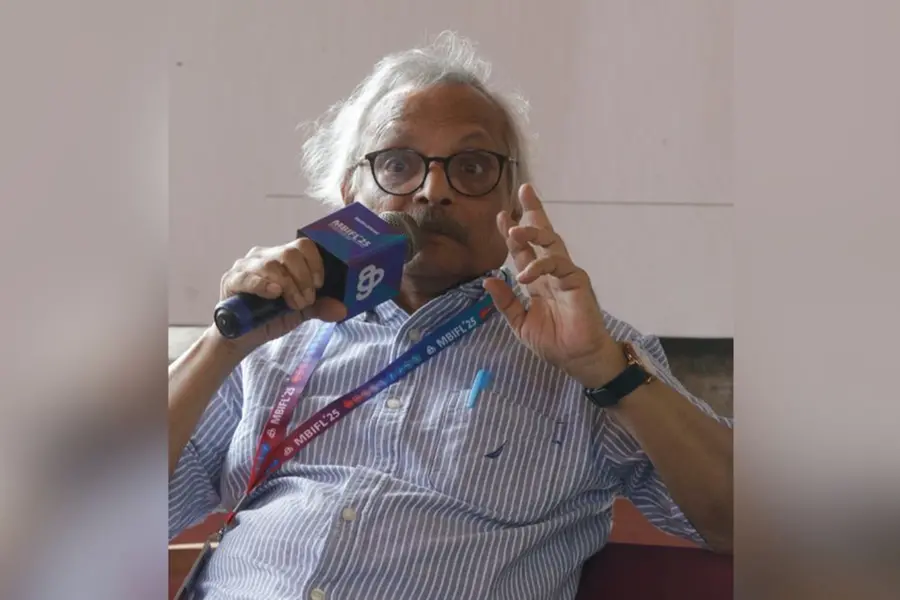
When he was a kid, M. Mukundan grew up listening to the tales from French myths and folklore unlike the tales from Indian epics told to children in Kerala. That was the environment in Mayyazhi, a different world altogether, though surrounded by Kerala.
“One such story I still remember; that was about Joan of Arc, the shepherd girl who led the French to victory in many battles and was finally she was burnt at the stake,” he recollected the old days at Mahe, the erstwhile French colony.
Even now the smell of baking cake is fresh in his memory, and that was the smell of Mayazhi for him as a child.
And then he used to see the French officials and others coming to watch theyyam, and they were amazed and startled to see the rituals, he said. They used to sit separately, because they were white! According to him, Mayyazhi is the kid born out of the love between India and France.
It was from such memories that he wrote his debut novel 'Mayyazhippuzhayude Theerangalil'. However, the first draft was rewritten after reaching Delhi, which again, changed his visions. In a sense, while the days in Delhi remain nostalgic for Mukundan, his native Mayyazhi is his umbilical cord.
In his own words, Delhi days were of storms, romances, and tsunamis! Despite his time in Delhi shaping his vision, his bond with Mayyazhi (Mahe), an erstwhile French colony now part of Puducherry but nestled within Kerala, remained unbroken.
“If you understand my love for Mayyazhi, you will understand everything else. Mayyazhi is my mother, and a mother means simplicity. Perhaps that is why my language is simple,” he said during a discussion on his new book, ‘Ente Embassykkalam’ (My Embassy Days) at MBIFL’25.
Writing simply, he believes, is far more challenging than writing in a complex manner. “But fiction written in complicated language won’t survive,” he remarked. “Not many people remember Sartre today, but Camus is still cherished in his homeland. We may celebrate complex fiction, but it doesn’t last.”
And it is this simplicity that makes Victor Hugo’s ‘Les Miserables’ a work read by every generation even now, he said. He first read the Malayalam translation, Paavangal, by Nalapat Narayana Menon, which is celebrating its hundredth year now.
During a discussion commemorating the centenary year of the translation, Mukundan said he read the whole novel in the dull light of the kerosene lamp, as there was no electricity those days in Mayyazhi.
“Those days, there was scarcity of light and one night I fell asleep while reading, keeping the book on my chest and then I realized that you can read a book with your heart too, not just eyes,” he said sharing his experience of reading a translation that Malayali readers still consider their own novel.
It was with all these experiences he reached Delhi at a young age, which opened doors of a new world of experience before him. Such experiences are captured in his latest autobiographical narrative, ‘Ente Embassykkalam’. Even now those experiences pulse in his memory. It was a time when political leaders, including ministers, moved freely, without fear. “I once saw a photograph of E M S Namboodiripad, then the chief minister of Kerala, riding pillion on a young Malayali journalist’s scooter. Can we imagine a chief minister doing that today?” he mused.
Travelling to Delhi in those days was arduous; but hardship, he believes, fuels creativity. “When you travel comfortably, you can write a travelogue, but not a novel,” he said.
Though reluctant to write about himself, ‘Ente Embassykkalam’ emerged from necessity. “But it has given me the confidence to believe that even ordinary people can write memoirs. Maybe I should write more,” he added with a smile. Yes, he is churning out his memories and mixing it with his creative imagination to give birth to new classics.
Published: 09 Feb 2025, 10:04 pm IST
Related Topics
Disclaimer: Kindly avoid objectionable, derogatory, unlawful and lewd comments, while responding to reports. Such comments are punishable under cyber laws. Please keep away from personal attacks. The opinions expressed here are the personal opinions of readers and not that of Mathrubhumi.
