
Analysts say Beijing will approach the talks cautiously while protecting its interests on issues such as Iran, rare earths and relations with Russia
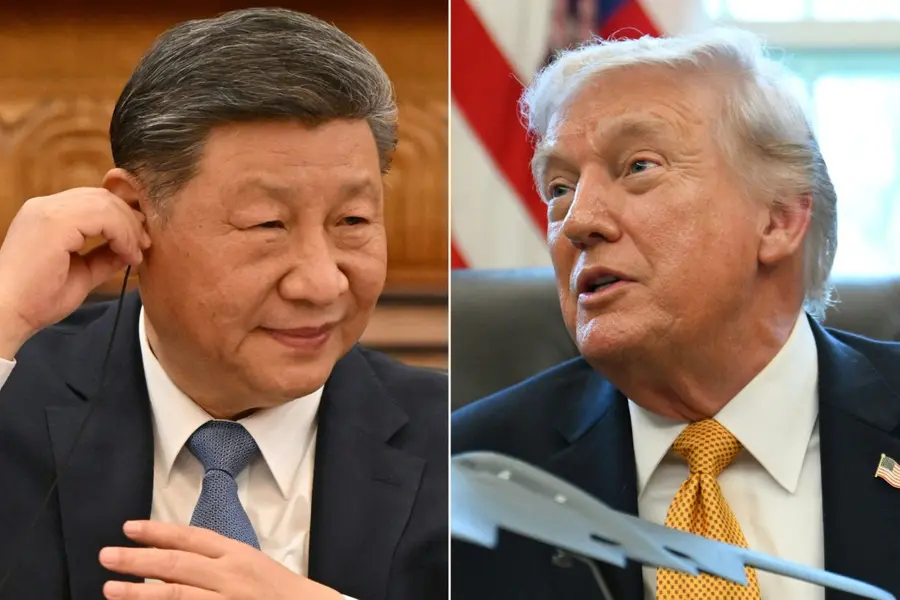
Beijing: US President Donald Trump is expected to visit China on May 14 and 15 for talks with Chinese President Xi Jinping, in a meeting that comes after an earlier summit was delayed because of the Iran war. While the visit carries major diplomatic significance, analysts believe Beijing’s expectations remain measured, with China focusing on limited but practical gains rather than a dramatic reset in ties with Washington.
The two countries continue to navigate a strained relationship shaped by trade tensions, geopolitical rivalry and disagreements over global conflicts. Experts say China is approaching the summit cautiously, aiming for stability while preparing for the possibility of further unpredictability from Trump.
Why is this meeting important for China?
The summit comes at a sensitive time for both countries. China and the United States had previously been engaged in a fierce trade confrontation, during which US tariffs on several Chinese products climbed to as high as 145 percent.
Tensions eased somewhat after Trump and Xi agreed in October to a one-year trade truce. Analysts say Beijing’s immediate priority is to ensure that agreement continues beyond its current timeline.
Benjamin Ho of Singapore’s S Rajaratnam School of International Studies said China would prefer a broader improvement in relations but understands that such an outcome remains unlikely under current circumstances.
Instead, Beijing is expected to focus on smaller, achievable outcomes that can reduce tensions without requiring major political concessions.
What concrete results is Beijing looking for?
Experts say China wants proof that Washington is willing to continue engaging diplomatically and economically at the highest level.
Yue Su from the Economist Intelligence Unit said Beijing would likely consider limited tariff relief a meaningful success. China could then justify easing some of its own retaliatory tariffs or export restrictions in response.
Rather than aiming for sweeping agreements, Chinese officials are believed to be concentrating on targeted and manageable results that would stabilise trade ties.
Analysts also believe Beijing may attempt to create a positive atmosphere ahead of the summit through smaller economic gestures, including increased purchases of American agricultural goods or Boeing aircraft.
Joe Mazur, a geopolitics analyst at Beijing consultancy Trivium China, said such steps could help place Trump and his advisers in a more favourable mood before discussions move towards more difficult subjects.
How could the Iran war affect the talks?
The conflict involving Iran is expected to feature prominently during the Xi-Trump discussions, although analysts say China does not want to become deeply involved in the issue.
According to experts, Washington has already increased pressure on Beijing before the summit by targeting China’s economic relationship with Tehran.
Trump warned last month that Chinese goods could face an additional 50 per cent tariff if Beijing provided military assistance to Iran.
China maintains close ties with Tehran and has criticised US-Israeli strikes on Iran as illegal. At the same time, Beijing has also condemned Iranian attacks on Gulf countries and called for the reopening of the Strait of Hormuz.
However, analysts believe China will resist any attempt by the United States to pressure it into taking action against Iran or Russia.
Yue Su said Beijing may hold some influence over both countries but does not have decisive control over them.
China is also expected to avoid allowing disputes linked to Iran to further complicate an already difficult relationship with Washington.
Why are rare earths so important in negotiations?
One of China’s strongest advantages in negotiations with the United States remains its dominance in rare earths.
These minerals are essential for the production of smartphones, electric vehicles and many advanced technologies. China controls a major share of global rare earth reserves, mining operations and processing capacity after decades of investment in the sector.
Analysts believe Beijing could use this position as leverage if talks require significant concessions from the United States.
Mazur noted that rare earths remain an area where Washington still lacks a strong alternative to Chinese supply chains.
Trump has repeatedly highlighted the importance of securing access to rare earth materials, making the issue a key part of the broader economic negotiations.
How has China prepared for future pressure from Trump?
Experts say China has spent years preparing for possible instability in relations with the United States.
Beijing has expanded trade ties with Southeast Asia and countries in the Global South while also strengthening regional partnerships. At the same time, it has focused heavily on technological self-sufficiency, energy diversification and electrification.
According to analysts, China has also developed stronger legal and regulatory tools that can be used in economic disputes. One recent example cited was the blocking of technology company Meta’s acquisition of artificial intelligence firm Manus.
However, experts point out that many of these policies were already underway before Trump’s second presidential term and are part of China’s long-term economic planning.
Mazur said that even if the summit proves highly successful, it is unlikely to alter China’s broader strategy of reducing economic dependence on the United States.
He said Beijing’s effort to “America-proof” its economy would continue regardless of the meeting’s outcome.
Does China believe it holds the stronger position?
Analysts say Beijing is entering the summit with growing confidence in its ability to withstand economic and political pressure.
Lizzi Lee of the Asia Society Policy Institute said Chinese leaders believe they are better positioned than before to absorb external pressure and play a longer strategic game.
She noted that Trump also faces domestic political considerations ahead of US midterm elections, which may influence his negotiating approach.
Meanwhile, China continues to maintain close ties with Russia. Russian President Vladimir Putin is also expected to visit Beijing later this year, according to Russian Foreign Minister Sergei Lavrov.
Analysts believe a possible back-to-back visit involving Trump and Putin would signal that China’s partnership with Russia remains unchanged despite diplomatic engagement with Washington.
Mazur said such a sequence would demonstrate that strong ties between Beijing and Moscow are not dependent on China’s relationship with the United States.
Agency inputs
Published: 08 May 2026, 09:33 am IST
Related Topics
Disclaimer: Kindly avoid objectionable, derogatory, unlawful and lewd comments, while responding to reports. Such comments are punishable under cyber laws. Please keep away from personal attacks. The opinions expressed here are the personal opinions of readers and not that of Mathrubhumi.
