
US President Donald Trump said he and Chinese President Xi Jinping discussed Iran, Taiwan and regional tensions during his recent visit to China, claiming both leaders agreed that Iran should not possess nuclear weapons.
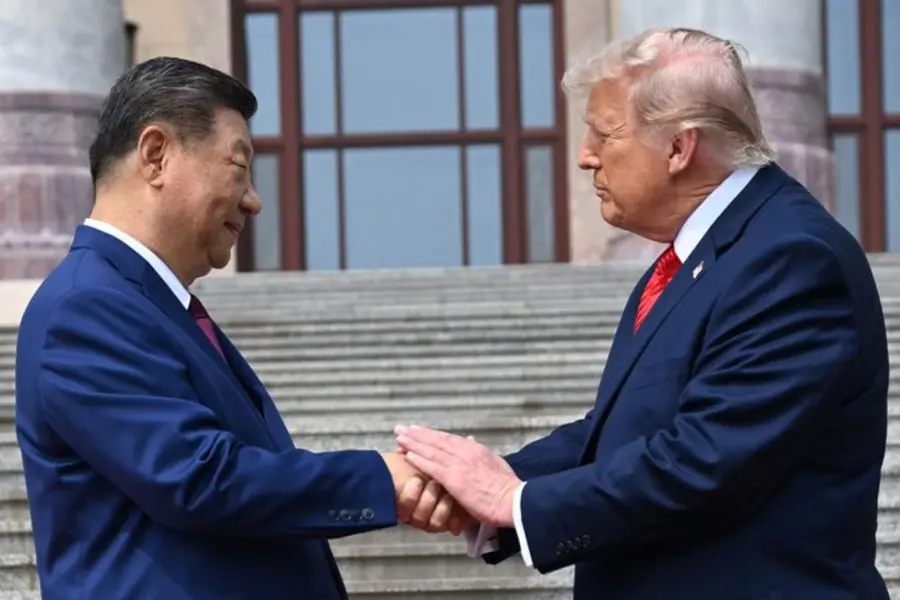
Beijing: US President Donald Trump stated that Chinese President Xi Jinping agreed that Iran “cannot have nuclear weapons” and supported keeping the Strait of Hormuz open during discussions held in China.
Speaking to reporters aboard Air Force One after completing a three-day state visit to China, Trump said the leaders discussed the ongoing conflict in West Asia, Iran’s nuclear ambitions, Taiwan and broader regional security concerns.
Also Read

According to Trump, Xi strongly opposed Iran obtaining nuclear weapons and expressed support for maintaining open shipping access through the Strait of Hormuz, a crucial global oil trade route.
Trump claimed that the United States currently controls the strategic waterway and alleged that Iran had suffered economic losses of around 500 million dollars per day over the last two-and-a-half weeks due to a US naval blockade in the region.
He quoted Xi as saying that if Iran closed the strait, it would effectively close itself off economically. Trump added that Iran had conducted “no business” during the period of heightened tensions.
The US President also revealed that Taiwan was discussed extensively during the meeting. Trump said Xi opposed any “fight for independence” in Taiwan, warning that such a move could trigger a major confrontation.
Trump said he listened to Xi’s views on Taiwan but did not make any direct commitment during the talks. He added that he respected Xi and described the discussions as constructive.
During the media interaction, Trump was asked about the 1982 assurances made under former US President Ronald Reagan regarding US consultations with China on arms sales to Taiwan.
Responding to the question, Trump said the agreement dated back many decades and confirmed that arms sales and Taiwan were discussed in detail during the meeting with Xi.
Trump said he would make future decisions on the matter later, while stressing that the United States did not want another military conflict far from its borders.
The remarks come amid rising tensions in West Asia, growing US-China rivalry and increasing international focus on Taiwan and Iran’s nuclear programme.
Published: 16 May 2026, 06:31 am IST
Related Topics
Disclaimer: Kindly avoid objectionable, derogatory, unlawful and lewd comments, while responding to reports. Such comments are punishable under cyber laws. Please keep away from personal attacks. The opinions expressed here are the personal opinions of readers and not that of Mathrubhumi.