
High-resolution satellite photos taken on June 19 and 20 revealed unusual ground movement at the Fordow uranium enrichment facility
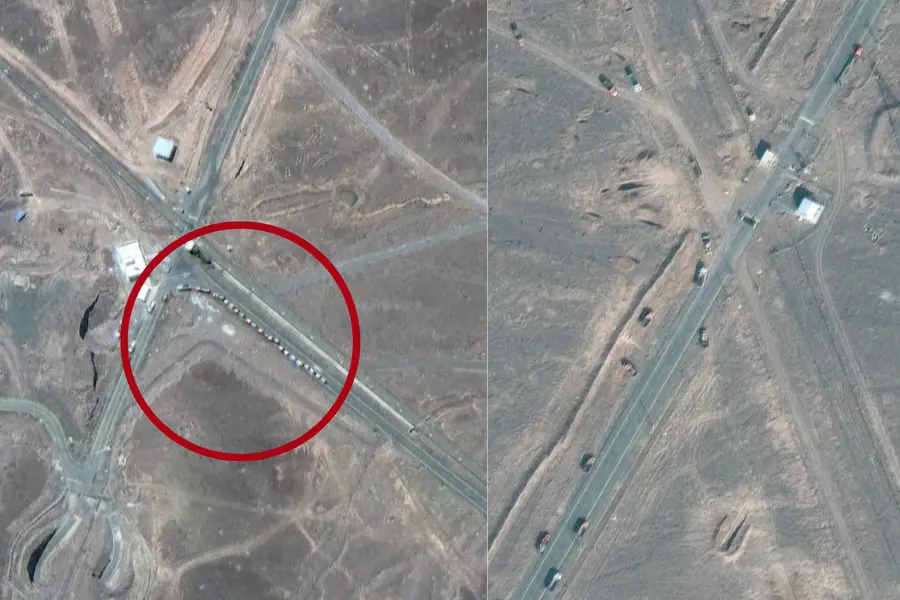
In the hours leading up to the United States' powerful airstrikes on Iran's nuclear infrastructure, satellite imagery captured unusual activity at one of the country’s most fortified sites, raising questions over whether Tehran had anticipated the assault.
Iran suffered a significant blow in its ongoing conflict with Israel on Sunday when the U.S. launched coordinated strikes on three major nuclear facilities: Fordow, Natanz, and Isfahan. President Donald Trump later confirmed the targets, describing the attacks as a decisive response amid escalating regional tensions.
However, images released by U.S.-based Maxar Technologies suggest Iran may have been bracing for a potential strike. High-resolution satellite photos taken on June 19 and 20 revealed unusual ground movement at the Fordow uranium enrichment facility, one of the most heavily protected nuclear sites in the country, located around 120 kilometres southwest of Tehran and buried 80 to 90 metres beneath a mountain.
The imagery showed several cargo trucks lined up on June 19 along the access road to Fordow’s tunnel entrance. By the next day, many of those trucks had moved approximately one-kilometre northwest. In their place, additional vehicles and bulldozers appeared near the tunnel entrance, suggesting a flurry of activity that had not been observed in prior satellite captures since Israel’s earlier air attacks on June 13.
These developments occurred just days after President Trump publicly stated on June 20 that he would take "two weeks" to decide on a military response to Iran. Yet less than 48 hours later, the U.S. launched its most extensive strikes on Iranian soil in years, including deploying heavy bunker-busting munitions.
The timing and scale of the movement at Fordow raise the possibility that Iran had received intelligence or signals pointing to an imminent attack. While officials in Tehran have not commented on the satellite evidence, the visible mobilisation of equipment and trucks near the site suggests some level of preparedness, or at least suspicion, that a response from Washington was imminent.
Published: 22 Jun 2025, 01:28 pm IST
Related Topics
Disclaimer: Kindly avoid objectionable, derogatory, unlawful and lewd comments, while responding to reports. Such comments are punishable under cyber laws. Please keep away from personal attacks. The opinions expressed here are the personal opinions of readers and not that of Mathrubhumi.
