
Trump announces US strikes on Iran`s Natanz, Fordow, & Isfahan nuclear facilities, escalating tensions in the Middle East.
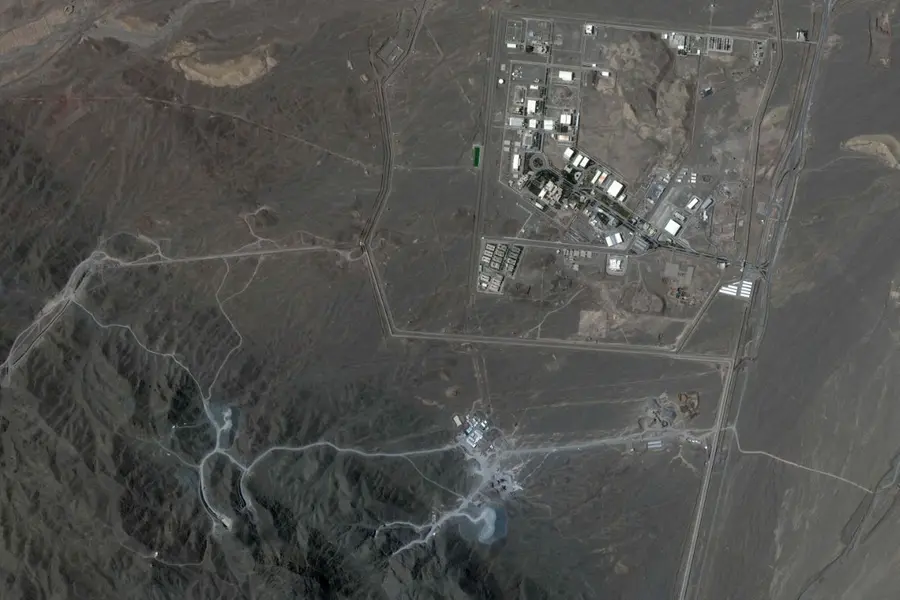
As the conflict between Iran and Israel enters its second week, US President Donald Trump announced that American forces have carried out strikes on three major nuclear sites in Iran. The targeted locations—Natanz, Fordow, and Isfahan—form the backbone of Iran’s nuclear infrastructure and have long been under international scrutiny.
Iran’s nuclear agency confirmed on Sunday that its key nuclear sites at Fordow, Natanz and Isfahan were targeted in military strikes, following an announcement by Donald Trump. In a post on Truth Social, Trump declared that he had authorised a direct assault on Iran’s nuclear infrastructure, stating that a “full payload of BOMBS was dropped” on the deeply buried Fordow facility. He praised the mission’s success, adding, “All planes are safely on their way home… There is not another military in the World that could have done this. NOW IS THE TIME FOR PEACE!”
Natanz
Located approximately 250 kilometres south of Tehran, Natanz is Iran’s most extensive uranium enrichment complex. The site plays a central role in the development and assembly of centrifuges, the machines essential for converting uranium into nuclear fuel.
Natanz includes six above-ground buildings and three underground facilities. Two of these subterranean structures are reportedly capable of housing up to 50,000 centrifuges, according to data from the Nuclear Threat Initiative (NTI), a non-profit focused on global nuclear security.
The facility, active since 2003, has been used to enrich uranium up to 60 percent purity—a significant threshold given that weapons-grade uranium requires enrichment up to 90 percent. Satellite imagery and expert analysis have confirmed that previous Israeli airstrikes destroyed parts of Natanz’s Pilot Fuel Enrichment Plant, which is situated above ground. Two US officials told CNN at the time that the strikes had disabled power systems on the lower levels, disrupting the operations of the centrifuges. Due to the deep underground nature of the core facilities, knocking out electrical power is considered a critical method for neutralising the enrichment process.
Fordow
The Fordow Fuel Enrichment Plant is located near the holy city of Qom and is built into the side of a mountain range, offering significant natural protection. The facility is buried approximately 80 to 90 metres underground, making it a highly resilient target against aerial bombardment. According to Israeli officials and independent analysts, only the United States possesses the type of ordnance capable of penetrating to such depths, though there are concerns even those may not be fully effective.
Fordow's secretive nature has made it difficult to assess its full capabilities, but critical information was revealed through Iranian documents obtained years ago by Israeli intelligence. The International Atomic Energy Agency (IAEA) and nuclear experts estimate that the site now houses around 2,700 centrifuges and has recently increased its production of uranium enriched to 60 percent purity.
The Institute for Science and International Security (ISIS), a nonpartisan research body, has warned that Iran could potentially transform its current stockpile of 60 percent enriched uranium into 233 kilograms of weapons-grade material in as little as three weeks at Fordow. This would be sufficient to produce up to nine nuclear weapons.
Isfahan
Situated in central Iran, the Isfahan nuclear facility serves as the country’s largest nuclear research complex. The site was constructed with assistance from China and became operational in 1984. According to NTI, Isfahan employs approximately 3,000 scientists and is widely believed to be the epicentre of Iran’s nuclear development efforts.
The complex houses three small Chinese-supplied research reactors and a wide range of auxiliary infrastructure. These include a uranium conversion facility, a fuel production plant, a zirconium cladding plant, as well as multiple laboratories and support buildings.
The scale and scope of Isfahan’s research capacity underscore its importance to Iran’s overall nuclear ambitions, making it a key target in any military campaign aimed at curtailing those capabilities.
While the full extent of the damage from the US strikes remains uncertain, the strategic importance of the Fordow, Natanz and Isfahan nuclear sites within Iran’s atomic programme is widely recognised. Each facility plays a key role in uranium enrichment and nuclear technology development—activities that have fuelled decades of international concern.
The development also revives debate over Washington’s approach to Iran’s nuclear ambitions. Nearly seven years ago, Trump withdrew the US from the 2015 nuclear agreement brokered by then-President Barack Obama’s administration. The deal had placed strict limits on Iran’s uranium enrichment in exchange for relief from economic sanctions. Trump later denounced the accord as the “worst ever,” arguing it failed to curb Iran’s destabilising actions in the region.
In response to the strikes, Iranian authorities have vowed that their nuclear efforts will continue uninterrupted.
(With inputs from AP)
Published: 22 Jun 2025, 08:01 am IST
Disclaimer: Kindly avoid objectionable, derogatory, unlawful and lewd comments, while responding to reports. Such comments are punishable under cyber laws. Please keep away from personal attacks. The opinions expressed here are the personal opinions of readers and not that of Mathrubhumi.
