
Venezuela’s top court names Delcy Rodríguez interim president after the US seizes Nicolás Maduro, stopping short of triggering snap elections.
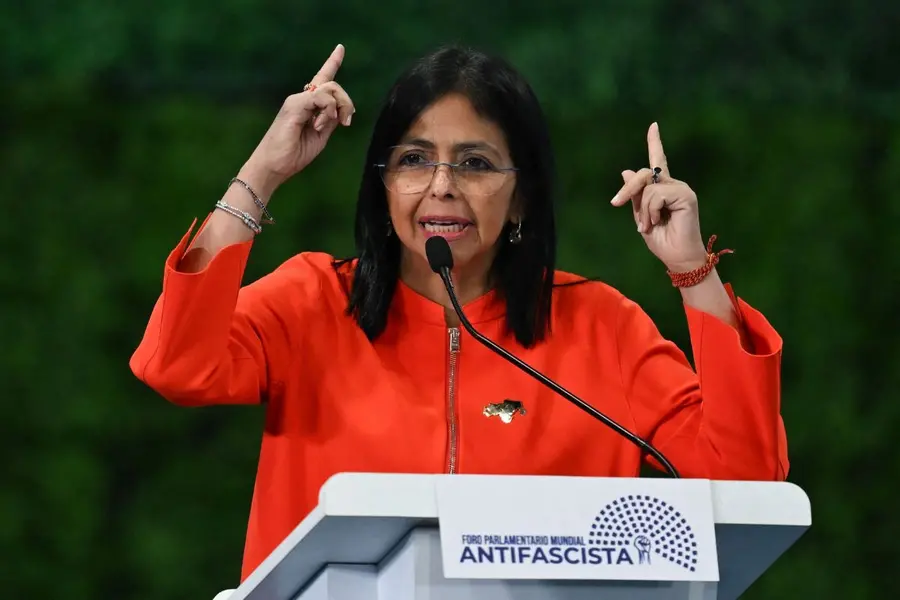
Caracas/Washington: Venezuela’s Supreme Court late on Sunday ordered Vice President Delcy Rodríguez to assume the role of interim president, hours after the United States seized President Nicolás Maduro and removed him from the country, triggering one of the most dramatic political crises in Venezuela’s modern history.
In an emergency ruling broadcast on state television, the high court said Rodríguez would “assume and exercise, in an acting capacity, all the attributes, duties and powers inherent to the office of President of the Republic,” citing the need to guarantee “administrative continuity and the comprehensive defense of the nation.”
The judges stopped short of declaring Maduro permanently absent, a constitutional step that would mandate presidential elections within 30 days.
Government sources said Rodríguez was immediately sworn in at the Miraflores Palace, where senior military commanders and cabinet ministers pledged loyalty to the interim leadership. State television showed Rodríguez chairing a late-night security meeting and calling for “calm, unity, and resistance against foreign aggression.”
The US has not released full details of Maduro’s seizure, but officials confirmed he is in American custody, citing long-standing criminal indictments related to narcotics trafficking and sanctions violations. Washington described the move as a “lawful enforcement action,” while Venezuela’s government denounced it as an “illegal abduction” and a violation of national sovereignty.
Also Read: 1st video out: Maduro arrives in New York after ‘capture’, Venezuela on 'HIGH' alert
In a televised address, Rodríguez accused the US of attempting to impose “regime change by force” and announced heightened security across Caracas and other major cities. The defence ministry said armed forces remained on “full alert,” while police reported scattered pro-government rallies overnight, with no major violence reported.
International reaction has been swift and divided. Close allies, including Russia, China, Iran, and Cuba, condemned the US action and reaffirmed recognition of Rodríguez as Venezuela’s legitimate interim authority. Several Latin American governments called for restraint and urged respect for constitutional processes.
The United Nations said it was “closely monitoring” developments and appealed for de-escalation. Analysts say the Supreme Court’s decision to appoint an interim leader without declaring permanent absence appears aimed at buying time, avoiding immediate elections while consolidating control amid extraordinary circumstances.
With Maduro’s future uncertain and diplomatic tensions escalating, Venezuela now faces a volatile transition that could reshape its political trajectory in the coming weeks.
Published: 04 Jan 2026, 08:04 am IST
Related Topics
Disclaimer: Kindly avoid objectionable, derogatory, unlawful and lewd comments, while responding to reports. Such comments are punishable under cyber laws. Please keep away from personal attacks. The opinions expressed here are the personal opinions of readers and not that of Mathrubhumi.
