
The United Nations climate agency has warned that Earth is highly likely to cross the 1.5°C warming threshold again before 2030, with 2027 potentially becoming the hottest year ever recorded.
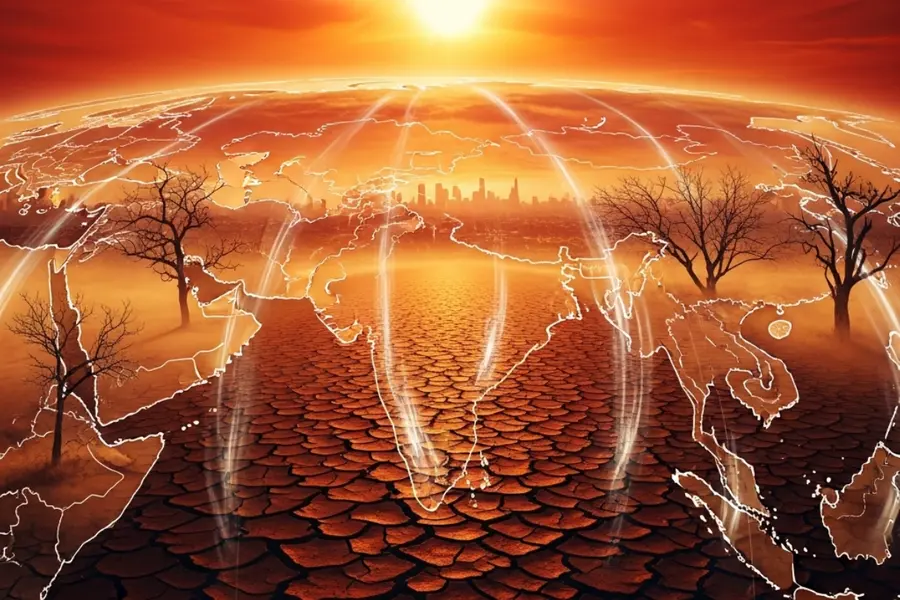
The world is highly likely to cross the critical 1.5 degrees Celsius global warming threshold repeatedly over the next five years, with 2027 emerging as a possible new record for the hottest year ever recorded, according to a major new report released by the United Nations’ weather agency.
The latest climate projections from the World Meteorological Organization (WMO) and the UK Met Office warn that there is a 75% chance the average global temperature between 2026 and 2030 will remain above the Paris climate agreement’s 1.5°C limit compared to pre-industrial levels.
The report also flagged alarming risks for the Arctic and the Amazon rainforest, while scientists warned that rising global temperatures driven by fossil fuel emissions could trigger more extreme heatwaves, floods, droughts and wildfires worldwide.
The WMO said there is a 91% chance that at least one year before 2030 will cross the 1.5°C mark and an 86% probability that one of those years will surpass 2024 as the hottest year in recorded history.
Climate scientists said the findings underline how rapidly the planet is warming.
“It’s important to note that (1.5) is not kind of a cliff edge that we’re going to fall off,” said report co-author Melissa Seabrook, a climate scientist at the U.K. Meteorological Office. “Every kind of 0.1 of a degree has more and more severe impact.”
The projections estimate global temperatures during the next five years could range between 1.3°C and 1.9°C above late-1800s levels.
Why are scientists warning about 2027 and extreme weather risks?
The report linked the rising temperatures partly to the expected return of a strong El Niño weather pattern, which typically pushes global temperatures higher and disrupts weather systems across the planet.
According to the projections, the El Niño event could continue until 2028, increasing the likelihood that 2027 may set a fresh global heat record.
Climate experts warned that even temporary breaches of the 1.5°C threshold could have severe consequences.
Imperial College London climate scientist Friederike Otto said higher temperatures would likely bring extreme weather events beyond what cities and agricultural systems were designed to handle.
She warned of stronger heatwaves, intense rainfall, prolonged droughts, food price shocks and more destructive wildfires.
The report also noted that if the world averages more than 1.5°C warming over the next five years, it would signal an acceleration in global warming compared to previous decades.
Scientists are now debating whether climate change itself is speeding up.
What does the report say about the Arctic and Amazon?
The Arctic is expected to warm nearly four times faster than the global average, according to the projections.
The WMO warned that Arctic winters over the next five years could average around 2.8°C warmer than recent historical norms, accelerating the melting of sea ice.
Scientists said the loss of reflective ice creates a dangerous cycle in which more heat is absorbed by the ocean, further intensifying warming.
The report also highlighted growing concerns over the Amazon basin, where hotter and drier conditions could increase wildfire risks and threaten one of Earth’s most important carbon-absorbing ecosystems.
Researchers warned that worsening drought and fires could weaken the Amazon’s ability to absorb carbon dioxide, potentially turning it into a contributor to climate change instead of a natural defense against it.
Meanwhile, Africa’s Sahel region, which has faced prolonged dry conditions, could see unusually heavy rainfall and flooding in coming years.
United Nations officials said current global efforts to curb emissions remain insufficient.
UN climate chief Simon Stiell said rising temperatures across Europe, India and other regions were already exposing the “brutal human and economic impacts” of continued fossil fuel use.
He warned that countries worldwide are increasingly paying the price through extreme heat, mega-storms, floods, droughts and wildfire disasters linked to the global climate crisis.
With AP inputs
Published: 28 May 2026, 03:01 pm IST
Related Topics
Disclaimer: Kindly avoid objectionable, derogatory, unlawful and lewd comments, while responding to reports. Such comments are punishable under cyber laws. Please keep away from personal attacks. The opinions expressed here are the personal opinions of readers and not that of Mathrubhumi.
