
Trump says the US-Iran ceasefire was agreed as a favour to Pakistan and signals no further strikes on Tehran amid nuclear tensions.
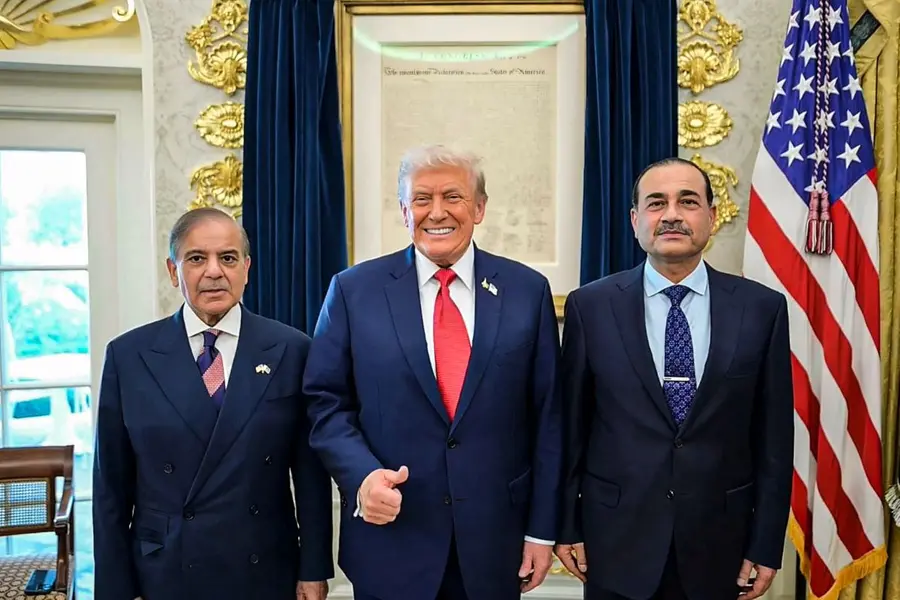
US President Donald Trump on Friday claimed that the ceasefire between the United States and Iran was agreed upon partly as a “favour” to Pakistan, while also indicating that Washington does not plan to carry out additional strikes on Tehran for now.
Speaking to reporters aboard Air Force One while returning from China, Trump said the decision to halt attacks came after diplomatic intervention from Pakistan’s leadership. The remarks come amid heightened global attention on tensions in the Middle East and concerns over Iran’s nuclear programme.
“We did the ceasefire as a request from another nation. I would have really benefited from it, but we did it as a favour to Pakistan,” Trump said, praising Pakistan’s military and political leadership. He described the country’s leaders as “terrific people,” referring specifically to the Field Marshal and the Prime Minister.
The conflict between the US, Israel and Iran escalated earlier this year, with military operations reportedly beginning on February 28. Hostilities were later paused after a ceasefire agreement took effect on April 8 following negotiations reportedly facilitated by Pakistan in Islamabad.
Trump also reiterated Washington’s long-standing position that Iran must not be allowed to obtain nuclear weapons. According to him, Iranian representatives admitted during negotiations that their nuclear facilities had suffered major damage during US air strikes.
“They came up with a terrible secret. They said that they can't remove it because they don't have the technology to remove it. They don't have the time and the practice,” Trump said while discussing Iran’s stockpile of enriched uranium. The US administration has repeatedly demanded that Tehran end its uranium enrichment activities in exchange for sanctions relief and the release of frozen Iranian assets.
The Strait of Hormuz, a strategic shipping route through which nearly 20 percent of global oil supplies pass, also featured in Trump’s remarks.
The US President said Xi Jinping supported keeping the Strait open, underlining concerns about disruptions to global energy markets if tensions in the Persian Gulf intensify again.
Meanwhile, US Vice President JD Vance reportedly led a delegation for direct talks with Iranian officials in Islamabad earlier in April. The discussions marked a rare face-to-face engagement between the two sides and are believed to have contributed to the temporary halt in military escalation.
While Trump’s latest remarks suggest a pause in direct confrontation, uncertainty remains over whether diplomatic negotiations can permanently ease decades of hostility between Washington and Tehran.
With PTI inputs
Published: 15 May 2026, 09:01 pm IST
Related Topics
Disclaimer: Kindly avoid objectionable, derogatory, unlawful and lewd comments, while responding to reports. Such comments are punishable under cyber laws. Please keep away from personal attacks. The opinions expressed here are the personal opinions of readers and not that of Mathrubhumi.
