
The latest incident comes amid a worsening security situation in the Strait of Hormuz, one of the world’s most vital oil shipping routes through which roughly a fifth of global oil supplies pass daily.
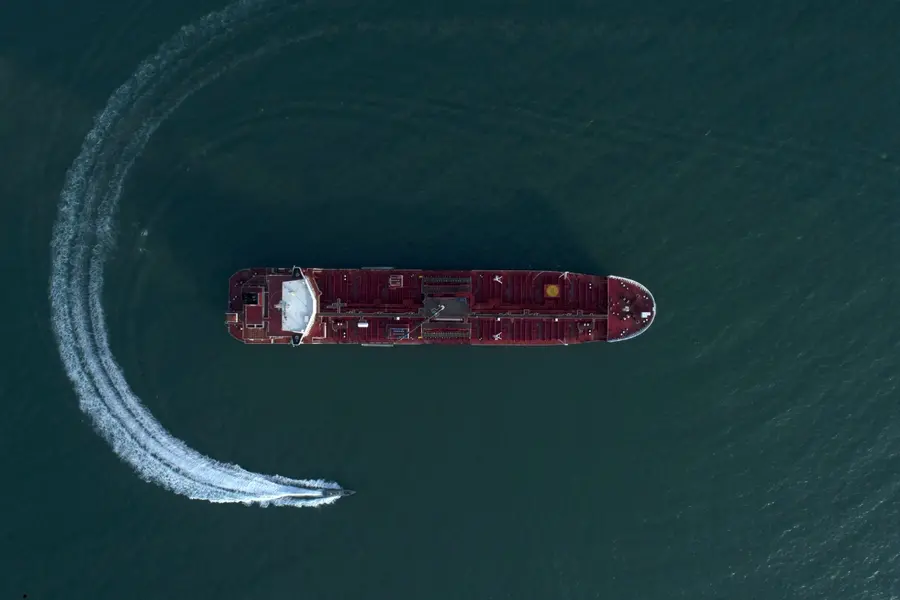
Dubai: A vessel anchored off the eastern coast of the United Arab Emirates was seized by unidentified personnel and is now heading towards Iranian waters, the British military said on Thursday, amid escalating tensions in the strategically crucial Strait of Hormuz.
The United Kingdom Maritime Trade Operations (UKMTO) said the ship was taken while anchored around 38 nautical miles northeast of Fujairah, a major UAE oil export terminal located outside the Persian Gulf. The agency said investigations were underway but did not identify the vessel or who was behind the seizure.
The latest incident comes amid a worsening security situation in the Strait of Hormuz, one of the world’s most vital oil shipping routes through which roughly a fifth of global oil supplies pass daily. Iran’s tightening grip over the waterway has rattled global markets and triggered a rise in fuel prices worldwide.
In a separate incident, Indian authorities confirmed that an Indian-flagged cargo vessel, Haji Ali, sank off the coast of Oman after an attack sparked a fire onboard on Wednesday while it was travelling from Somalia to Sharjah in the UAE.
Mukesh Mangal, a senior official in India’s shipping ministry, said all 14 Indian crew members were rescued safely by the Omani coast guard. India’s foreign ministry condemned the attack, calling it “unacceptable” and denouncing continued assaults on commercial shipping and civilian sailors. However, authorities stopped short of identifying those responsible.
The developments unfolded at a sensitive diplomatic moment as US President Donald Trump met Chinese President Xi Jinping in Beijing for high-level talks expected to focus heavily on the conflict involving Iran.
Iranian semi-official media reported that Chinese ships had begun passing through the Strait of Hormuz under newly established Iranian protocols after requests from Beijing. According to the reports, Tehran agreed to facilitate the movement of several Chinese vessels following appeals from China’s foreign minister and ambassador to Iran.
The maritime incidents also came hours after Israeli Prime Minister Benjamin Netanyahu claimed he had quietly visited the UAE during the ongoing Israeli-US conflict with Iran, though UAE authorities swiftly denied any such secret visit.
Iran has repeatedly criticised the UAE’s normalisation of ties with Israel in 2020 and has long alleged that Israel maintains military and intelligence operations within the Gulf nation.
Commenting on the evolving regional dynamics, Yoel Guzansky, a senior researcher at Tel Aviv’s Institute for National Security Studies, said, “It's amazing, it's the deepest cooperation we've ever had… that during a war, Israel is defending an Arab state against Iran, it shows how complicated the Middle East is.”
He added that the UAE appeared keen to maintain security cooperation with Israel while distancing itself politically from Netanyahu’s government due to growing anger in the region over Israel’s actions in Gaza.
“They're trying to differentiate between security cooperation and cooperating with this government,” Guzansky said.
Meanwhile, Iran defended its actions in the Strait of Hormuz. Judiciary spokesperson Asghar Jahangir told the Iran Daily newspaper that Tehran had the legal right to seize ships linked to the United States, accusing Washington of violating international maritime laws and engaging in piracy.
Iran recently seized another tanker, Ocean Koi, alleging it was being used to undermine Iranian oil exports. The tanker had been sanctioned by the US earlier this year as part of what Washington described as a “shadow fleet” transporting Iranian oil.
Elsewhere in the region, tensions between Israel and Hezbollah escalated again after a Hezbollah drone exploded inside Israel, injuring three civilians, two of them seriously.
It marked the first reported civilian injuries caused by Hezbollah projectiles since a US-brokered ceasefire took effect on April 17. Israel and Hezbollah have continued exchanging fire across the Lebanon border despite the truce.
Lebanon’s Health Ministry said at least 2,896 people had been killed and 8,824 wounded since fighting intensified on March 2. Israeli authorities said 18 soldiers and one defence contractor had also been killed in southern Lebanon.
Lebanon and Israel are expected to hold another round of direct talks in Washington on Thursday as the Trump administration pushes for a diplomatic breakthrough between the two long-time adversaries.
Published: 14 May 2026, 06:19 pm IST
Related Topics
Disclaimer: Kindly avoid objectionable, derogatory, unlawful and lewd comments, while responding to reports. Such comments are punishable under cyber laws. Please keep away from personal attacks. The opinions expressed here are the personal opinions of readers and not that of Mathrubhumi.
