
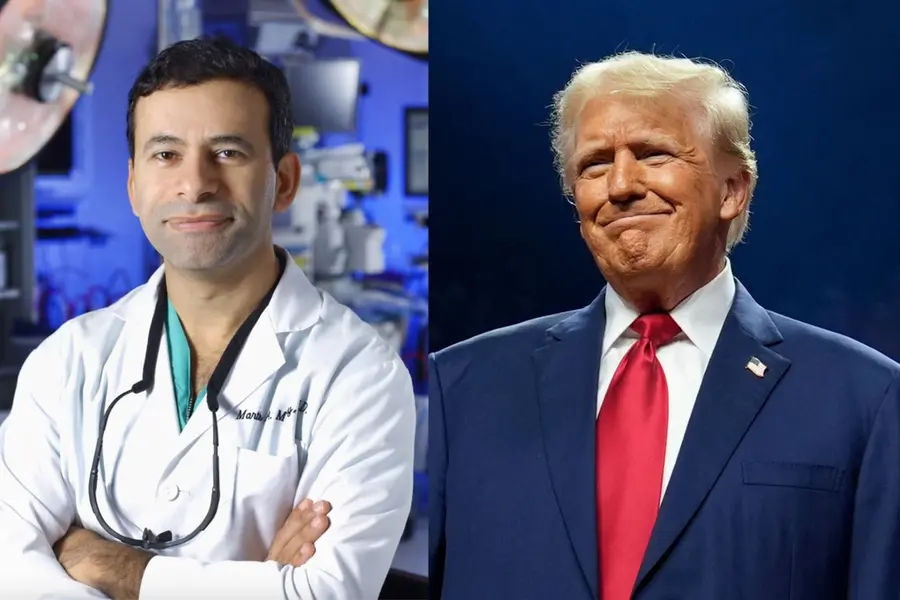
Washington DC: President-elect Donald Trump has chosen Dr. Marty Makary, a renowned surgeon and professor at Johns Hopkins University, to lead the Food and Drug Administration (FDA). Makary, who has gained national attention for his outspoken views on health policies, will need Senate approval before assuming the role. His nomination signals Trump's ongoing efforts to reform the U.S. healthcare system, which both Trump and Makary have called "broken."
Trump announced the nomination in a statement Friday night, saying Makary “will restore FDA to the gold standard of scientific research, and cut the bureaucratic red tape at the agency to make sure Americans get the medical cures and treatments they deserve.”
Also Read

A controversial figure in public health
Dr. Makary, known for his critical stance on various public health measures during the COVID-19 pandemic, became a prominent figure on conservative media. He questioned the need for widespread masking and voiced concerns about COVID-19 vaccinations for young children, despite not being opposed to vaccines overall. Makary has also raised alarms about the overprescription of medications and the influence of pharmaceutical companies on medical practices and regulations.
His views on vaccine mandates and public health strategies during the pandemic attracted both support and criticism. While some agree with his calls for more personal freedoms in health decisions, others argue that his positions may have downplayed the seriousness of the pandemic.
Focus on drug safety and FDA reforms
Makary's nomination comes at a time when the FDA has faced increased scrutiny, especially regarding its approval of drugs with incomplete data. He has been vocal about the role of pharmaceutical companies in pushing medications like OxyContin, despite misleading claims about their safety. If confirmed, Makary may push for a greater focus on scrutinising drug safety and effectiveness, marking a shift from the FDA's previous emphasis on faster drug approvals.
He has also expressed concern about the FDA’s handling of certain drug approvals, such as those for Alzheimer’s and ALS treatments, which were granted despite questionable evidence of their effectiveness.
Challenges ahead
Makary’s leadership could challenge longstanding industry practices, especially as the pharmaceutical industry exerts significant influence over FDA decision-making. Some of Trump’s other health nominees, including Robert F. Kennedy Jr. for the Department of Health and Human Services, have proposed ending pharmaceutical industry payments to the FDA, a move that could face resistance due to the financial impact on the agency.
Makary would also inherit several ongoing projects, including efforts to overhaul the FDA’s food division and regulate artificial intelligence in healthcare. These initiatives could face delays, especially if there is resistance from career staff at the agency or legal challenges from the pharmaceutical industry.
“The bureaucracy can wait anybody out, and that’s an attitude I think you’ll hear a lot,” said Wayne Pines, a former FDA official under Republican and Democratic administrations.
Agency
Published: 23 Nov 2024, 08:32 am IST
Related Topics
Disclaimer: Kindly avoid objectionable, derogatory, unlawful and lewd comments, while responding to reports. Such comments are punishable under cyber laws. Please keep away from personal attacks. The opinions expressed here are the personal opinions of readers and not that of Mathrubhumi.