
The TR-3B Black Manta is often linked to anti-gravity and UFO claims. Here’s what is known about the myth, stealth aircraft and hypersonic technology.
Inside a quiet testing range in 2016, ISRO engineers watched a small engine gulp air at blistering speed and burn fuel for a few precious seconds. Four years later, in 2020, DRDO's Hypersonic Technology Demonstrator Vehicle roared into the sky on a similar promise. Neither moment went viral. Neither involved alien secrets. Yet both were genuine triumphs, won inch by inch through failed trials, anxious nights and stubborn national resolve. Keep those two achievements in mind, because they quietly answer one of the loudest claims circulating online today: that the age of missiles and jet engines has ended.
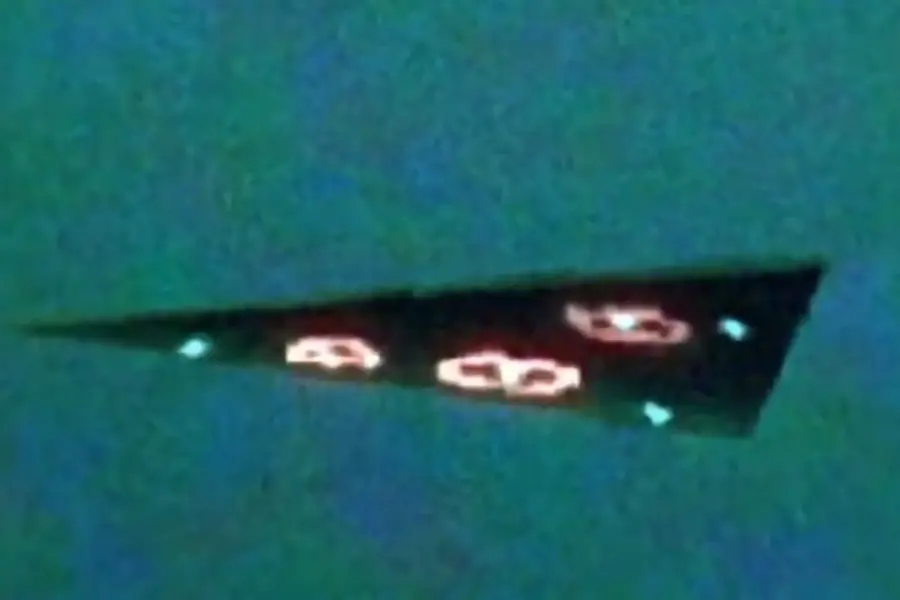
The claim rests on a legend called the TR-3B, nicknamed the "Black Manta." For decades, internet folklore has described it as a secret American triangle that runs on anti-gravity, technology supposedly reverse-engineered from crashed UFOs. Believers say it needs no fuel, makes no sound and performs turns that defy gravity itself. Imagine a loaded truck lifting gently off the road and gliding sideways without an engine. That is roughly what we are being asked to accept.
Why has the story returned now? Mysterious lights recently filmed over Tehran and Zahedan in Iran, along with older clips linked to Argentina, have given the legend a fresh excuse to trend. But that is all these videos have done. Neither sighting has been identified as a triangular aircraft. No government statement, court filing, budget entry or flight-test record has ever confirmed that a TR-3B exists. A name and a shaky phone video cannot carry the weight of such an extraordinary claim, and they never have.
None of this means people are imagining things. Triangles really do appear in the night sky, and the reasons are refreshingly down to earth. Stealth aircraft are deliberately shaped with flat, sharply angled surfaces. When radar waves strike them, they skid away in other directions instead of bouncing back, much like a cricket ball glancing off a tilted bat towards the slips. America's RQ-170 Sentinel, a real pilotless spy drone with a wedge-shaped outline, is one such machine. In 2011, one came down almost intact inside Iran itself. Experimental flying wings and newer bombers belong to the same family of shapes, and seen from the ground at night, they can look genuinely eerie.
Other culprits are even simpler. Starlink satellites often cross the dusk sky in long, glittering chains. Ordinary satellites catch the sunlight after dark. Phone cameras, built for family photographs rather than astronomy, tend to smear bright dots against a black sky into strange shapes. And today, convincing visual effects are cheap to create and designed to spread fast across social media.
ALSO READ: China's silent eye above India's skies
We have seen this drama before. During the 1980s, the United States secretly flew the F-117 Nighthawk, a jagged black aircraft unlike anything the public had known. Honest witnesses who spotted it reported something alien. It turned out to be an earthly aeroplane, hidden for earthly military reasons. That episode offers a lasting lesson: classified hardware has explained far more mysterious triangles than borrowed gravity ever has.
Then comes the most telling evidence of all, which is money. The United States continues to spend tens of billions on jet engines, missiles and the B-21 Raider, its next-generation stealth bomber. The B-21 burns fuel and obeys every law of physics. No nation pours such vast sums into old technology if it has already found a way to switch gravity off. Budgets rarely lie, even when rumours do.
ALSO READ: India's sky eye returns: ISRO prepares to launch GISAT-1A satellite
This brings us back to those Indian test ranges. A scramjet, the engine behind hypersonic flight, has no spinning blades. It relies on its own shape to squeeze incoming air travelling at tremendous speed, then burns fuel within a fraction of a second. Engineers often compare the task to keeping a matchstick alight in a storm. ISRO's 2016 test and DRDO's 2020 flight were hard-won, step-by-step victories that consumed real fuel and respected real science. That is precisely what makes them so admirable. They were earned within the laws of nature, not by imagining those laws away.
For a country like India, whose security depends on sound judgement, the ability to separate evidence from excitement matters deeply. Missiles and jet engines are far from finished. Rumour simply travels faster than engineering ever can. Meanwhile, the sky remains full of real marvels built by determined human hands. Our duty is to keep looking up with wonder, and to keep asking how.
The author is a Defence, Aerospace & Geopolitical Analyst
Published: 26 Sept 2026, 01:02 pm IST
ABOUT THE AUTHOR

Related Topics
Disclaimer: Kindly avoid objectionable, derogatory, unlawful and lewd comments, while responding to reports. Such comments are punishable under cyber laws. Please keep away from personal attacks. The opinions expressed here are the personal opinions of readers and not that of Mathrubhumi.